
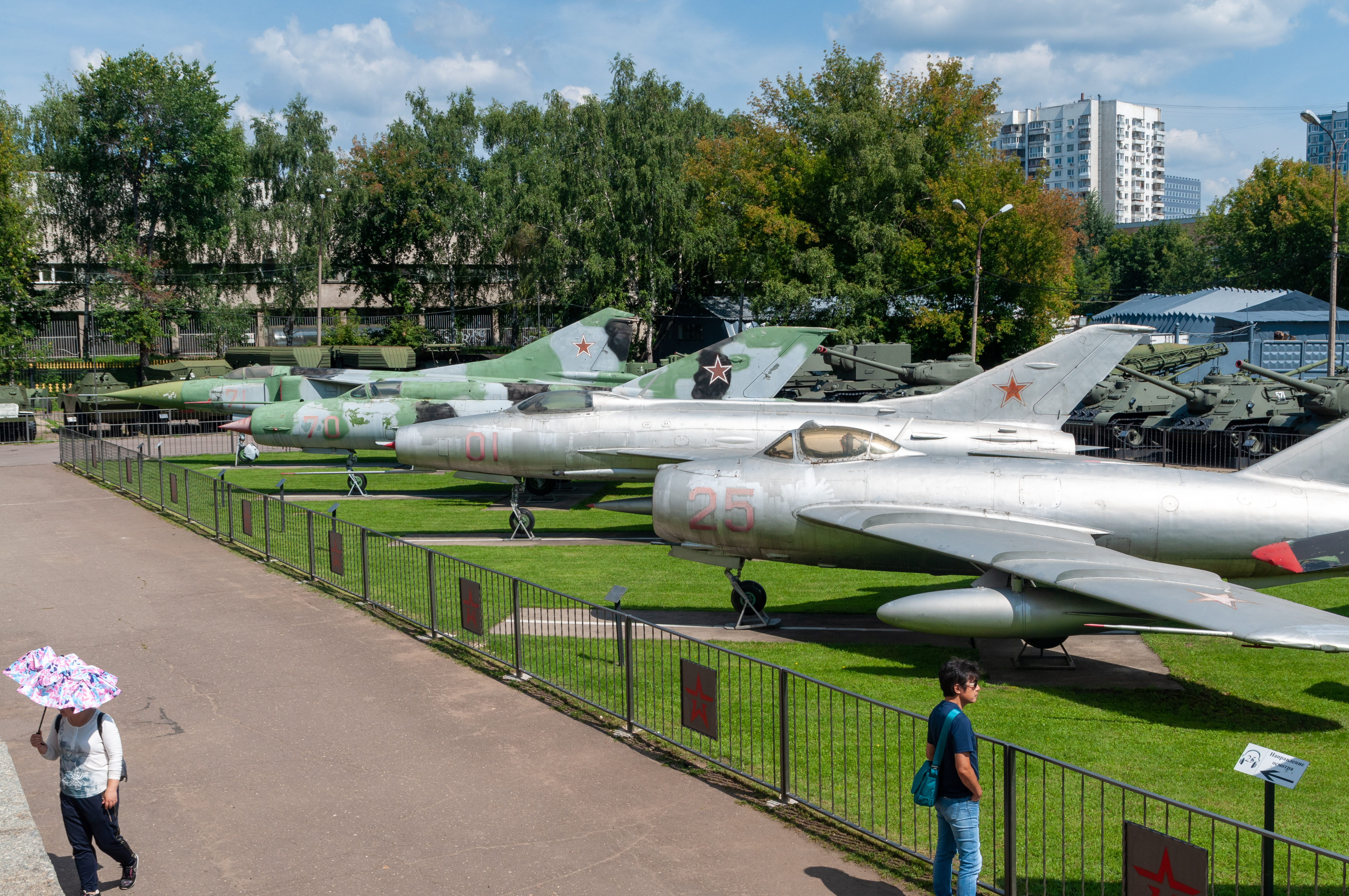
 Photo by Don-vip
A Triple Helix publication

by Arne de Kruijff
March 2026
Table of Contents
- Introduction
- Compounding Ukrainian ingenuity with industrial scale
- Integration of effort
- Non-EU Defence Innovation
- Don’t miss the boat
- About the Author
- Canadian Global Affairs Institute
Introduction
For Europe, a decade’s worth of events occurred within the first weeks of September 2025. It started with the targeted Russian drone strike on the European Union (EU) delegation in Kyiv, followed by the GPS jamming of Commission President von der Leyen. Then came a sabotage action leaving large parts of Berlin with a days-long power outage, which was also shadowed by the unprecedented incursion of Polish airspace by some nineteen UAVs, mainly consisting of Russian Gerbera adaptations of Iranian Shahed drones.
A natural consequence of these Russian escalations was the resolute statement by Commission President Von der Leyen in her State of the European Union. Von der Leyen stated that Europe is in a fight for its freedom, for its sovereignty, and for its peace. To meet this challenge, defence innovation pursued in an open, strategically autonomous fashion–pivoting away from a unilateral dependence on the U.S.– is vital.
A similar argument was also put forward in a speech by Canadian Prime Minister Mark Carney at the 2026 World Economic Forum in Davos. He stated that the world order is in a rupture, in which the rules-based order is coming to an end. In order to hedge against uncertainty and manage risk, Carney stated that middle powers like Canada should rebuild strategic autonomy, while also seeking cooperation.
The commonality between the EU and Canada in rebuilding strategic autonomy while seeking cooperation with each other is striking. As Carney stated in Davos, collective investments in resilience are cheaper than going alone, and shared standards reduce fragmentation. With each passing day, the most powerful NATO member, the U.S., seems less and less of a reliable partner, straining the reliability of NATO as a whole, both in managing aforementioned risk and as a go-to structure for defence innovation.
To spare the reader the complexities of EU decision-making, “the EU” refers here to the centralized European Union decision-making in Brussels. Of course, member states are a part of that through the Council, but in the areas where they are not, they are referred to as EU member states.
This article outlines and analyzes three visible strategic developments in the EU context regarding defence innovation, each supported by concrete policy implementation. The first visible strategic development is the EU finding ways to combine Ukrainian ingenuity with European industrial scale. The second development is EU integration of efforts with regard to governance and fiscal constraints, and common arms production. The third development in the EU context is the cooperation with non-EU partners, and the expected move toward a defence development ecosystem. Lastly, this article focuses on Canada and the lessons it can learn from the EU.
Compounding Ukrainian ingenuity with industrial scale
The Russo-Japanese war of 1904-05 provided the world with an early vision of the large-scale trench warfare of the early twentieth century. However, during the First World War, neither the Entente –Russia, France, and the UK– nor Germany paid close enough attention to act on these revelations, causing them to ultimately end up in a stagnant, horrific Western European Front.
Compared to their actions a century ago, European partners have responded quite differently to developments since the onset of Russia’s war of aggression against Ukraine, which geban in 2022. Ukraine’s European allies have been closely following Ukraine’s drive for innovation ever since the war broke out, trying to keep pace with the changes unfolding on the battlefield. In a matter of years, Ukraine has become highly innovative, integrating complex operations with overlapping drone and missile swarms, and deploying cost-effective UAV countermeasures.
The European adaptations to the warfare unfolding in Ukraine are vital to developing the edge the EU needs to fight in the 21st century. Solidifying this drive into policy, Von der Leyen proposed, among other things, the Qualitative Military Edge program, building Ukrainian innovation into European capabilities, while helping Ukraine scale its innovations. Also, the EU-Ukraine Drone Alliance is taking shape, aiming to create an industrial ecosystem that accelerates the development of affordable defence technology, and that fast-tracks mass production. For this, the EU has allocated $9 billion CAD, helping Ukraine build cheap drones and enhancing counter-drone warfare on the NATO eastern flank.
A concrete example of this expanded European assistance through scaling up after innovation is the Ukrainian-developed FP-5 Flamingo cruise missile system, which closely follows the de-risking principle that ‘no one’ can influence the weapons Ukraine builds–neither China nor the U.S. Recently, news announced that Denmark was to host a rocket fuel plant for the missile system. Another example is the ramping up of drone manufacturing to tens of thousands a month throughout the EU, all of which are destined for Ukraine. In addition, Joint All-Domain Command and Control systems such as DELTA are being adapted. Also, generative AI models for human-AI collaboration on the battlefield, along with AI-enabled satellite constellations are being deployed for real-time intelligence and situational awareness.
The EU’s space assets are an often overlooked but key element in its assistance to Ukraine. The EU maintains and develops a large-scale array of constellations, including Earth observation, satellite navigation, space safety, and secure connectivity. To reduce European and Ukrainian reliance on the U.S., the EU’s development of new satellite capabilities to improve geospatial intelligence support is just on the horizon.
Especially in the area of secure connectivity, there have been some major developments on the topics of GOVSATCOM and IRIS². Becoming operational in January 2026, GOVSATCOM offers secure and sovereign governmental satellite communications services for EU and member state authorities. The first country to use it was Cyprus on 10 March 2026, for “safety and security purposes along the south-eastern borders of the Union”. More relevant for Ukraine, the EU has been facilitating secure military satellite communications and has been providing partial intelligence, surveillance and reconnaissance (ISR) data from sensors to commanders in near-real time. What is missing in that respect is a level of secure communications, location tracking and security surveillance as advanced and scaled as Starlink/Starshield by SpaceX. This dependence on SpaceX, however, lays bare a strategic risk for Ukraine, as its owner Elon Musk, and the U.S. government, have proven unreliable in the past. Intended to fill this gap, the implementation of IRIS² is being sped up, expected to be first deployed in 2027, and coming fully into service in 2030.
Integration of effort
A second major strategic focus point for defence innovation in the EU is the integration of effort. Since geopolitical tensions have begun to rise, a “vibe shift”, as awkwardly described by Niall Ferguson, has become visible in the way the EU moves from a no-mandate position to a coordinating role in common defence procurement and production. The EU taking the initiative with regard to collective defence is a novelty. It shows a push into terra incognita for the European project–centralized and coordinated action on European collective security.
Up until last year, defence innovation and procurement was an affair of member states. Broadly speaking, NATO capability targets set out the requirements for each ally (many of which are EU member states) regarding shortcomings and where new development and procurement is needed. This system has ultimately made defence procurement bureaucratic and expensive, and EU defence innovation fragmented. The common EU action here is designed to make acquiring armaments cheaper through common procurement and production, and enable defence innovation.
Much changed in 2025 when NATO member states generally agreed on a new spending target. In practice, NATO member states committed to invest 5% of GDP annually on defence spending, to be split into 3.5% for “core defence” and 1.5% for defence-related costs. To ensure the EU side of the bargain was to be met and informally, with NATO crumbling, to be able to stand on its own legs–the EU took drastic action. In launching ReArm Europe / Readiness 2030, it created some $1.25 trillion CAD in fiscal spending and loans for joint defence projects. Suggested priorities include air defence, artillery, drones/anti-drones, cyber, military mobility, and strategic support systems.
Besides fiscal spending, the EU also set up a new defence-financing mechanism. The mechanism called SAFE provides up to $230 billion CAD in affordable loans to EU member states seeking financial assistance for investments in their defence capabilities. In general, preferential treatment is given to domestically produced military equipment, meaning that 65% of component costs must originate from the EU or Ukraine. When in December 2025 Canada joined the SAFE mechanism, after signing a security and defence partnership with the EU in June, it became the first non-European country to participate in the mechanism. With its admittance, Canada is being treated as a domestic producer, alongside the EU and Ukraine.
To de-risk supply chains and to hedge against dependencies becoming weaponized, the European Defence Industrial Strategy (EDIS) was published. Focusing on reinforcement, while also building up an EU Defence Technology and Industrial Base (EDTIB) and de-risking its supply chains, the goals of EDIS is to enhance supply chain resilience, improve uniformity and interoperability, and close the EU’s major capability gaps in air defence and military mobility. While described policy initiatives are taking shape, the strategic reality is changing even faster, mounting pressure on the EU to pick up the gauntlet to coordinate common defence production.
In his paper, ‘From Procurement to Production‘, Jordan Miller suggests that Canada more actively manage its military industrial capacity. In some form, such development is already visible in the EU. Where until recently the focus was on sporadic joint defence purchases, with some peak bureaucratic notoriety for the German defence procurement agency BAAINBw, the current focus is on common defence production, most notably in the Czech Republic and in Germany. On 27 August, among others, NATO Secretary Geneneral Mark Rutte and Social Democratic Party (SDP) leader Lars Klingbeil opened Europe’s largest arms factory in Unterlüss. The speed with which the factory developed is mind-boggling in a European context. In a mere 18 months, an idea for mass-producing 155mm ammunition went from concept to mass production. Although the produced ammunition type is not innovative, the paradigmatic move from procurement to common production certainly is.
As developments continue to unfold rapidly, the EU Readiness Roadmap 2030 was published in October 2025. The roadmap identifies capability shortfalls, and tracks implementation progress. Coalitions of EU member states are intended to take the lead in individual capability areas, while benefiting from EU funding. Four of these areas are identified: Eastern Flank Watch, a European Drone Defence Initiative, a European Air Shield, and the European Space Shield. It remains to be seen whether EU member states will fully adopt this roadmap, and how cooperation with non-EU partners will be integrated.
Since pressure changes everything, the EU is moving from a no-mandate position on collective security to a coordinating role in common procurement and production. Logically a coordinating role for EU common defence development is the next thing to expect. However, the common development of armaments is still an affair of NATO member states.
Non-EU Defence Innovation
A third element of EU defence innovation is the common development of defence technology and armaments. Despite the aforementioned evolution to EU common defence procurement and production, defence development still mainly happens within a NATO context, outside the realm of central EU decision-making. Although this is to be expected at some point, there is not yet an EU mandate on coordination of defence development, let alone a clear EU vision regarding defence innovation, or an EU defence investment ecosystem.
Common defence development for EU member states occurs within a NATO context on a fragmented and ad hoc basis, inhibiting scale. Examples of European common development programs are the development of a 6th generation fighter aircraft, which is divided across the Global Combat Air Program (UK-Italy-Japan) and the Future Combat Air Systems program (France-Germany-Spain). The Global Combat Air Program has an ambitious planned in-service date of 2035 and appears to be reinforced by clear political support and strategic necessity, although costs rise quickly, and there are already delays due to military spending ambiguities. Important to note, although the UK is no longer an EU member state, it is still a highly respected player in European collective security and defence innovation. The Future Combat Air System program on the other hand has stalled due to intra-EU discussion, seemingly evolving into a “combat cloud”. Other examples of programs and efforts not exclusively tied to the EU, are the very successful Direct Energy Weapons program (UK-France-Germany); and multinational corporations such as MBDA (France-UK-Italy), which manufacturers the battle-tested Storm Shadow.
Overall, a wider European defence innovation ecosystem is emerging, albeit still primarily within a NATO context. For example, the NATO Innovation Fund and the Defence Innovation Accelerator (DIANA) invest venture capital in deep-tech such as AI and autonomous systems, and quantum technologies. Canada is an active participant in DIANA, housing its North American headquarters in Halifax, NS. Outside the NATO framework, to a much lesser extent, there are EU member states engaging with like-minded partners such as Australia, Japan, and the Republic of Korea on defence development.
To rise above the current ad hoc and fragmented nature of common defence development, the EU may well fill that gap. Although the EU currently lacks both a clear vision and a mandate regarding common defence development, at some point, an exclusively EU defence development ecosystem will emerge, leaving it unclear whether Canada will still be able to participate.
Don't miss the boat
There is a large commonality between the EU and Canada in building strategic autonomy while enhancing cooperation with each other. Canada, by virtue of its NATO commitments and Arctic geography, cannot ignore the threat posed by Russia—just as Europe cannot overlook its eastern neighbour. Similarly, just as the EU has to navigate an unpredictable U.S., Canada faces comparable challenges. I will try to convey some elements in the EU learning path that I deem critical to any like-minded partner, especially to Canada. As the Canadian Defence Industrial Strategy has been developed, these three EU defence innovation developments are worth consideration.
1) Adapting properly to the times is essential, as learned by the Canadian heroes who fought in the trenches between 1914 and 1918, and remains an important lesson today. A lengthy political discussion about the procurement of icebreakers will not hold much relevancy for the complexity of preparing for 21st century warfare.
Considering Dr. Alexander Salt’s recent publication on a prospective Canadian defence-technological ecosystem, Canada will not have such a base in the foreseeable future. As Canada’s Defence Industrial Strategy is very comprehensive and ambitious on this, the hard part is getting it off the ground, as stated by Dr. David Perry in the Defence Deconstructed podcast.
The EU, in terms of directing central policy, has pressed the fast-forward button on institutionalization and has moved toward implementation. Building its defence and technological industrial base, while learning from developments in Ukraine, seems to be its preferred course of action. To make Canada’s Defence Industrial Strategy work, Canadian policy makers, must link up with Ukraine regarding defence innovation, just as the EU is doing.
2) Canada should enhance its defence partnership with the EU, specifically on defence innovation. As Prime Minister Carney pointed out in Davos, while dependencies and integration are being weaponized, Canada is actively finding and pairing up with countries that share its values on specific issues.
Although strategic priorities differ somewhat between the EU and Canada, the issue of defence innovation is mutually shared. As the EU maintains more focus on the NATO eastern flank while Canada focuses on the NATO western flank –meaning the Arctic– both need to innovate and develop higher level military capabilities. By allowing for innovation partnerships with other countries, Canada’s Defence Industrial Strategy provides substance in standing up a build-partner-buy procurement mechanism. The mechanism entails a framework to decide whether to develop capabilities domestically (Build), collaborate with partners (Partner), or purchase them on the market (Buy). With Europe being treated as a trusted ally and receiving initial focus as a “Partner” the mechanism presents a unique opportunity to allow Canada to partner with the EU and expand its relationship.
Also, since Canada has joined the EU SAFE mechanism, continuing to build on this would be advisable, although many of the practicalities of the build-partner-buy mechanism remain unclear. For one, SAFE is depletable, and secondly, reciprocal issues can arise. However, when in practice Canada marks ‘partnering’ second in order to prioritize Canadian production, whereas within the EU SAFE mechanism Canada is being treated as a fellow EU-producer.
3) Canada must actively participate in European common defence development programs. As Canada’s Defence Industrial Strategy acknowledges, Canada cannot develop all new weapon systems itself and cannot depend exclusively on off-the-shelf systems. Emphasizing diversifying partnerships at a time when the nature of defence is changing rapidly, Canada has no choice but to join common defence developments with the EU and other likeminded countries like the UK, Australia, New Zealand, Japan and the Republic of Korea.
As NATO’s role as the primary driver of defence innovation subsides, the EU is becoming more assertive in advancing defence innovation and collective capability development, emerging as a defence ecosystem in its own right. Over the longer term, Canada must take a more assertive approach to participating in this ecosystem, beginning with engagement in the common defence developments now underway in Europe. One advantage for Canada is that these collaborative European weapons programs are not limited to EU members, offering opportunities for meaningful participation.
Finally, a large range of defence development programs is underway in Europe; I will highlight just a few that could be a strong fit for Canadian participation. As Canada is still in the midst of a heated debate over the successor to the CF-18 Hornet, and may be late to the fifth-generation fighter discussion, the development of sixth-generation aircraft is only just beginning to take shape. Lobbying to join the new Global Combat Air Program would be a smart initial course of action for Canada. With traditional strengths in areas such as aircraft, engines and parts, Canada would be able to attract some parts of the production process to Canada. A second recommendation would be to closely follow the developments of the DELTA Joint All-Domain Command and Control system and the Future Combat Air System program which is reportedly evolving into a data and AI-centric combat cloud given Canada’s position as a world leader in artificial intelligence and deep learning. My final suggestion would be for Canada to enhance cooperation with the EU on space issues, specifically on IRIS² and the European Space Shield.
Canada may have set itself a ten-year horizon; the world around it does not stick to that timeline. The overarching theme of this article is that the EU is making strides and moving forward in defence innovation. In order to not miss that boat, the fundamental lesson for Canada is that it must align itself with EU defence innovation efforts.
About the Author
Arne de Kruijff is a Dutch policy advisor, currently based in Toronto, with a background at the European Commission (DG for Defence Industry and Space) and at the Strategy department of the Netherlands Ministry of Defence.
Canadian Global Affairs Institute
The Canadian Global Affairs Institute focuses on the entire range of Canada’s international relations in all its forms including (in partnership with the University of Calgary’s School of Public Policy), trade investment and international capacity building. Successor to the Canadian Defence and Foreign Affairs Institute (CDFAI, which was established in 2001), the Institute works to inform Canadians about the importance of having a respected and influential voice in those parts of the globe where Canada has significant interests due to trade and investment, origins of Canada’s population, geographic security (and especially security of North America in conjunction with the United States), social development, or the peace and freedom of allied nations. The Institute aims to demonstrate to Canadians the importance of comprehensive foreign, defence and trade policies which both express our values and represent our interests.
The Institute was created to bridge the gap between what Canadians need to know about Canadian international activities and what they do know. Historically Canadians have tended to look abroad out of a search for markets because Canada depends heavily on foreign trade. In the modern post Cold War world, however, global security and stability have become the bedrocks of global commerce and the free movement of people, goods and ideas across international boundaries. Canada has striven to open the world since the 1930s and was a driving factor behind the adoption of the main structures which underpin globalization such as the International Monetary Fund, the World Bank, the World Trade Organization and emerging free trade networks connecting dozens of international economies. The Canadian Global Affairs Institute recognizes Canada’s contribution to a globalized world and aims to inform Canadians about Canada’s role in that process and the connection between globalization and security.
In all its activities the Institute is a charitable, non-partisan, non-advocacy organization that provides a platform for a variety of viewpoints. It is supported financially by the contributions of individuals, foundations, and corporations. Conclusions or opinions expressed in Institute publications and programs are those of the author(s) and do not necessarily reflect the views of Institute staff, fellows, directors, advisors or any individuals or organizations that provide financial support to, or collaborate with, the Institute.
Showing 1 reaction