
Photo by Canva
A Triple Helix publication

by Fabrice Blais-Savoie
March 2026
Table of Contents
- Introduction
- Objectives
- Protecting the Country and Its Region
- Strengthening Partnerships with Australia and the Five Eyes
- Bolstering Global Security
- Capacity and Actions
- Conclusion
- Sources
- Canadian Global Affairs Institute
Introduction
In April 2025, New Zealand released its 2025 Defence Capability Plan, outlining its defence policy and spending for the next four years. As a small country bordered by a major regional power, possessing the smallest GDP and military in the Five Eyes, and a target of international criticism for limited intelligence sharing and a weak military capabilities, New Zealand now claims to want to “pull its weight internationally and domestically.” This context, and these critiques, mirror Canada’s own. The comparison goes further, with the policy echoing the recent Canadian conclusion that “geographic isolation no longer shelters us from threats.” These similarities should raise immediate curiosity from Canadians: less than a year before, in April 2024, their country also released a new defence policy, which promised to “do more.” Acknowledging that Canada is considerably larger than New Zealand in landmass, economy, and population—the two countries are not perfect replicas—this comparative analysis between New Zealand’s Defence Capability Plan and Canada’s recent Our North Strong and Free (ONSAF) will identify the key similarities and differences between the two policies. This will allow for the identification of a few points of interest from the former that could inspire Canada’s approach. As New Zealand’s policy is divided into two sections—strategic objectives and capacity—this analysis will follow a similar format, beginning with overarching objectives and following with planned spending.
Objectives
In their new policy, New Zealand sets forward three principal objectives: protecting the country and its region; strengthening partnerships with Australia and the Five Eyes; and bolstering global security.
Protecting the Country and Its Region
The first objective echoes two of Canada’s stated goals in its own policy: “Asserting Canadian Sovereignty” and “Defending North America.” It includes typical statements for such policies, such as “protecting sovereignty,” “ensuring resilience,” and “ensuring readiness to respond,” but also goes beyond the country’s sole sovereignty, specifically emphasizing the security and resilience of pacific islands. New Zealand’s search and rescue zone covers large swathes of the Pacific, including three other countries’ territories—namely Australia’s Norfolk Islands, Tonga’s, Samoa’s, and the Cook Islands—and it has trade with them valued at more than USD 1 billion. This broader regional aspect is missing from Canada’s approach, with the policy almost solely considering the security of Canada and the United States within an increasingly integrated approach to continental defence. Mentions of the Indo-Pacific and other continents are limited to Canada’s role in “contribut[ing] to stability.” This may be a relic of the pre-Trump era in which the policy was drafted, but if the United States’ military presence becomes less foundational in some regions, as suggested by the American president, bilateral partnerships with Indo-Pacific or South and Central American countries could enable Canada to maintain a view on its neighbouring regions without requiring direct deployment. Considering ONSAF was developed and released before the Trump presidency, the new policy, promised on 9 June 2025, is likely to have a broader international outlook, but current stances suggest it may focus on Europe, simply shifting the Canadian reliance around. Current economic and diplomatic partners such as Korea and Japan, Chile and Peru, jump to mind as key potential allies for Canada that could provide first-hand perspective into key regions for the Canadian defence ecosystem. Such partnerships should be pursued beyond NATO or Five Eyes, as New Zealand has done, to avoid falling back on American reliance.
Strengthening Partnerships with Australia and the Five Eyes
The second objective is the most different from the Canadian approach. In response to American pressures, New Zealand has pivoted towards increased self-reliance and domestic capacity building—with some opening towards Europe. Conversely, New Zealand’s approach favours increased interoperability and integration with its partners to build cross-border capacity. Canada has experience in this: both its defence industry and military have long been closely integrated with their American counterparts, but the pivot towards Europe is likely to be hindered by integration challenges. Furthermore, New Zealand’s approach is particularly notable, as they aim for not only interoperability of military equipment, but also strategic and policy alignment. This goal is in line with the 2024 New Zealand-Australia Joint Statement and the previously signed Plan ANZAC. These noted the embedding of each other’s units, air force coordination and interchangeability, as well as their integrated defence industries to promise continued and increased cooperation. This echoes a partnership closer to the one Canada has with NORAD. As New Zealand’s plan alludes, equipment interoperability is useful, but, in conflict, partners must be fully aligned in their processes to be effective. This factor should be considered if Canada continues its rapprochement with Europe.
The New Zealand policy also puts forward the importance of increasing engagement and cooperation with Pacific nations. In almost any military engagement, the Canadian Armed Forces will be operating naval or aerial supply chains. Canada’s multinational brigade in Latvia has highlighted the supply chain challenges associated with such distant operations; the idea of partnering with smaller countries, dotted between Canada and its theatres of operations, may be an interesting approach for alleviating such challenges.
Bolstering Global Security
The third objective reads as a perfect mirror of the last point of Canada’s vision, as stated in ONSAF: “Advancing Canada’s Global Interests and Values.” In content, the two approaches mostly resemble each other, emphasizing the global rules-based order and the importance and instability of the Indo-Pacific region. Purpose is where they differ. Canada sees its international military presence as an opportunity to build ally capacity, further Canadian diplomacy and presence, and push Canadian values. The New Zealand government sees its military’s role to be in alignment with the country’s economic interests, particularly in the Indo-Pacific, stating “this is where our economic and strategic interests converge.” While maintaining the rules-based order is assuredly in the interest of the Canadian economy, this more explicit approach may be interesting for Canada, especially as it attempts to expand its commercial interests in Latin America and Africa, with the latter being the most important recipient of peacekeeping and stabilization missions, and the former being key for Canada’s food security.
Capacity and Actions
On the capacity side, New Zealand’s policy remains relatively surface level, promising 12 billion New Zealand dollars (9.9 billion CAD) over the next four years, separated into seven segments (see Table 1). It offers a few indicative investments, accounting for between 9 billion (7.38 billion CAD) and over 13 billion NZD (10,6 billion CAD).
Table 1. Distribution of New Zealand’s Promised Defence Spending 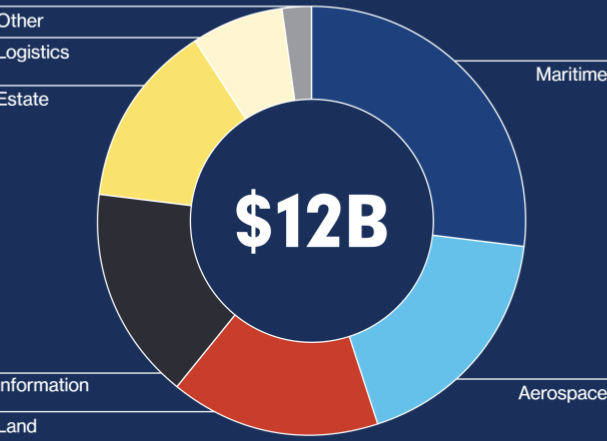
| Area | Share of Spending (estimated) | Amount |
| % | Billion, NZD (CAD) | |
|
Maritime |
27 | 3.2 (2.7) |
| Aerospace | 18 | 2.2 (1.8) |
| Land | 16 | 1.9 (1.6) |
| Information | 16 | 1.9 (1.6) |
| Estate | 14 | 1.7 (1.4) |
| Logistics | 7 | 0.8 (0.7) |
| Other | 2 | 0.3 (0.2) |
Graphic Source: New Zealand Government, 2025 Defence Capability Plan, p. 7. Note: The share of spending is estimated based on the graphic.
As well as being very cursory, this spending plan is also extremely ambitious. Achieving a 12B NZD budget increase by 2029 would mean an average increase in spending of 3B NZD per year. Considering the 2024–25 defence budget was 3.2B NZD (2.6 billion CAD) dollars, this would require the government to almost double its spending within a year, to 6.2B NZD (5.12 billion CAD). It would also represent a jump in defence spending from 0.8% of GDP18 to 1.5% of GDP. For reference, Canada’s previous plan to go from 1.37% to 2% over 7 years was called “a challenge” and criticized for “[being] based on an erroneous GDP forecast” by the Parliamentary Budget Office.20 The most recent promise to reach the 2% mark by the end of the 2025 budget year is helped partially by the inclusion of the coast guard into the defence budget, but the supplementary budget—while approved—remains subject to the same spending barriers highlighted by the Parliamentary Budget Office. Similarly, the Hague summit commitment to spending 3.5% of GDP on defence and an additional 1.5% on “defence-related” expenditures by 2035, remains vague, with—at the time of writing—no clear plan beyond the creation of the Defense Investment Agency.
To support the feasibility of the New Zealand figures, analysts have argued that the bulk of the spending would be capital expenditure: planes, tanks, and buildings. However, as argued in the Canadian case, there are limits to fixing a capacity gap by throwing money at the problem.26 Equipment requires trained personnel to operate, inefficient and politicized procurement can delay spending indefinitely while depreciated equipment becomes unserviceable (e.g. New Zealand’s Manawanui crash;27 Canada’s F-35 procurement). In sum, the effectiveness of some of this spending remains questionable, if it is not matched with policy changes and budget reprioritisation, as seen in Canada. The 2025-26 budget only allocated an additional 155 NZD (128 million CAD) to defence spending, with an additional 1.044B NZD (862 million CAD) promised in investment. This represents less than 40% of the increase required to meet their goals. Similarly, the forecasted spending for the 2026-27 year would amount to a spending increase of only 3.03 billion, missing the mark by almost 50% Nevertheless, the targets of this spending may provide some inspiration for Canada.
For example, a major emphasis of the New Zealand policy is the integration of emerging technologies into military operations. It dedicates an entire section—one seventh—of the chapter on investment to technology as a “critical enabler” and a second to the “information domain.” It explicitly mentions “the innovative use of new technologies” as a pillar of its strategy. To leverage these technologies the policy proposes a more flexible approach, shortening the review cycle to two years (instead of the previous six years).30 In a more practical sense, the plan promises the creation of a “technology accelerator” and the digitalization of their systems. In describing the plan for digitalization, the value of reliable, timely data for strategic decisions is central, but also the growing importance of resilient supply chains in procuring the equipment required to obtain this data. To this point, the accelerator is specifically designed to increase the industry’s understanding of the force’s needs, facilitating technology transfers and ensuring the ability of the force to procure domestically or through “new ways of delivering.”
This approach is echoed in the aerospace section, mentioning the importance of domestic access to allied satellites, and in the land section, emphasizing the role of a “Network Enabled Army” in leveraging existing allied infrastructure while amplifying within-force capabilities. In sum, the Capability Plan proposes technology as a tool for increased force and alliance effectiveness while acknowledging the risk of the global interconnection in both supply chains and networks. To leverage its advantages and minimize the risks, it sees domestic production capacity as complimentary to global procurement and as an agility multiplier, enabling the force to adapt more quickly.
This perspective clashes with the 2018 policy statement, in which technology appeared as a threat and risk multiplier: “[NZDF deployments] are becoming more complex, with more capable threat actors that are increasingly using a range of technologies in novel and challenging ways.” That policy repeatedly reiterates the increased threat posed by non-state actors having enhanced capabilities and the “changing nature of conflict,” notably as it pertained to cybersecurity. It described “complex disruptors,” including technological changes, as “forces for disorder.” It gave few solutions for the New Zealand Defence Force, beyond insisting that it needed to “keep pace.” This shift in rhetoric may indicate a changing perspective on the potential of the technological transition for the armed forces and the ways the country and its economy can both contribute and benefit from such a transition.
More specifically, a particularly interesting area of technology investment for Canada discussed in New Zealand’s plan is uncrewed and remotely controlled vehicles. While the current Canadian policy acknowledges these innovations as threats to national security, it makes no mention of their role for Canada’s capacity rebuilding or even for operational effectiveness and readiness. Constrained by similar population and recruitment challenges, these tools could greatly amplify Canada’s abilities. This technology is also particularly relevant as Canada is home to some of the most cutting-edge aerospace companies in the world and benefits from the expertise of leading AI scholars. Using these strengths, as well as opportunity created by the reinvigorated military spending, Canada is well positioned to serve as a reference for its allies’ uncrewed aerial vehicle strategies and capabilities.
Finally, an interesting criterion set in the procurement process by the New Zealand policy is the “durability” of assets. Neither Our North Strong and Free, nor the 2014 Defence Procurement Strategy, seem to consider this factor in deciding, respectively, what to procure or how to procure. While hastening procurement is key, especially for Canada, the reality of waning and waxing military funding and the long production times mean it is very likely that Canada, despite its best efforts, will continue to operate outdated equipment in the future. Therefore, including a similar criterion into defence procurement may be a wise, forward looking, move.
Conclusion
While New Zealand’s new policy is cursory and appears mostly as a wish list, it provides a useful perspective on the approach of a country which, while considerably smaller, greatly resembles Canada and faces similar challenges. It also notes the importance of agility, emphasizing that the capability plan will be reviewed every two years. Particularly interesting for Canada is:
1. The scope of who New Zealand considers potential defence partners, and its approach to partnerships:
a. While NATO and the United States will certainly remain Canada’s most important allies, establishing partnerships with smaller or neutral countries would help Canada increase its awareness of strategic regions and reduce dependence on the United States’ network;
b. Consequently, Canada should also reconsider the scope and aims of its defence partnerships, considering what each ally may bring. Full strategic and policy alignment with close partners, such as France or the United Kingdom, may be required, while ad hoc information sharing or logistic agreements with regional partners may be more appropriate.
2. New Zealand’s perspective on the role of the military in foreign policy, beyond security.
a. Canada’s policy clearly states the awareness of the Department of National Defence that it exists as part of a broader Canadian foreign policy, but it may be interesting to formalize this approach, especially as it goes both ways. How can Global Affairs Canada utilize military capacity to reinforce aid missions or strengthen trade partnerships? How could the deployment of the Canadian Armed Forces to support a country affect its interest in trade negotiations? Canada may not currently have a comprehensive foreign policy strategy, but it has regional strategies in the Indo-Pacific and Africa. Both mention regional security but fail to link this security with other national and economic interests.
3. The spending plan’s emphasis on uncrewed and autonomous weapons (UAW):
a. Canada should continue its current initiative to bolster recruitment, but its population, and the per-person cost of its personnel, will inevitably act as a barrier to capacity growth. As previously mentioned, technology and spending aren’t a panacea for capability, especially considering the turnaround required by technology development, procurement, and training, but technology can act as a medium- to long-term multiplier. Furthermore, in the Canadian context, UAWs can shrink distances and enable deployment in difficult conditions, such as the Arctic.
b. Canada, considering its existing aerospace expertise, should position its industry to benefit from New Zealand’s and other allies’ interest in this capacity.
Note: 1 CAD = 1.21 NZD
Sources
1 New Zealand Ministry of Defence, “2025 Defence Capability Plan,” April 7, 2025, https://www.defence.govt.nz/assets/publications/Defence-Capability-Plan-25.pdf
2 Frank Gardner, “Five Eyes: Is the Alliance in Trouble Over China?,” BBC, 4 May 2021, https://www.bbc.com/news/world-56970640 ; Stephen Dziedzic, ‘Amid Rising Tensions with China, New Zealand “Uncomfortable” with Expanding Five Eyes Remit,” ABC News, 19 April 2021, https://www.abc.net.au/news/2021-04-19/new-zealand-five-eyes-intelligence-sharing-china-australia/100078834.
3 Charlotte Graham-Mclay, “Crew of New Zealand Navy Ship That Sank Off Samoa Lacked Training and Experience, Inquiry Finds,” AP News, 4 April 2025, https://apnews.com/article/zealand-navy-ship-samoa-manawanui-inquiry-defense-5d0e78e8e37c46de8bba7aca6e705281.
4 Judith Collins, “Multi-Billion Dollar Defence Plan Unveiled,” Beehive, 7 April 2025, https://www.beehive.govt.nz/release/multi-billion-dollar-defence-plan-unveiled.
5 New Zealand Ministry of Defence, “2025 Defence Capability Plan,” April 7, 2025, https://www.defence.govt.nz/assets/publications/Defence-Capability-Plan-25.pdf 10; Bill Blair, “Remarks by Minister of National Defence Bill Blair to the Canadian Global Affairs Institute Conference on NORAD Modernization,” Speech, Department of National Defence, 8 May 2024, https://www.canada.ca/en/department-national-defence/news/2024/05/remarks-by-minister-of-national-defence-bill-blair-to-the-canadian-global-affairs-institute-conference-on-norad-modernization.html.
6 William Sterling Blair, “Message from the Minister of National Defence,” Department of National Defence, 8 April 2024, https://www.canada.ca/en/department-national-defence/corporate/reports-publications/north-strong-free-2024/message-mnd.html.
7 Department of National Defence, Our North, Strong and Free: A Renewed Vision for Canada’s Defence, 2024, https://www.canada.ca/en/department-national-defence/corporate/reports-publications/north-strong-free-2024.html.
8 Nancy Swarbrick and Dan Clearwater, “Search and Rescue – New Zealand Search and Rescue Organisations,” in Te Ara – the Encyclopedia of New Zealand, accessed 20 October 2025, https://teara.govt.nz/en/map/13199/new-zealands-search-and-rescue-region.
9 UN Comtrade, “Trade Data,” https://comtradeplus.un.org.
10 Trevor Hunnicutt and David Brunnstrom, “Trump: If NATO Members Don’t Pay, US Won’t Defend Them,” Reuters, March 6, 2025, https://www.reuters.com/world/trump-if-nato-members-dont-pay-us-wont-defend-them-2025-03-07/.
11 “Carney Pledges Transformation of Canadian Military to Meet Global ‘Turning Points’,” CBC News, 9 June 2025, https://www.cbc.ca/player/play/video/9.6790683.
12 Matina Stevis-Gridneff, “Menaced by Trump, Canada Prepares to Join E.U. Military Industry Efforts,” The New York Times, 19 March 2025, https://www.nytimes.com/2025/03/19/world/canada/canada-eu-military-industry-trump.html; Murray Brewster, “Carney Says Canada Is Looking to Join Major European Military Buildup by July 1,” CBC News, 27 May 2025, https://www.cbc.ca/news/politics/rearm-europe-deal-canada-carney-interview-1.7545303.
13 Alexander Salt, “Canada and the Interoperability Challenge,” Canadian Global Affairs Institute, October 2024, https://www.cgai.ca/canada_and_the_interoperability_challenge.
14 The Hon. Richard Marles MP and The Hon. Judith Collins KC, “Australia - New Zealand Joint Statement on Closer Defence Relations,” December 6, 2024, https://www.minister.defence.gov.au/statements/2024-12-06/australia-new-zealand-joint-statement-closer-defence-relations.
15 New Zealand Defence Force, “Australian and New Zealand Armies Bilateral Service Cooperation Plan ‘Plan ANZAC,’” June 2023, pp. 3-7.
16 Fabrice Blais-Savoie, “Coordinating the Multinational Brigade in Latvia,” Canadian Global Affairs Institute, April 2025, https://www.cgai.ca/coordinating_the_multinational_brigade_in_latvia.
17 Agriculture and Agri-Food Canada, “Canada’s Food Security Dependencies,” May 2020, https://agriculture.canada.ca/en/sector/data-reports/canadas-food-security-dependencies .
18 New Zealand Treasury, “Fiscal Time Series Historical Fiscal Indicators 1972-2024,” 10 January 2025, https://www.treasury.govt.nz/publications/information-release/data-fiscal-time-series-historical-fiscal-indicators.
19 Computed from New Zealand Treasury, “Budget Economic and Fiscal Update 2025,” 22 May 2025, https://www.treasury.govt.nz/publications/efu/budget-economic-and-fiscal-update-2025.
20 Christopher Penney, “The Fiscal Implications of Meeting the NATO Military Spending Target,” Office of the Parliamentary Budget Officer, 30 October 2024, https://www.pbo-dpb.ca/en/publications/RP-2425-020-S--fiscal-implications-meeting-nato-military-spending-target--repercussions-financieres-atteinte-cible-depenses-militaires-fixee-otan.
21 Department of National Defence, “Canada’s New Government Is Rebuilding, Rearming, and Reinvesting in the Canadian Armed Forces,” June 9, 2025, https://www.canada.ca/en/department-national-defence/news/2025/06/canadas-new-government-is-rebuilding-rearming-and-reinvesting-in-the-canadian-armed-forces.html; Prime Minister’s Office, “Canada’s New Government Is Rebuilding, Rearming, and Reinvesting in the Canadian Armed Forces,” June 9, 2025, https://www.pm.gc.ca/en/news/news-releases/2025/06/09/canadas-new-government-rebuilding-rearming-and-reinvesting-canadian.
22 House of Commons, “Supplementary Estimates (A) for the Fiscal Year Ending March 31, 2026,” Vote 19 (2025), https://www.ourcommons.ca/members/en/votes/45/1/19.
23 “Defence Expenditures and NATO’s 5% Commitment,” NATO, 27 August 2025, https://www.nato.int/cps/en/natohq/topics_49198.htm
24 “Prime Minister Carney Launches New Defence Investment Agency to Rebuild, Rearm, and Reinvest in the Canadian Armed Forces Faster,” Prime Minister of Canada, 10 January 2025, https://www.pm.gc.ca/en/news/news-releases/2025/10/02/prime-minister-carney-launches-new-defence-investment-agency-rebuild.
25 Katie Kenny, “The Multibillion-Dollar Boost for New Zealand’s Military: What You Need to Know,” RNZ, 12 April 2025, https://www.rnz.co.nz/news/political/557934/the-multibillion-dollar-boost-for-new-zealand-s-military-what-you-need-to-know.
26 Charlotte Duval-Lantoine, “Throwing Money at Recruitment Won’t Fix the CAF’s Personnel Problems,” The Hill Times, 6 March 2024, https://www.hilltimes.com/story/2024/03/06/throwing-money-at-recruitment-wont-fix-the-cafs-personnel-problems/413627/; Philippe Lagassé and Justin Massie, “Don’t Count on Us: Canada’s Military Unreadiness,” War on the Rocks, April 11, 2024, https://warontherocks.com/2024/04/dont-count-on-us-canadas-military-unreadiness/.
27 Charlotte Graham-Mclay, “New Zealand Military Inquiry Finds ‘Series of Human Errors’ Led to Navy Ship Manawanui Sinking Off Samoa - ABC News,” AP News, November 28, 2024, https://apnews.com/article/zealand-navy-ship-samoa-manawanui-sinking-military-dd9cccaa0739ef98f615cc4969a117b0.
28 Daniel Lang and Mobina S.B. Jaffer, “Reinvesting in the Canadian Armed Forces: A Plan for the Future,” (Standing Senate Committee on National Security and Defence, May 2017), https://sencanada.ca/content/sen/committee/421/secd/reports/secddprreport_final_e.pdf.
29 New Zealand Treasury, “Budget Economic and Fiscal Update 2025,” May 22, 2025, https://treasury.govt.nz/publications/efu/budget-economic-and-fiscal-update-2025 ; The Treasury New Zealand, “Data Library - Budget 2025,” Text, NZ 2025 Budget, May 22, 2025, https://www.budget.govt.nz.
30 New Zealand Defence Force, “Strategic Plan 2019-2025,” https://www.nzdf.mil.nz/assets/Uploads/DocumentLibrary/NZDF-Strategic-Plan-2019-2025-v2.pdf.
31 New Zealand Government, “Strategic Defence Policy Statement,” 2018, https://www.defence.govt.nz/assets/publications/Strategic-Defence-Policy-Statement-2018.pdf.
32 Innovation, Science and Economic Development Canada, “State of Canada’s Aerospace Industry,” 11 July 2024, https://ised-isde.canada.ca/site/aerospace-defence/en/state-canadian-aerospace-industry.
33 Adam McDowell, “Artificial Intelligence Was Made in Canada. How Can We Be World Leaders Once Again?,” 14 February 2025, https://thehub.ca/2025/02/14/artificial-intelligence-was-made-in-canada-so-why-arent-we-leading-the-ai-race/ ; “The Power List: AI,” Macleans, 1 April 2024, https://macleans.ca/society/the-power-list-ai/.
34 Fabrice Blais-Savoie, A Dual-Use Solution to a Dual Problem: Canada’s Innovation and Defence Spending, no. 32, Policy Report, (Network for Strategic Analysis, 2025), 6, https://ras-nsa.ca/a-dual-use-solution-to-a-dual-problem-canadas-innovation-and-defence-spending/.
35 Service Canada, “Leveraging Defence Procurement to Create Jobs and Economic Growth in Canada,” news releases, March 17, 2014, https://www.canada.ca/en/news/archive/2014/03/leveraging-defence-procurement-create-jobs-economic-growth-canada-825559.html.
36 Global Affairs Canada, “Canada’s Africa Strategy: A Partnership for Shared Prosperity and Security,” 2025, https://www.international.gc.ca/gac-amc/publications/transparency-transparence/canada-africa-strategy-strategie-afrique.aspx; Global Affairs Canada, “Canada’s Indo-Pacific Strategy,” 2025, https://www.international.gc.ca/transparency-transparence/indo-pacific-indo-pacifique/index.aspx.
37 Kyle Duggan, “National Defence Considering Purchase of Fighter Drones That Could Fly with F-35,” The Canadian Press, July 12, 2025, https://vancouver.citynews.ca/2025/07/12/national-defence-considering-purchase-of-fighter-drones-that-could-fly-with-f-35/.
38 Unshin Lee Harpley, “Drones Take on the Arctic,” Air and Space Forces Magazine, November 1, 2024, https://www.airandspaceforces.com/article/drones-take-on-the-arctic/.
Canadian Global Affairs Institute
The Canadian Global Affairs Institute focuses on the entire range of Canada’s international relations in all its forms including (in partnership with the University of Calgary’s School of Public Policy), trade investment and international capacity building. Successor to the Canadian Defence and Foreign Affairs Institute (CDFAI, which was established in 2001), the Institute works to inform Canadians about the importance of having a respected and influential voice in those parts of the globe where Canada has significant interests due to trade and investment, origins of Canada’s population, geographic security (and especially security of North America in conjunction with the United States), social development, or the peace and freedom of allied nations. The Institute aims to demonstrate to Canadians the importance of comprehensive foreign, defence and trade policies which both express our values and represent our interests.
The Institute was created to bridge the gap between what Canadians need to know about Canadian international activities and what they do know. Historically Canadians have tended to look abroad out of a search for markets because Canada depends heavily on foreign trade. In the modern post Cold War world, however, global security and stability have become the bedrocks of global commerce and the free movement of people, goods and ideas across international boundaries. Canada has striven to open the world since the 1930s and was a driving factor behind the adoption of the main structures which underpin globalization such as the International Monetary Fund, the World Bank, the World Trade Organization and emerging free trade networks connecting dozens of international economies. The Canadian Global Affairs Institute recognizes Canada’s contribution to a globalized world and aims to inform Canadians about Canada’s role in that process and the connection between globalization and security.
In all its activities the Institute is a charitable, non-partisan, non-advocacy organization that provides a platform for a variety of viewpoints. It is supported financially by the contributions of individuals, foundations, and corporations. Conclusions or opinions expressed in Institute publications and programs are those of the author(s) and do not necessarily reflect the views of Institute staff, fellows, directors, advisors or any individuals or organizations that provide financial support to, or collaborate with, the Institute.


Showing 1 reaction