
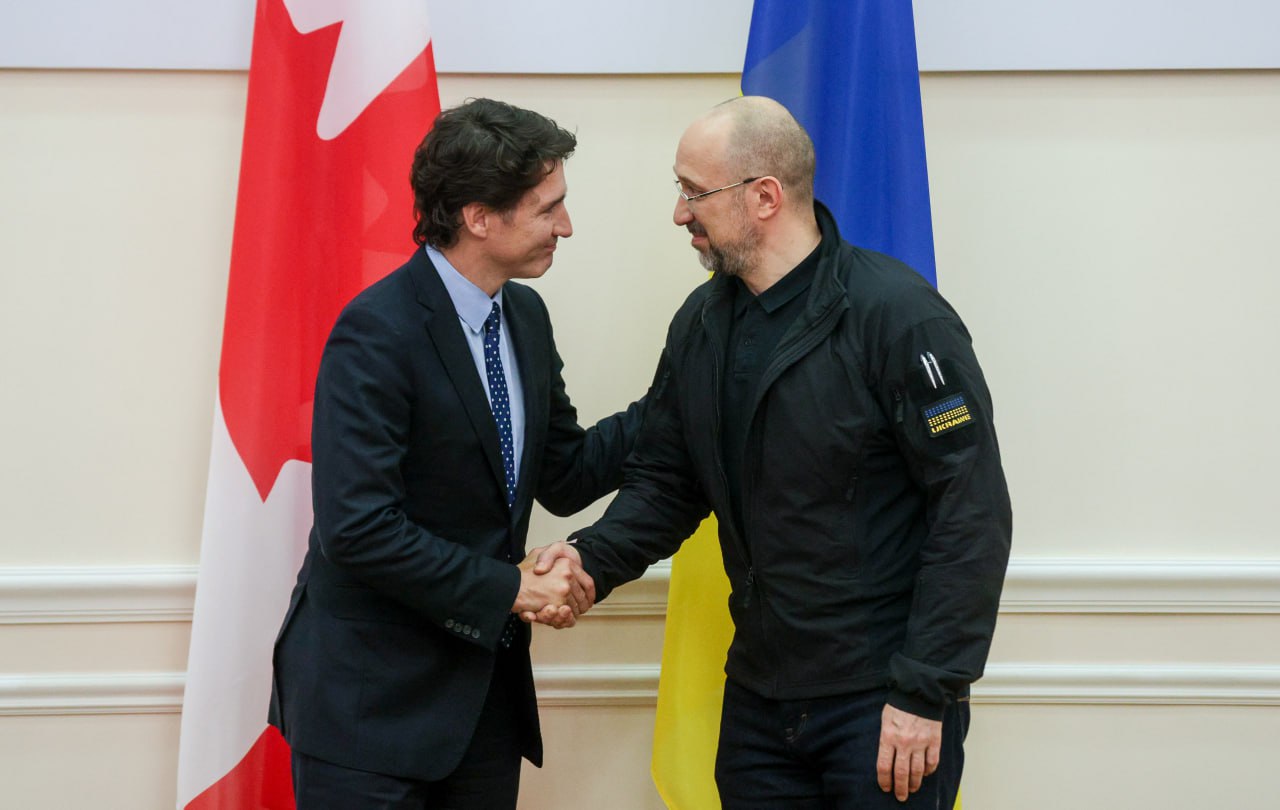
 Image taken by the Government of Ukraine
March 2026
Table of Contents
- Introduction
- Air Power and Air Defence
- Emerging Technology and Electronic Warfare
- Fires
- Ground Combat and Combined Arms
- Sustainment
- Command and Control, as well as Small Unit Leadership
- Training and Mobilization
- Institutional Resilience
- Information
- Personnel Recovery
- Lessons Identified and Policy Implications for Canada
- End Notes
- About the Author
- Canadian Global Affairs Institute
Introduction
For Canada, the experience of Ukraine provides a rare body of contemporary evidence on how modern high‑intensity warfare unfolds and what institutional adaptations are required to survive it. The central implication is clear: modern high‑intensity war rewards institutions that can learn faster than their adversaries while sustaining logistics, leadership, and public resilience over time. This Canadian Global Affairs Institute report, therefore, examines what Ukraine’s experience suggests for Canadian defence policy, force development, and national preparedness.1
The Russia–Ukraine War has become a demonstration of what high-intensity conflict looks like when industrial-era violence and digital-era speed intersect, in this case juxtaposing elements of the First World War with the Information Age. It is a war fought with trenches, minefields, artillery barrages, armoured assaults, and mass mobilization, but also with drones in the hands of small units, constant satellite connectivity, rapid intelligence sharing, and an unending struggle for control of the electromagnetic and cybernetic spectrum. The War has unfolded with unusual transparency, as commercial imagery, open-source analysis, and near real-time video have narrowed the gap between action and public awareness. This visibility showcases the consequences of error, accelerates adaptation, and makes deception harder but also more necessary. The battlefield has become a learning laboratory in which tactics, technology, and organization evolve rapidly, while the strategic stakes for the Ukrainians remain existential. Lessons from this war concern how forces learn to survive, adapt, and endure when the enemy is competent, and when the fight lasts years rather than weeks. Inculcating these lessons is akin to “building an airplane in flight.”
One of the most durable object lessons is the fragility of strategic assumptions. Russia’s opening operations reflected confidence that political collapse could be induced quickly, that institutions would fracture, and that resistance would be fragmented and disorganized. Those assumptions shaped operational design: multiple thrusts, bold special actions, a desire to seize key nodes rapidly, and an expectation that logistics and reserves could be improvised once the state was paralyzed. Ukraine’s survival demonstrates that a state’s ability to continue governing, communicating, and mobilizing is a form of combat power. When the government remains functional, and society remains cohesive, an invader can be culminated before they achieve their initial goals. Ukraine forced Russia to extend operations longer than expected, stretching supply lines and exposing units to ambushes and attrition. Such strategic miscalculation does not merely delay success for the attacker; it can diminish any initial gains and remove their freedom to act by allowing the defender to consolidate, request external assistance, and reorganize military capacity.
The War further reinforces that the contemporary battlefield punishes concentration and predictability. Sensors are now abundant at multiple echelons, while small drones provide immediate observation. Commercial satellites reveal changes in posture and infrastructure, and electronic reconnaissance can expose transmissions and movement patterns. With omnipresent surveillance the norm, the cost of being discovered rises because detection can quickly be converted into strikes, often with the aid of automated target handoff and pre-planned fires. This has driven dispersion, frequent relocation, deeper camouflage, and the routine use of decoys. It has also accelerated time. If earlier wars allowed hours or days between reconnaissance and attack, this war often compresses that interval to minutes. The result is an environment in which survivability depends on mobility, emissions discipline, and the ability to conduct essential tasks—briefing, maintenance, resupply, casualty evacuation—under persistent observation. Forces that treat concealment as a temporary condition rather than a continuous requirement pay a steep price, especially when the enemy has sensors and can mass fire at speed.
Air Power and Air Defence
Air power provides a clear example of denial replacing dominance. Russia entered the War with numerical and technical advantages in aircraft, yet it struggled to achieve decisive air superiority. Ukraine’s air defence combined legacy (Soviet) systems, mobile launchers, and disciplined radar employment. Operators often kept sensors off until the moment of engagement, relocated frequently, and relied on a network of observers and other passive detection means to complete the targeting cycle. This approach forced Russian aviation to accept higher risk when operating close to the front and encouraged greater reliance on standoff tactics. Over time, the air war has shifted toward long-range strikes, glide bombs, cruise missiles, and drones rather than sustained close air support over contested airspace. The lesson is that an air force cannot assume freedom of action simply because it is larger. Air superiority is a campaign outcome that depends on the suppression and destruction of defences, the denial of intelligence, and the willingness to accept losses. A capable defender can deny air dominance by combining mobility, dispersion, deception, and layered fires, even with a mix of older and newer systems.
The air domain also highlights the importance of layered defence against long-range threats and the integration of air defence into national resilience. Ukraine has endured repeated strikes on cities and infrastructure, and protecting critical nodes has required a mix of capabilities: high-end systems against ballistic and cruise threats, medium-range systems against aircraft and missiles, and lower-cost approaches against drones. The objective is not perfect protection, which is rarely attainable in sustained campaigns, but the reduction of damage to a level that preserves strategic functioning. This has forced hard prioritization in defending energy systems, industrial nodes, ports, and population centres while accepting that some targets will nevertheless be hit.2 Air defence is therefore a national enterprise and not a single military unit. It requires resilient power, redundancy, rapid repair, and public preparedness for interruptions, because an adversary’s long-range strike campaign aims not only to destroy material but to erode the defender’s confidence and will.
For Canada, this underscores the importance of investing in layered air and missile defence, and in training to operate in contested airspace rather than assuming freedom of action for air and aviation assets.
Emerging Technology and Electronic Warfare
Unmanned systems have been the most visible tool of adaptation, yet the more profound lesson is organizational rather than technological. Drones are significant because they have changed the economics and tempo of reconnaissance and strike. Cheap drones give squads and platoons real-time observation, artillery adjustment, and battle damage assessment, shrinking the gap between seeing and firing. Longer-range drones and loitering munitions provide persistent pressure on logistics, artillery, and command nodes, including in areas previously considered relatively safe. The range of tasks has expanded rapidly: reconnaissance and surveillance; collecting coordinates and characteristics of objects; targeting and adjusting artillery; monitoring the results of strikes; remote mining; and even limited logistics tasks such as small resupply or delivery of critical items. The lesson is not that drones replace other combat arms, but that they increase the effectiveness of every arm by reducing tactical uncertainty. Conversely, a unit that cannot see becomes blind in a battlespace where the enemy likely can.
The proliferation of drones has altered the behaviour of both offence and defence. Defensive positions can no longer assume that they will remain unseen without effort. Offensively, even small attacks can be observed and disrupted by rapid fires directed through drone spotting. The presence of drones encourages smaller, more deliberate movements, more emphasis on concealment, and more frequent use of decoys. It also increases the tactical value of simple countermeasures, such as overhead cover, camouflage nets, smoke, disciplined movement in and out of positions, and drills for immediate action upon detecting a drone. On the offensive side, drones have enabled new forms of “micro-strike” in which individual vehicles, trenches, or weapons teams can be targeted quickly with First Person View (FPV) drones or loitering munitions. This has complicated the use of armoured vehicles and made resupply convoys and maintenance areas more vulnerable. The lesson for future forces is that counter-drone capability must exist at every echelon not only as a centralized asset. Detection, electronic protection, kinetic defeat, and rapid adaptation of tactics are now as routine as camouflage and fieldcraft.
The electromagnetic spectrum has emerged as a primary battleground rather than a support function. Jamming and spoofing degrade navigation and disrupt drone control; electronic detection exposes command posts and firing positions; and communications can become intermittent precisely when coordination is most needed. The environment punishes forces that assume reliable digital networks. It rewards forces that train for degraded operations and build procedural resilience. Frequency agility, alternative communication methods, the use of wired lines when feasible, disciplined emissions, and the ability to operate on intent3 when communications fail are no longer niche skills. Electronic warfare also shapes the viability of other systems. When GPS is disrupted, the precision of aerial platforms and weapons can degrade. When data links are unreliable, the temptation is to transmit more, which can further expose units. A core lesson is that spectrum management is critical: commanders must decide when to emit, when to go quiet, and how to balance situational awareness against survivability. This is a continuous balancing act, not a one-time choice.
Electronic warfare has regained its Cold War importance. Precision munitions and guided rockets can be decisive, but they depend on reliable targeting, navigation, and communication. When those are contested, the value of precision can drop, and the expenditure required to achieve a given effect can rise sharply. This teaches that forces need a mix: precision for high-value targets and time-sensitive opportunities, and volume fire for suppression and for moments when precision is degraded. It also teaches that protection of the kill chain is as important as the munition itself. Targeting networks requires redundancy, data discipline, and the ability to revert to manual processes. In practice, both sides have learned to innovate quickly by altering drone control methods, changing frequencies, upgrading software, modifying platforms, and adapting tactics to new jammers. The lesson is that adaptation is not an occasional improvement program; it is a battlefield function. The side that can shorten the observation-to-change cycle gains temporary advantages that can accumulate into operational effect.
For Canada, this suggests that counter‑Unmanned Aerial Systems (UAS), or drone capabilities, electronic protection, and drone literacy should become routine skills across formations rather than niche specializations.
Fire
The battle of the fires illustrates both enduring truths and modern accelerants. Artillery remains the dominant killer in large-scale land war, shaping movement, morale, and the possibility of manoeuvre. What has changed is the speed of the counter-battery cycle and the coupling of fires with distributed sensing. Drones for spotting, counter-battery radars, and rapid sharing of coordinates mean that firing positions can be identified quickly, and that retaliation can arrive before crews can displace. The practical lesson is that artillery must fight for survivability as much as for effect. It must integrate reconnaissance, deception, and mobility. It must also manage ammunition intelligently.
Missile forces and rocket artillery demonstrate the leverage of long-range fires at the operational level. Systems that can strike deep supply nodes, bridges, rail junctions, command centres, air defence components, and concentrations of artillery impose dilemmas that slow an opponent’s operations. Long-range strikes force dispersion, hardening, redundancy, and defensive investment. Yet the War also shows limits. A strike system without a sustainable munitions supply becomes a periodic disruption rather than a continuous operational tool. Therefore, the War teaches that industrial capacity, procurement agility, and sustainment planning are strategic capabilities.
For Canada, the implication is that land forces must integrate artillery with drones, counter-battery sensors, and mobile survivability practices while ensuring sufficient ammunition stocks and industrial capacity to sustain capability for long-range fires in a prolonged conflict.
Ground Combat and Combined Arms
Ground combat has shown the power of a well-prepared defence. Dense mine belts, trenches, obstacles, and layered fires can slow offensives, canalize assaults, and impose heavy losses. Even with modern armoured vehicles, advancing forces must still solve classic problems: breaching under fire, clearing mines, protecting engineers, and coordinating infantry, armour, and fires in a compressed window. When the attacker fails to synchronize their offensive operations, the defence can defeat piecemeal efforts and force repeated, costly assaults. The War has also reminded observers that mines are not merely tactical nuisances; when used in depth and integrated with observation and fires, they become operational barriers. They force attackers to commit scarce breaching assets, slow tempo, and expose units to artillery and drone strikes. The lesson for modern forces is that engineering is not an afterthought. Breaching, obstacle reduction, and survivability engineering are essential to any manoeuvre concept, and their effectiveness depends on training, rehearsals, and integration with fires and air defence.
The War highlights the value of flexible defensive approaches such as mobile defence, controlled retrograde,4 and the selective use of counterattacks. When a defence is rigid, it can be broken by concentrated attack and then exploited. When a defence is flexible, it can trade space for time, draw an attacker into prepared fires, and preserve combat power for decisive moments. This approach demands disciplined command and control and a shared understanding of intent; it often requires units to retrograde under pressure without collapsing, to reoccupy alternate positions, and to coordinate fires as the line shifts. It also involves mobility and logistics, because movement without sustainment becomes flight rather than defence. The War shows that defensive success is not merely holding ground; it is maintaining coherence, conserving combat power, and ensuring the defender can reconstitute and counter. The ability to conduct deliberate retrograde while remaining lethal is a sophisticated skill that must be trained, not improvised.
Armour has not become obsolete. Tanks and infantry fighting vehicles still provide protected mobility and direct firepower, and they can be decisive when integrated with dismounted infantry and supported by fires and engineers. However, they are increasingly exposed to mines, top-attack munitions, drone-guided artillery, and close-range FPV drones. These threats make careless massing and predictable routes extremely costly. The lesson is that armoured forces must use combined arms discipline and survivability measures: dispersion, route variation, integration with dismounted reconnaissance, rapid smoke employment, use of deception and decoys, and aggressive counter-drone and electronic protection. The War also highlights maintenance and recovery as combat functions. Therefore, armoured effectiveness depends not only on the platform but also on the sustainment system—including recovery vehicles, spare parts, trained mechanics, and protected supply routes—that keep armour operational over time.
For Canada, the lesson is that prepared defences, obstacle systems, and engineering capabilities remain decisive in modern warfare and must be fully integrated into combined arms operations. The Canadian Armed Forces (CAF) must also adapt armoured forces to drone-saturated battlefields through dispersion, deception, counter-drone protection, and robust maintenance and recovery systems that sustain combat power over time.
Sustainment
Logistics emerges as a decisive lesson, because a war of attrition is fundamentally a war of supply and regeneration. Ammunition, fuel, spare parts, food, medical support, and maintenance determine whether tactical success can be repeated or merely endured once. The War demonstrates that sustainment is both vulnerable and adaptable. Strikes against depots, rail lines, bridges, ports, and energy infrastructure aim to fracture supply chains and isolate front-line units. In response, forces must build redundancy: multiple routes, smaller and more frequent resupply, dispersion of stocks, and rapid repair of damaged infrastructure. Logistics also includes mundane but decisive realities: feeding units, clothing them, providing shelter, and sustaining them through winter and extended periods in the field. These requirements do not disappear in modern war; they become more difficult because drones and long-range fires contest delivery itself. The War thus teaches that logistics is not simply a rear-area function. It must be integrated into planning, protected by air defence and counter-drone measures, and designed for operation under continuous threat.
The maintenance of diverse equipment has been particularly instructive. Ukraine’s forces have fielded systems from multiple partners alongside legacy platforms. This provides capability but creates a complex sustainment burden: different parts, different training requirements, different maintenance procedures, and different supply chains. The lesson is that capability is not only about acquiring platforms; it is about building the infrastructure to keep them operational. That includes trained maintainers, diagnostic equipment, documentation, spare parts pipelines, and processes for battle damage repair. It also includes organizational adaptation: maintenance units must learn quickly, coordinate with partners, and establish easily accessible feedback loops to identify and address common failures. For partners and allies, the War highlights that delivering equipment without sustainment planning can create short bursts of capability followed by long periods of frustration. Training must include maintainers as well as operators, and sufficient supplies to keep these weapons in the fight.
For Canada, the implication is that logistics systems must be robust and designed to operate under persistent surveillance, long‑range fires, and drone threats rather than assuming secure rear areas. It also reinforces the need for technical sustainment processes for varied equipment and platforms.
Command and Control, as well as Small Unit Leadership
Command and control have been stressed by distance, dispersion, and the speed of the kill chain. The War rewards forces that combine clear intent with decentralized execution, enabling small units to act quickly while maintaining coherence across formations. When communications are disrupted, rigid structures can become paralyzed, and over-centralized decision-making can be fatally slow. The War highlights the value of mission-type command, in which commanders set purpose, priorities, and boundaries while empowering subordinates to exploit fleeting opportunities. It also shows that staff work and battle rhythm must be adapted to a faster environment. If decisions are made after the situation has already changed, planning becomes an academic exercise. Practical command and control resilience includes alternate headquarters, the ability to shift communications methods, rehearsed procedures for loss of contact, and the discipline to avoid unnecessary emissions. The War also teaches that command posts and logistics nodes are targets. Survivability requires dispersion, mobility, deception, and constant attention to signatures, because a headquarters that is found can be struck quickly by rockets, drones, or long-range fires.
Small-unit leadership and the evolution of the non-commissioned officer role stand out as consequential lessons. In dispersed, lethal environments, junior leaders become the primary decision-makers in contact, and they must integrate fires, movement, casualty care, and local adaptation. Ukrainian experiences show the need to expand NCO responsibilities, strengthen NCO-officer relationships, and build training systems that can operate even during war. External training support can help, but the decisive factor is internal culture: whether initiative is rewarded, whether standards are enforced, and whether leaders are trusted to act without constant permission. The War also highlights the importance of instructors in wartime and the challenge of protecting training resources from both physical threat and the drain of sending experienced personnel back to the front. The lesson is that leadership development is a strategic resource. Armies that cannot generate and regenerate competent small-unit leaders will struggle in a prolonged war, regardless of the quality of their equipment.
For Canada, this underscores the continued importance of mission command and the need to prioritize the development and empowerment of NCOs and junior officers, ensuring that small-unit leaders can exercise initiative and integrate combat functions effectively in dispersed, communications-degraded environments.
Training and Mobilization
Training and mobilization have shaped endurance as much as battlefield systems. Sustaining a large force over years requires a pipeline that recruits, trains, and integrates new personnel while preserving experienced cadres. Ukraine’s experience illustrates the tension between speed and quality. Short training cycles can generate numbers, but without sufficient instructor cadre and repetition, performance suffers; long cycles build competence but may not match urgent manpower needs. The War teaches the value of modular training that focuses on core survivability skills, small-unit tactics, and the realities of the current front, while also showing the need to create pathways for more advanced specialization as time allows. It also highlights the importance of rotation and rest. Mobilization is therefore not only about bringing people in; it is about sustaining them physically and mentally and building leadership depth so that units do not collapse when casualties remove experienced commanders.
For Canada, this highlights the need to treat the design of training and mobilization systems as a deliberate operation that can rapidly expand the force while preserving instructor capacity, leadership depth, and the quality of small-unit training during prolonged conflict.
Institutional Resilience
National resilience underpins military endurance. Ukraine’s ability to continue fighting has depended on civil cohesion, functioning governance, and an economy that, though damaged, continues to generate resources and legitimacy. The War demonstrates that resilience is not merely the ability to absorb shocks; it is the ability to adapt and improve under pressure. Economic resilience involves protecting critical industries, sustaining agriculture and export routes where possible, managing energy disruptions, and repairing infrastructure under threat. It also includes preparing for the long-term effects of strikes and occupation, such as destroyed housing, damaged schools and hospitals, contaminated or mined land, and disruptions to industrial capacity. Resilience is therefore partly material and partly psychological. Societies must manage fear, fatigue, and grief while maintaining unity and confidence in eventual success. The War shows that morale is not a slogan; it is sustained by credible leadership, visible competence, fairness in mobilization, and the belief that sacrifice has purpose.
Resilience also has an external dimension shaped by international support. Ukraine’s endurance has depended on assistance in weapons, training, intelligence, and economic relief. The lesson is that alliances and partnerships are critical for building and sustaining capability. Support must be aligned with integration: training for operators and maintainers, provision of spare parts and munitions, and realistic replenishment planning. The War shows that some needs are persistently urgent, such as air defence, artillery ammunition, and maintenance capacity, because they underpin daily survival and the ability to hold ground. It also shows that capability coalitions and coordinated support can accelerate learning and standardization, reducing friction in sustainment. For partners, the War is a reminder that deterrence and defence require industrial readiness. If a coalition cannot produce munitions and spare parts at scale, then battlefield outcomes may be determined by factories and supply chains rather than by tactical ingenuity.
Special operations and resistance activities illustrate lessons about strategic depth and societal preparation. Ukraine’s concept of national resistance, including territorial defence structures and organized resistance activities, demonstrates how a state can increase its defensive capacity by distributing responsibility and enabling local action. Special operations forces contribute through special intelligence, direct action, and support for broader resistance efforts in occupied areas, while non-armed resistance can disrupt, undermine, and complicate an occupier’s control. The lesson is that defence is not only the task of regular formations at the front. It includes organized structures for citizens, clear legal and command relationships, training, and plans for both armed and non-armed forms of resistance. When a society is prepared, the aggressor’s attempt to consolidate control becomes more costly and uncertain. However, this capability must be integrated with strategy and governance to avoid fragmentation. Effective resistance is disciplined, purposeful, and aligned with national objectives, not merely spontaneous defiance.
A critical factor in national resilience and logistical flexibility has been the volunteer movement’s unprecedented role. In a dynamic environment where formal military logistics often struggle to supply forces with sufficient speed or volume, volunteers have emerged as a vital connective tissue. They facilitate an accelerated cycle of adaptation, rapidly delivering high-tech capabilities to the front lines, including drones, communication systems, and counter-UAS equipment, alongside essential medical supplies and camouflage. This decentralized support network, operating at both national and international levels, effectively augments formal defence capabilities. Without this interaction between society and the military, sustaining high-intensity resistance over an extended duration would have been nearly impossible.
For Canada, strengthening societal resilience, protecting critical infrastructure, enhancing civil preparedness, and ensuring credible strategic communication should be considered part of national defence rather than a separate civil responsibility.
Information
The information environment has become a component of command and control, strategy, and resilience. Public narratives influence international support, domestic morale, and perceptions of legitimacy.5 Battlefield information, whether accurate or manipulated, shapes decisions in capitals and among populations. The War shows that information operations are not an optional overlay; they interact with mobilization, recruitment, and partners’ willingness to supply aid. This has two lessons. First, transparency can be a strategic asset when it builds legitimacy and sustains support, but it must be managed to protect operational security. Second, disinformation and psychological pressure are continuous threats. They aim to fracture unity, create fatigue, and erode trust in institutions. Therefore, resilience requires credible communication, rapid correction of false narratives, and societal preparation for the stresses of prolonged war. The information fight does not replace combat power, but it shapes the environment in which combat power is generated and sustained.
For Canada, this underscores the need to integrate information operations, strategic communications, and counter-disinformation capabilities into defence planning to sustain public trust, allied support, and societal resilience during prolonged conflict.
Personnel Recovery
The human dimension of the War is inseparable from operational effectiveness, and personnel recovery and reintegration provide concrete lessons about how modern war stresses people and organizations: captivity, isolation events, and missing personnel demand structured systems rather than improvised responses. Personnel recovery is more than rescue.6 It includes planning, decision protocols, training for isolated personnel, coordination across units and agencies, and reintegration after recovery. Reintegration requires medical, psychological, and administrative support, and it influences morale across the force because soldiers fight differently when they believe their organization will not abandon them. The War highlights that recovery and reintegration must be standardized and practised, not invented in crisis. It also shows that modern isolation can occur in many ways: capture during small-unit actions, separation during rapid movement, downed aircraft or vehicles, and confusion under heavy fires and electronic disruption. A coherent personnel recovery system strengthens resilience at the personal and institutional levels, linking the human cost of war to the organization’s ability to endure.
For Canada, this highlights the need to institutionalize personnel recovery and reintegration, through doctrine, training, and interagency coordination, so that isolated or captured personnel can be recovered and reintegrated in ways that sustain morale, preserve experience, and strengthen force resilience in prolonged conflict.
Lessons Identified and Policy Implications for Canada
For Canada and the CAF, several practical lessons and policy implications emerge from Ukraine’s experience. First, institutional learning must be accelerated so that operational observations can rapidly influence training, doctrine, procurement, and professional military education. Second, Canada should invest in layered air and missile defence and scalable counter‑UAS capabilities that can operate under persistent drone pressure. Third, the CAF must continue strengthening mission command and the professional development of non‑commissioned officers and junior officers who will be decisive in dispersed and communications‑degraded environments. Finally, national resilience, including civil preparedness, infrastructure protection, and information resilience, must be treated as an integral component of defence planning rather than a separate civil responsibility.
Taken together, these observations point to a model of warfare defined by persistent surveillance, rapid adaptation, and unceasing industrial consumption. Technology offers advantages, but advantages are often temporary because countermeasures emerge quickly and because the enemy also learns. The side that learns more quickly, integrates those lessons into training and organization, and protects its sustainment base can best convert short-lived tactical edges into enduring operational effects. Yet learning alone is not enough without endurance. Ammunition, repair capacity, replacement personnel, and protected logistics determine whether adaptation can be sustained. The War suggests that future forces must be designed to operate in contested rear areas, with degraded communications and continuous drone and missile threats. They must treat the spectrum as a manoeuvre space, train to fight with and without connectivity, and build redundancy into every critical function. They must also cultivate military cultures that reward initiative and honest assessment, because a force that cannot learn quickly will be outpaced by one that can. For other militaries, the War argues for realistic preparation: stocks that match consumption rates, training that assumes loss of communications and equipment, and organizations that can incorporate lessons without waiting for doctrine cycles. It also argues for moral preparation because long wars test societies and units, and endurance is built long before the first shot is fired through habits of governance, discipline, and trust.
In the end, the Russia–Ukraine War reminds us that war remains a Clausewitzian contest of will, competence, and resources even as its tools evolve. It demonstrates the power of denial: denying air superiority, denying safe rear areas, denying the ability to concentrate, and denying the expectation of a short war. It shows that modern combat is fought under observation, electronic attack, and relentless demands on logistics and personnel. But the most durable lesson is institutional. Nations and militaries prevail when they can sustain learning, generate trust, and regenerate capability under pressure, turning adversity into adaptation without losing coherence or purpose. The War’s lessons, therefore, point toward forces (and societies) that are not only well equipped but resilient, organized for rapid change, and prepared for the long, grinding reality of modern high-intensity war.
End Notes
1 The material in this paper is taken from the National Defence University of Ukraine’s Lessons Learned briefings delivered in Toronto, Kingston, and Ottawa (08–12 December 2025). I am deeply grateful to my Ukrainian colleagues for the valuable insights, guidance, and support in writing this article. Their expertise and feedback greatly enriched the development of this work. I would also like to thank Dr. Katherine Rossy of the Royal Military College of Canada for her edits and suggestions to this work. Any remaining errors, omissions, or interpretations are solely my responsibility. For more research about the War in Ukraine, see the National Defence University of Ukraine’s website at https://nuou.org.ua/en/main-page.html.
2 Ukrainian perspectives on risk evaluation and management articulated during the Lessons Learned briefings deserve further and detailed research. They are philosophically different from how Western militaries conduct the same activities. For the Armed Forces of Ukraine, risk analysis seems to be based more on the outcome to be achieved and what risk is acceptable to achieve that end, rather than eliminating or minimizing risk. While that may be a byproduct of Ukrainian risk analysis, it does not seem to be its focus.
3 There is more discussion of manoeuvre command philosophy later in the paper.
4 The Armed Forces of Ukraine use the term “retrograde” to include delay, withdrawal, and retirement. Retrograde operations are organized military manoeuvres or movements in which a unit or formation moves away from the enemy or from its previous position.
About the Author
HOWARD G. COOMBS is an Associate Professor of History at the Royal Military College of Canada and Deputy Director of the Centre for International and Defence Policy, Queen’s University, both located in Kingston, Ontario. Coombs is also a part-time Canadian Army reservist with the Canadian Defence Academy, also in Kingston. He is a graduate of the United States Army School of Advanced Military Studies and received his PhD in Military History from Queen’s University. Coombs’ primary research interests are Canadian professional military education, in addition to Canadian Cold War military operations and training.
Canadian Global Affairs Institute
The Canadian Global Affairs Institute focuses on the entire range of Canada’s international relations in all its forms including (in partnership with the University of Calgary’s School of Public Policy), trade investment and international capacity building. Successor to the Canadian Defence and Foreign Affairs Institute (CDFAI, which was established in 2001), the Institute works to inform Canadians about the importance of having a respected and influential voice in those parts of the globe where Canada has significant interests due to trade and investment, origins of Canada’s population, geographic security (and especially security of North America in conjunction with the United States), social development, or the peace and freedom of allied nations. The Institute aims to demonstrate to Canadians the importance of comprehensive foreign, defence and trade policies which both express our values and represent our interests.
The Institute was created to bridge the gap between what Canadians need to know about Canadian international activities and what they do know. Historically Canadians have tended to look abroad out of a search for markets because Canada depends heavily on foreign trade. In the modern postCold War world, however, global security and stability have become the bedrocks of global commerce and the free movement of people, goods and ideas across international boundaries. Canada has striven to open the world since the 1930s and was a driving factor behind the adoption of the main structures which underpin globalization such as the International Monetary Fund, the World Bank, the World Trade Organization and emerging free trade networks connecting dozens of international economies. The Canadian Global Affairs Institute recognizes Canada’s contribution to a globalized world and aims to inform Canadians about Canada’s role in that process and the connection between globalization and security.
In all its activities the Institute is a charitable, non-partisan, non-advocacy organization that provides a platform for a variety of viewpoints. It is supported financially by the contributions of individuals, foundations, and corporations. Conclusions or opinions expressed in Institute publications and programs are those of the author(s) and do not necessarily reflect the views of Institute staff, fellows, directors, advisors or any individuals or organizations that provide financial support to, or collaborate with, the Institute.
Showing 1 reaction