
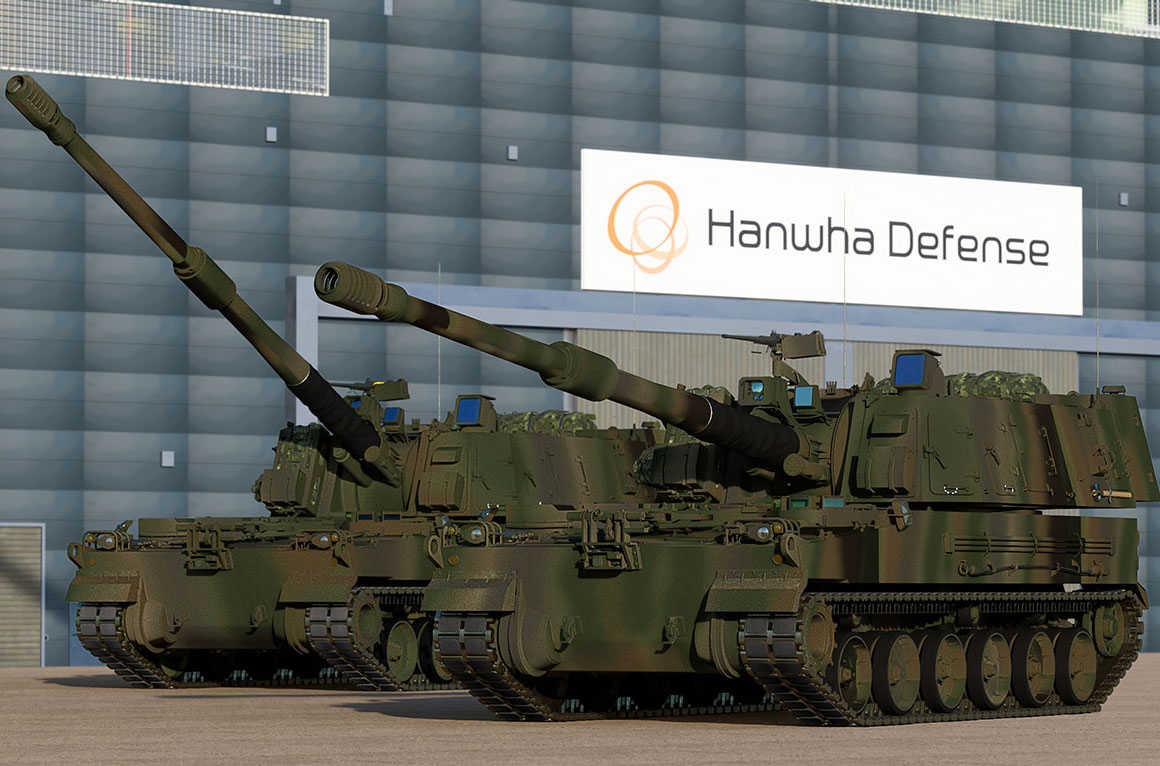
 Via: Hanwaha Defence USA
by Dr. Julie Kim
December 2025
This briefing note summarizes a roundtable discussion that took place on December 4, 2025, and was supported by the Korea Foundation.
Summary
- In June 2025, Canada, alongside NATO, committed to invest 3.5% of its annual GDP in core defence spending by 2035. To meet this target, Canada needs to strengthen its defence industrial base, invest in modernizing military equipment, and diversify defence partnerships beyond its traditional partners.
- The Republic of Korea is one of Canada’s longest-standing allies in the Indo-Pacific. Recently, the two countries have advanced defence cooperation, including the signing of the Canada-Republic of Korea Security and Defence Cooperation Partnership on October 30, 2025.
- Although South Korea is still a relatively new partner for Canada in the defence sector, its defence industry offers competitive, cost-effective, and interoperable systems. This presents a strong opportunity for Canada to diversify its defence partnerships.
Context
- In June 2025, Prime Minister Mark Carney announced that Canada will rebuild, rearm, and reinvest in the Canadian Armed Forces (CAF). He announced that Canada, along with its NATO allies, has agreed to spend 5% of its annual GDP on defence by 2035. In November 2025, the government released Budget 2025, which proposes to provide $81.8 billion over five years to rearm the CAF, saying it would put Canada on the path to meet the new NATO defence investment pledge.
- Canada’s latest defence policy, Our North, Strong and Free, outlines key elements of the CAF’s modernization efforts and capability development. For example, it commits to upgrading or replacing tank and light armoured vehicle fleets, modernizing artillery, and acquiring surveillance and strike drones and counter-drone capabilities. It also commits to exploring options for renewing and expanding submarine fleet that are under-ice capable and conventionally powered.
- While some military capabilities can be produced in Canada, many cannot be manufactured domestically, especially within tight timelines. Historically, Canada has relied heavily on U.S. defence suppliers. In a recent statement, Prime Minister Carney stated that Canada “should no longer send three quarters of our defence capital spending to America.” As such, Canada needs to identify reliable partners who can deliver equipment on time and within budget.
- In light of the shifting geopolitical landscape and emerging security challenges – including Russia’s aggression in Ukraine, its expanding defence ties with North Korea, global supply chain disruptions, and the growing unpredictability of U.S. policy – Canada needs to strengthen its defence industrial base and diversify its partnerships beyond the United States.
Considerations
- South Korea is one of Canada’s longest-standing allies in the Indo-Pacific with a history of shared values, regular bilateral exchanges, and strong trade ties. The relationship has deepened in recent years and was elevated to a Comprehensive Strategic Partnership in September 2022. Canada and South Korea continue to engage in active discussions to further strengthen cooperation across multiple sectors, including the defence industry.
- Canada and the ROK’s Defense Acquisition Program Administration (DAPA) have signed several Memorandum of Understanding (MOU), including MOU on Defence Industry and Procurement Cooperation with the Canadian Commercial Corporation (CCC). This includes sharing knowledge on government-to-government procurement, creating networking opportunities for defence companies, meeting Industrial and Technological Benefits (ITB) obligations, and exploring opportunities to enter third export markets through joint ventures.
- More recently, during his visit to the ROK in October 2025, Prime Minister Carney, alongside President Lee Jae Myung, announced a roadmap to “deepen bilateral cooperation on security, defence and intersecting strategic domains, including cyber, space and hybrid threats.” The two leaders also announced the establishment of the Canada-Republic of Korea Security and Defence Cooperation Partnership (SDCP).
- South Korea’s defence industry has grown significantly in recent years. The country is currently ranked the world’s tenth largest arms exporter, with 2.2% of the global market, and aims to become the world’s fourth-largest arms exporter.
- South Korea is in a unique geopolitical landscape that requires significant effort to adapt to potential threats. The Korean Peninsula shares borders with China and Russia, and South Korea faces direct threats from North Korea.
- To respond to these threats, the government has invested heavily in enhancing weapons systems and capabilities and has conducted performance improvements and training to maximize combat readiness. Through these efforts, South Korea has managed to build up its domestic defence industry.
- South Korean defence companies have been steadily expanding their customer base across Europe and the Indo-Pacific, supplying armoured vehicles, artillery, and combat aircraft. In fact, South Korea became the second-largest arms exporter to European NATO states in 2020-24, alongside France, accounting for 6.5% each.
- European experience demonstrates that South Korea is well positioned to meet urgent defence modernization needs. In addition to supplying weapons, South Korea maintains relationships with partner countries through technology transfer, maintenance support, and local production.
- Poland has made substantial purchases from South Korea, including K2 Black Panther tanks, FA-50 light combat aircraft, and K9 self-propelled howitzers. More recently, in August 2025, Poland signed a US$6.5 billion deal with Hyundai Rotem to buy an additional 180 K2 tanks, including 61 that will be manufactured in Poland. The new contract also includes technology transfer provision and local production licensing, which would be important for strengthening Poland’s domestic defence industrial base.
- In September 2025, Norway signed a third contract with Hanwha Aerospace for 24 additional K9 VIDAR howitzers, expanding its total fleet to 52 systems. The contract also includes an Integrated Logistics Support (ILS) package, covering training, spare parts, and maintenance, which will be delivered in cooperation with Norwegian industry.
Implications for Canada
- Given the emerging security challenges and the growing instability of Canada-U.S. relations, Canada needs to diversify its defence partnerships and identify reliable partners with robust supply chains that can deliver military equipment on time and within budget.
- Diversification should not only reinforce existing partnerships but also expand engagement with non-traditional partners. As such, Canada should leverage its Indo-Pacific Strategy to deepen its engagement in the region, which offers new avenues for diversification to secure timely and reliable access to meet procurement needs.
- South Korea, in particular, has demonstrated itself to be an active and dependable arms supplier, offering systems that are interoperable with the U.S. and already in service with several of Canada’s close allies. South Korean defence products also offer advantages, including being cost-effective alternatives to many American or European systems.
- Recently, South Korean defence firms and government agencies have increased their outreach to Canada, presenting proposals for howitzers, rocket launchers, training aircraft, and submarines. Notably, Hanwha Ocean has been shortlisted as one of two contenders for the Canadian Patrol Submarine Project (CPSP). This development reflects Canada’s growing willingness to considerthe ROK as a potential strategic partner and to establish relationships with new markets.
- Therefore, it is important for Canada to understand how best to engage with the ROK defence industry and what a meaningful, long-term partnership could look like.
- Canada’s new Defence Investment Agency could partner with DAPA to better facilitate partnerships between Canadian and Korean defence firms.
- Many opportunities for collaboration remain to be explored – whether in land systems, guided weapons, artillery, aerospace, or emerging technologies. The key will be identifying strengths in each country that can complement each other.
- Finally, beyond defence exports, the two countries could pursue joint research and development, increase personnel exchanges, and expand military training cooperation.
About the Author
Dr. Julie (Jung-eun) Kim is a Post-Doctoral Fellow leading the Korea Program at the Canadian Global Affairs Institute (CGAI) and a Country Expert on North Korea for the Bertelsmann Transformation Index (BTI). She received a PhD in Political Science from Heidelberg University as a German Academic Exchange Service (DAAD) scholar. Her dissertation explores the social control system and autocratic regime stability in North Korea. She has a Master of Arts in North Korean Studies and a Bachelor of Arts in German Language and Literature from Ewha Womans University.
Julie has previously worked as a Research Intern at the Stockholm International Peace Research Institute (SIPRI) and a Global Asia Fellow at the East Asia Foundation. She has published various articles and a book chapter, including in the Journal of East Asian Studies, BTI Country Report – North Korea, and Global Asia. Her research interests include authoritarian regimes, geopolitics with a regional focus on the Korean Peninsula, and Canada-Korea defence cooperation.
You can connect with Dr. Kim at [email protected]
Canadian Global Affairs Institute
The Canadian Global Affairs Institute focuses on the entire range of Canada’s international relations in all its forms including trade investment and international capacity building. Successor to the Canadian Defence and Foreign Affairs Institute (CDFAI, which was established in 2001), the Institute works to inform Canadians about the importance of having a respected and influential voice in those parts of the globe where Canada has significant interests due to trade and investment, origins of Canada’s population, geographic security (and especially security of North America in conjunction with the United States), social development, or the peace and freedom of allied nations. The Institute aims to demonstrate to Canadians the importance of comprehensive foreign, defence and trade policies which both express our values and represent our interests.
The Institute was created to bridge the gap between what Canadians need to know about Canadian international activities and what they do know. Historically Canadians have tended to look abroad out of a search for markets because Canada depends heavily on foreign trade. In the modern post-Cold War world, however, global security and stability have become the bedrocks of global commerce and the free movement of people, goods and ideas across international boundaries. Canada has striven to open the world since the 1930s and was a driving factor behind the adoption of the main structures which underpin globalization such as the International Monetary Fund, the World Bank, the World Trade Organization and emerging free trade networks connecting dozens of international economies. The Canadian Global Affairs Institute recognizes Canada’s contribution to a globalized world and aims to inform Canadians about Canada’s role in that process and the connection between globalization and security.
In all its activities the Institute is a charitable, non-partisan, non-advocacy organization that provides a platform for a variety of viewpoints. It is supported financially by the contributions of individuals, foundations, and corporations. Conclusions or opinions expressed in Institute publications and programs are those of the author(s) and do not necessarily reflect the views of Institute staff, fellows, directors, advisors or any individuals or organizations that provide financial support to, or collaborate with, the Institute.
Showing 1 reaction