
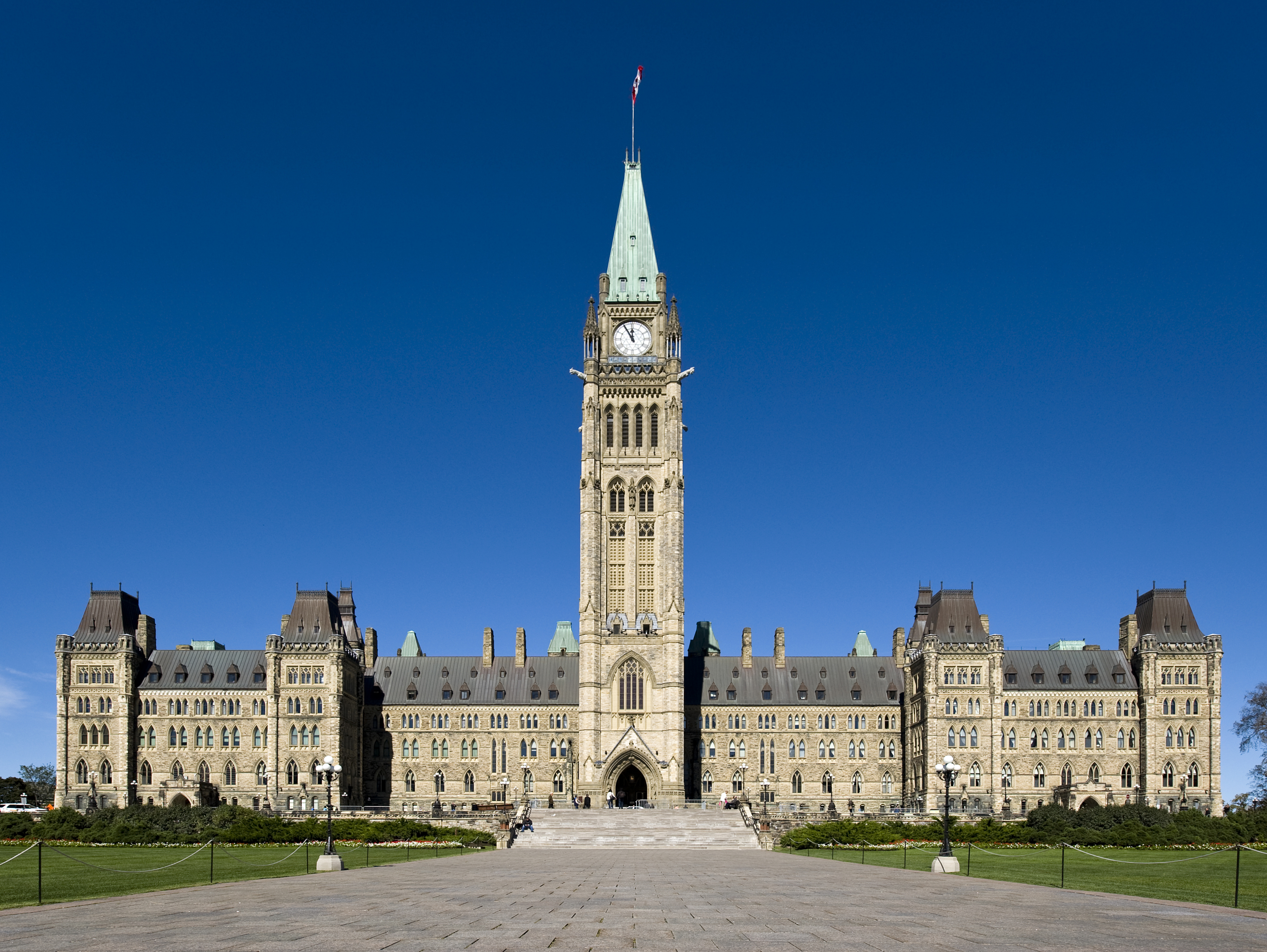
Image credit: Saffron Blaze (via Wiki Commons)
Published in collaboration with:

by Colin Robertson and Maureen Boyd
February 2026
Table of Contents
- Preface
- Executive Summary
- Setting the Scene: February 2026
- Canadian, eh!
- A Compromise with Geography, Climate and Diversity
- Peopled by Many Lands
- It's the Economy...
- Resource Politics and Infrastructure
- Colony to Country
- Monarchy, Law and the Rule of Compromise
- The Constitution and the Canadian Compromise: A Living Federalism
- National Unity in a Diverse and Decentralized Federation
- Population and Political Balance
- Diaspora Politics and Foreign Interference
- Standing on Guard for Canada
- Managing the Elephant: Canada-U.S. Relations in the Carney Era
- Middle Power for the 21st Century
- The Carney Credo
- Canada: a Work in Progress
- Further Sources
- About the Authors
- Canadian Global Affairs Institute
Preface
The first edition of “What Foreign Diplomats Need to Know about Canada” appeared in 2019 for Carleton University’s Initiative for Parliamentary and Diplomatic Engagement’s annual Orientation for Newly Arrived Diplomats, now delivered by the Parliamentary Centre through its EngageParlDiplo program. Conceived as a practical guide, it reflected both experience and personal observation — the accumulated impressions of travelling through every province and territory and working closely with governments at every level.
Now re-titled The Diplomats Guide to Canada, it has been extensively revised following the elections of Donald Trump and Mark Carney. It continues to provide context and background — not a critique or reportage on current events. We think it’s better to read in chunks rather than in one sitting — and this is why there is purposeful repetition of key points.
The guide benefits from readers’ suggestions, verification with experts, and, as always, from the steady collaboration of my wife and fellow CGAI Fellow, Maureen Boyd, Chair Emerita of the Parliamentary Centre. This year, we are pleased to partner with Policy Magazine and its publisher Lisa Van Dusen.
Colin Robertson and Maureen Boyd
February 2026
Executive Summary
Living in a northern terrain, with our vast geography crossing six time zones, we enjoy, and sometimes endure, the full sweep of four seasons. It breeds resilience and perseverance against the elements.
We take pride in nature: our mountains, birch trees and maple syrup, and our iconic wildlife — the beaver, polar bear, moose and loon — feature on everything from our stamps to our currency. We think of ourselves as a northern country even though most of us live within 200 kilometres (about 125 miles) of the U.S. border.
We rate high on likeability and as a desirable place to live. The 2025 Economist Intelligence Unit’s liveability rankings place Vancouver in the top 10 most livable cities worldwide. Toronto and Calgary had been on the list but fell off because of housing scarcity and price.
Proud of its diversity, this vast country is distinguished by its regions. To truly understand Canada, Ottawa-based envoys need to travel to the provinces and to meet our premiers and the mayors of our major cities.
Canadians generally are economically prudent yet socially progressive. Our federal structure and constitutional division of powers allow for significant variation in social, economic and policy approaches — mitigating frictions while accommodating differences among the federal, provincial/territorial and municipal levels of government. Our political parties remain an evolving mix of leader-driven movements, single-issue campaigns and coalitions of regional and sectoral interests.
By necessity, we must be innovative and practical. Canadian inventions include IMAX, basketball, the garbage bag, peanut butter, the discovery of insulin by Frederick Banting, Pablum, butter tarts and WonderBra.
Yet we have traditionally been neither as entrepreneurial nor as effective at marketing or scaling up as our U.S. neighbours and our productivity lags behind that of many of our Organization for Economic Cooperation and Development (OECD) peers. Prime Minister Carney, like his predecessors, has made addressing this a priority.
Our geography and vast space mean that transportation and communications matter critically. We were reminded of this when rail workers went on strike in 2024 and disrupted North American supply chains.
Our vast geography and diversity in regions and populations makes national unity an ongoing preoccupation for every government and a personal project for every prime minister. Top of today’s unity file is ongoing reconciliation with Indigenous Canadians and dealing with separatist movements in Quebec and Alberta.
Our diversity as a people obliges us to practise tolerance, accommodation and compromise. It is also an incentive to govern by consent.
We are officially bilingual — English and French — but French proficiency outside Quebec, beyond the federal public service and parts of Ontario, New Brunswick, and some Western communities remains modest.
K-12 French immersion programs are the preferred route to bilingualism in English Canada. The legislation of successive Quebec governments aimed at enhancing French language and culture has been controversial, with the balance between nationalism and multiculturalism always a political tightrope.
Just as all politics is local, so are business and trade. The constitution declares that resources fall under provincial responsibility. While the federal government sets the broad framework for trade and investment, it is the premiers and mayors who are closest to the reality of business, something foreign envoys quickly discern.
There is broad support for and participation in our public education system and universal, publicly funded health care.
On cost and coverage, the provincial systems resemble those of Western Europe more than the United States. We spend about 50% more than the OECD average and about 75% of what the U.S. spends. While COVID-19 underlined the value of the Canadian health system, it also exposed the need for reform and reinvigoration, especially regarding the availability of family doctors.
Unlike our southern neighbour, Canadians have no visceral allergy to taxation when it comes to paying for public goods. Nonetheless, the promise of lower taxes is invariably a plank in opposition platforms: the left pledges higher taxes on the rich; the right promises to lower or ‘axe the tax’. While every party commits to curtail profligacy, the disagreement is over exactly what constitutes profligacy and whether discipline will constrain spending once in government.
While our social safety net and public education comparably outshine those of the U.S., we can always know more about how our services compare with those of other national governments. Given that funding these programs consumes the lion’s share of what governments spend, foreign envoys often share fresh ideas for improvement.
Canada has traditionally integrated newcomers better than many other countries. In recent years, increasing numbers put unsustainable pressure on housing, education and health services. Public support for immigration plummeted, reflecting those concerns. As one Globe and Mail columnist observed: “Anti-immigrant attitudes have always been present in this country, but never before have they been so prevalent, and so mainstream.”
In acknowledgment that his government “didn’t get the balance quite right,” then Prime Minister Justin Trudeau announced significant cuts to immigrant, foreign-student and temporary worker
intake. The Carney government put a steady cap on permanent immigration at 380,000 per year and a sharp reduction in new temporary resident arrivals, including international students and foreign workers, designed to reduce temporary residents to 5% of Canada’s population by the end of 2026. But the need for talented newcomers is unchanged. We have experimented with fast-tracking in-demand professionals like doctors and we are likely to do so again.
By temperament, Canadians are helpful fixers and bridge-builders. This makes us good at diplomacy — notwithstanding the middle-power hazards of taking ourselves too seriously or slipping into preachiness.
In foreign policy, our approach since World War II rests on two main pillars: first, the bilateral relationship with the U.S.; and second, to balance that preponderant relationship, a commitment to multilateralism.
The most important foreign policy file on any prime minister’s desk is the Canada-U.S. relationship. Canada is simultaneously the neighbour, economic partner and strategic ally of the United States. As then Prime Minister Pierre Trudeau remarked, living next to the United States “is in some ways like sleeping with an elephant.” With Donald Trump, the ‘rupture’ caused by the twitching elephant is forcing a fundamental recalibration.
The two countries trade over C$3.5 billion daily; the U.S. takes roughly 75% of Canada’s exports and accounts for over half of Canadian imports. American foreign investment stocks in Canada are the largest single foreign investor category. Canada at times trends in the top two or three largest sources of foreign direct investment into the United States.
This proximity produces strategic dependencies and vulnerabilities — including forced discount pricing for Canadian energy exports, supply chain exposure and political spillover, especially under U.S. ‘America First’ policies. Canada’s challenge is to engage the United States, protect its interests, and diversify partnerships to avoid being overly dependent.
Our history as the “smaller sibling” in the bilateral dynamic with the superpower to the south has long created an insecurity, sometimes expressed in anti-Americanism or, especially for English-speaking Canada, defining themselves as ‘not American.’
The return of Donald Trump as U.S. president and his continuing references to Canada as the putative 51st state has mobilized a unifying backlash of Canadian patriotism rarely seen outside of wartime and, for a country that has worn its identity lightly, flags and flag-waving.
The Canadian experiment in federalism endures because most Canadians still believe in accommodation — the daily compromise of a large, pluralistic country that works best when it works together. Imperfect, we remain fair and decent, sometimes complacent but rarely cruel.
Setting the Scene: February 2026
As 2026 begins, Canada is in a moment of renewal. Following last April’s election, Prime Minister Mark Carney, running as a centrist Liberal, beat Pierre Poilievre’s Conservatives. Together, the two parties captured over 80 percent of the popular vote, largely at the expense of the Bloc Quebecois, the New Democratic Party and the Greens, the latter two parties losing official party status.
Opposition Leader Pierre Poilievre decisively won his party’s endorsement in January to continue as leader.
Mr. Carney and Mr. Poilievre offer differing approaches to governing that come through in three speeches, delivered in late January, which foreign envoys should read: Mr. Carney’s in Davos and Quebec City and Mr. Poilievre’s in Calgary. Where Carney speaks of tradeoffs, institutions, and global coordination, Poilievre speaks of liberation and resolve. Where Carney promises stewardship, Poilievre promises restoration.
As prime minister, Mr. Carney has pledged to restore fiscal discipline, rebuild international credibility, and reinvest in the instruments of statecraft. Carney’s early commitments mark a return to functional realism guided by values: budgeting billions for investments in housing and for capital projects to harvest our resources; improving manufacturing capacity; accelerating clean growth and building the infrastructure to get our goods to market; eliminating internal trade barriers while aiming to diversify Canada’s trade dependence on the U.S.; and meeting NATO’s 2% defence spending target this year while committing to raise it to 5% in a decade.
Carney inherits a country proud but anxious: more diverse and dynamic than ever, yet strained by inflation, housing shortages and the stresses of rapid population growth. For now, he has public support. Carney’s opposition is just as likely to come from his caucus which, for now, remains more Justin Trudeau progressive than the return to a more centrist liberalism that Carney represents.
If the last decade with Justin Trudeau as prime minister was defined by social justice and Indigenous reconciliation at home, the Carney era begins with a sense of urgency to get big things done. The focus is economic, environmental and democratic. But getting big things done with a minority government in a decentralized federalism with a Charter of Rights guaranteeing Indigenous and minority rights is not easy.
Our political discourse remains coarse. The 2025 federal election campaign was divisive, reflecting the populist undercurrents visible elsewhere across the West. The combination of generational change, housing and other cost inflation, and mistrust following COVID is a more potent base for populist politics than is broadly recognized and reflected in the national conversation.
Affordability remains the country’s most pressing domestic issue. Average home prices climbed to $700,000 nationwide, with major urban centres experiencing even steeper increases.
Encampments in downtown parks are a reminder that Canada’s social safety net — while still a point of pride — is under strain. Health care wait times and physician shortages, especially family doctors, are a problem and confidence in public delivery has eroded. The challenge is to rebuild capacity without abandoning compassion.
Canada’s population approaches 42 million, growing by more than one million people in a single year — the fastest rate in the G7. Immigration remains the main driver of this expansion, but public opinion has shifted. Where until recently four in five Canadians supported high levels of immigration, recent surveys show that barely half now do, as housing and infrastructure pressures intensify.
Climate change is no longer an abstraction. The 2025 wildfire season burned 8.3 million hectares (the figure in 2024 was a record 19 million hectares), forcing mass evacuations and choking cities in smoke. The climate strategies of all levels of government now emphasize adaptation and energy transition over pure mitigation.
Carney’s energy plan — to expand critical minerals production, build liquified natural gas (LNG) export capacity for allies, scale up carbon capture and build small nuclear modular reactors — reflects a pragmatic shift to a managed dial toward net zero. The November 2025 MOU with Alberta that could include one or more new pipelines will test his ability to reconcile differences between British Columbia and Alberta, between environmentalists and the energy industry, and within Indigenous communities.
Canada’s institutions, like those in most democracies, have been tested by polarization, disinformation and foreign interference, now acknowledged as an ongoing threat. Canadian democracy endures, sustained by the habits of civility and compromise still embedded in the Canadian temperament.
Internationally, we navigate a world of fractured power. The United States remains our most significant relationship but Donald Trump’s repeated references to Canada becoming the 51st state have destroyed confidence in what was an enduring friendship and indispensable partnership.
Russia’s war in Ukraine and China’s assertiveness in the Pacific are re-anchoring Canada firmly within the transatlantic and Indo-Pacific coalitions of democratic states.
Carney’s early diplomacy — restoring Canada’s full commitment to NATO, bolstering Arctic sovereignty and reinforcing the relationships with the European Union, United Kingdom, Mexico, Japan, Korea, Australia and New Zealand, reaching out to the Association of Southeast Asian Nations (ASEAN) and opening careful re-engagement with India and China — signals a pragmatic realism about the world as it is and not as we wish it to be.
As Mr. Carney declared in Davos:
“We are in the midst of a rupture, not a transition. Over the past two decades, a series of crises in finance, health, energy, and geopolitics have laid bare the risks of extreme global integration. More recently, great powers have begun using economic integration as weapons, tariffs as leverage, financial infrastructure as coercion, and supply chains as vulnerabilities to be exploited. You cannot ‘live within the lie’ of mutual benefit through integration when integration becomes the source of your subordination … Canada was amongst the first to hear the wake-up call, leading us to fundamentally shift our strategic posture. Our new approach rests on what Alexander Stubb, the President of Finland, has termed “value-based realism” – or, to put it another way, we aim to be both principled and pragmatic. Principled in our commitment to fundamental values: sovereignty and territorial integrity, the prohibition of the use of force except when consistent with the UN Charter, and respect for human rights. Pragmatic in recognising that progress is often incremental, that interests diverge, that not every partner will share all of our values. We are engaging broadly, strategically, with open eyes. We actively take on the world as it is, not wait for a world we wish to be.”
Time will tell whether Mr. Carney’s ambition will be matched by sustained public support when the pinch of costs requires sacrifices.
Canadian, eh!
What is a Canadian? Francophone, anglophone, or bilingual, but essentially multicultural. Unlike the American melting-pot metaphor, Canadians are more like a kilt or a tapestry of ethnicities. Over 200 ethnic groups make up our mosaic, giving us different accents and regional, ethnic and cultural variations.
While we constantly debate our national identity, we do possess a distinctive culture.
One way to experience this is by walking through the Canadian and Indigenous galleries in the splendid National Gallery of Canada designed by Moshe Safdie and Cornelia Oberlander, or visiting the Canadian Museum of History designed by Indigenous architect Douglas Cardinal across the Ottawa River. Within the National Capital region, there are also the Canadian War Museum, the Aviation and Space Museum, Museum of Science and Technology, the Museum of Nature (which hosted Parliament for four years after the Great Fire of 1916 destroyed our original Parliament Buildings) and the Agriculture and Food Museum. The Canadian Museum of Immigration is at Pier 21 in Halifax, and the Canadian Museum for Human Rights is in Winnipeg.
Though not formally a national museum, the Hockey Hall of Fame in downtown Toronto is worth a pilgrimage. You can find our iconic national artists — Tom Thomson, Emily Carr and the Group of Seven — in our galleries and in places like the McMichael Canadian Art Collection along the Humber River in Vaughan, Ontario. Most provincial capitals also have galleries and museums worth visiting.
Literary greats from Susanna Moodie to Margaret Atwood to Michael Ondaatje to Alice Munro and musical trailblazers from Leonard Cohen to Drake enrich our cultural landscape. Government broadcast regulations that require a percentage of Canadian content exposure help cultivate new talent, and awards such as the Junos, the Governor General’s Literary and Performing Arts Awards, medals for Architecture, Visual and Media Arts and the Northern Medal recognize them. Literary awards such as the Giller Prize and the Shaughnessy Cohen Prize for Political Writing give our artists and authors national recognition.
Canada is globally recognized for its film and television production, including Heated Rivalry, Schitt’s Creek, Murdoch Mysteries, and the Emmy-winning Shogun, filmed largely in British Columbia. We excel at programs for children, beginning with the birth of television and the Friendly Giant and Chez Hélène, the Elephant Show and Fred Penner, Degrassi High, Road to Avonlea and Anne of Green Gables.
Quebec’s cultural scene is especially rich, whether on canvas, in music, the stage, screen or digital media, as exemplified by artists such as Céline Dion, who returned to acclaim at the opening of the 2024 Paris Olympics, Michel Tremblay, Robert Charlebois and Denys Arcand whose Les Invasions barbares won Canada’s only Oscar for best foreign language film in 2004. The globally renowned Cirque du Soleil originated in Montreal and maintains its school there. Canadian game developers cluster in hubs such as Vancouver and Montreal.
Living in the Great White North, with Uncle Sam as our next-door neighbour, requires a capacity to laugh at ourselves, as shows like This Hour Has 22 Minutes have done for three decades. The legendary cross-border comedy supply chain has provided the United States with game-changing talents including Saturday Night Live producer Lorne Michaels, actors Dan Aykroyd, Jim Carrey, the late John Candy, the late Catherine O'Hara, Martin Short and many more.
From the humourist known as Canada’s Mark Twain, Stephen Leacock’s Sunshine Sketches of Small Town, set in fictional Mariposa, remain worth reading as is, of course, Lucy Maud Montgomery’s Anne of Green Gables set in Prince Edward Island, a story especially popular with Japanese visitors.
A Compromise with Geography, Climate and Diversity
In contrast to the rambunctious republic to the south, Canadians often like to think of ourselves as the counter-revolutionary “peaceable kingdom”: compromise, gradualism and deference to authority are part of our makeup. Pierre Trudeau described us in 1969 as “the product of understanding, not conflict; trustees of reasonableness, not violence.” All nations enjoy mythologies, but as one former U.S. ambassador remarked, if American national temperament traverses from A to Z, in Canada it hovers between F and M.
The structural challenges we face are geography and climate – huge, cold and often difficult. Consequently, we place a premium on communications and transportation to keep the country together. Our Fathers of Confederation intentionally created a decentralized federation: the provinces control resources and deliver health care and education. You must leave Ottawa to appreciate the land and the people.
Canada is a geographically vast country, spanning six time zones — Newfoundland, Atlantic, Eastern, Central, Mountain and Pacific. Saskatchewan does not observe Daylight Saving Time. Measured by land area, Canada is second only to Russia. For perspective, Germany could fit into Alberta while neighbouring Saskatchewan could contain the UK and Ireland.
From Toronto to the North Pole takes longer by air than from Toronto to the Equator. With almost 42 million people, Canada ranks 38th in population worldwide — slightly more than Poland and Ukraine but less than Afghanistan or Argentina.
Peopled by Many Lands
Canada was settled, to a large measure, by the dispossessed. Indigenous peoples lost land first to the short-staying Vikings, and then to French and English colonization.
After the French were defeated at the Battle of the Plains of Abraham in 1759, the ruling elite went back to France leaving their habitants behind. The American War of Independence brought the next wave of settlers. These British Loyalists — “Liberty’s Exiles” — fled north after 1783. They more than doubled the population in the process, settling along the St. Lawrence River in Ontario and Quebec, as well as in New Brunswick, Nova Scotia and Prince Edward Island.
Having lost the other 13 colonies to the American revolutionaries, the British learned something about compromise. They guaranteed French language rights, as well as the preservation of the Civil Code and religious freedom for the predominantly Catholic French-Canadians.
Next came the poorest from the British Isles — Scots displaced by foreclosure and Irish fleeing famine. Canada was the cheapest fare for those who could not afford Boston or New York, so they came to Quebec, Montreal or Halifax.
Grosse Ile on the St. Lawrence, upriver from Quebec City, is the largest graveyard outside of Ireland for those thousands who fled the 1840s Great Famine and died of typhoid and other diseases. It is well worth a visit.
After Confederation in 1867, we built our national railway with Chinese (whom we then sent home) and Scottish-Irish immigrants. We settled the West from the 1890s onward with “stalwart peasants” in sheepskin coats with large families from Eastern Europe, including Ukrainians, Germans, Poles and Russians. Those who claim Ukrainian descent form 3.9% of the population, which helps to explain our strong interest in what happens to Ukraine.
After the world wars we welcomed the displaced from Central Europe, then those who fled the Soviet yoke and turmoil in Indochina, Central and Latin America, the Middle East, Hong Kong and Africa — all seeking a fresh start in a land of fresh starts.
Canada is now one of the most diverse countries on Earth. According to the latest census, 26.5% of the Canadian population were classified as “visible minorities” in 2021, up from 22.3% in 2016. There is no single majority ethnic group as about 30% of the population report UK descent, followed by about 19% French ancestry. Since the 1980s, the majority of our new immigrants have come from Asia. Nearly three in four Canadians live in urban areas, almost all within a few hundred kilometres of the U.S. border.
With nearly 42 million inhabitants and still positive net growth in 2025, Canada remains among the faster-growing advanced economies. Yet that growth is uneven, driven overwhelmingly by international migration rather than natural increase with just a 1.25 birth rate per woman.
The country must manage not only the arrival of newcomers but also integration, and regional variation is pronounced with most migrants settling in our larger cities.
Diversity is central to the Canadian identity, with language and identity remaining flashpoints, notably when politicized. Official French-English bilingualism has been federal law since 1969. Recent Statistics Canada data show only a modest rise in bilingual proficiency from 17% in 1996 to about 18% in 2022; among Quebec residents French-English bilingualism stands at about 46%, while for the rest of Canada it is about 9.5%. These disparities highlight ongoing regional cleavages in identity, linguistic policy and migration trends.
It's the Economy...
In terms of Gross Domestic Product (GDP), Canada enjoys membership in the G7 thanks to the United States, but when lined up globally we rank 10th behind the U.S., China, Germany, Japan, India, UK, France, Italy and Brazil, and just ahead of Russia, Mexico and Australia.
While a large and advanced economy, persistent relative under-performance in productivity, scaling and high-end innovation clouds the picture. The economy faces the paradox of decent headline growth yet weak productivity gains.
Despite that, the economy remains diversified in services, natural resources, trade and technology. Canada is still a trading country: the U.S. remains our largest market and continental integration via the re-negotiated USMCA/CUSMA dominates trade policy. Dependency on U.S. demand continues to limit strategic autonomy and prompts the persistent question of how to become a “nation of traders,” not merely a “trading nation.”
Innovation culture in Canada is strong in pockets but lacks scaling. Governments have supported ‘super-clusters’ and innovation funds, yet investment per worker remains well behind U.S. levels. Productivity remains Canada’s central economic challenge despite having secured freer trade agreements with over fifty nations.
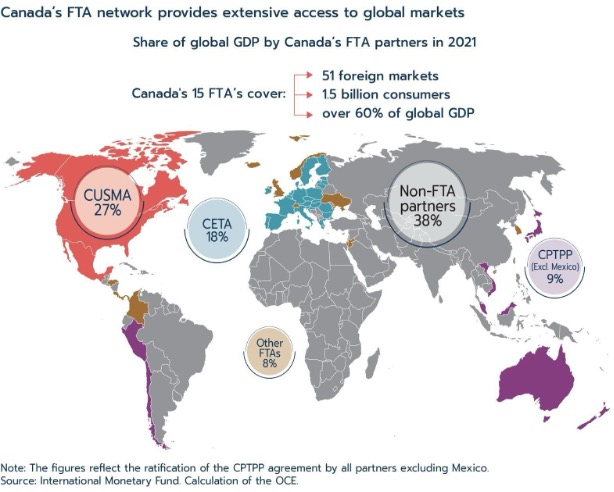
Foreign Trade Agreements - Source: Global Affairs Canada
Resources: “Quelques Arpents de Neige”
Voltaire once dismissed Canada as “quelques arpents de neige” — a few acres of snow. He would be astonished at what those acres now yield. Canada is the world’s fourth largest energy producer, third-largest uranium supplier and second-largest hydropower generator. Natural resources account for 9-12% of GDP and employ over 900,000 Canadians.
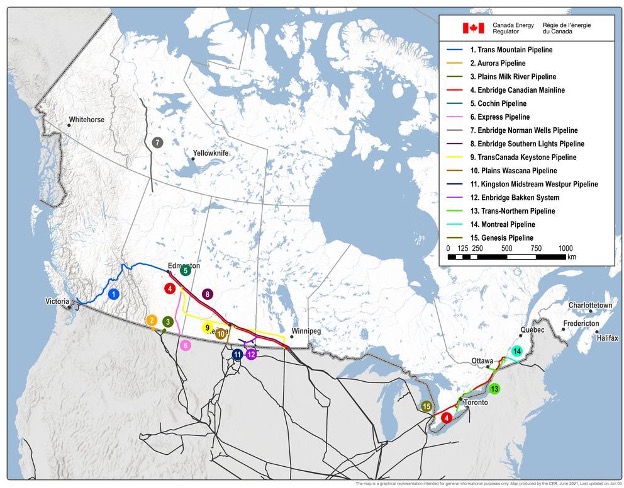
Source: Natural Resources Canada
Oil and Gas
Oil and gas remain vital, generating about $160 billion in export value in 2024. Most goes to the United States with Canada providing over half of U.S. imports. The Alberta oil sands produce 3.1 million barrels per day and emissions per barrel have fallen by one-third since 2000. Natural gas, largely from Alberta and British Columbia, supplies 40% of domestic energy and underpins emerging liquefied natural gas (LNG) exports.
Water
Water is Canada’s quiet superpower. Hydropower provides over 60% of our electricity, led by Quebec, Manitoba and British Columbia, with Newfoundland and Labrador’s Muskrat Falls project now online. The country holds 20% per cent of the world’s freshwater, though most is trapped in the North, far from population centres. As climate change intensifies global scarcity, stewardship of this resource may define Canada’s next century as profoundly as oil defined the last.
Agriculture
Canada’s agricultural endowment is vast. It is the world’s largest exporter of canola and pulses, the third-largest pork exporter and the eighth-largest beef exporter. Agricultural exports contributed 7% of the country’s GDP. Sustainability is improving: producing a kilogram of beef today requires 24% less land than in 1981. Fisheries are recovering after decades of depletion, while aquaculture is expanding in British Columbia and Atlantic Canada. We also produce genetic material for livestock and some other fertilizer products but potash, mostly in Saskatchewan, is one thing we produce at global scale that’s hard to source at scale elsewhere.
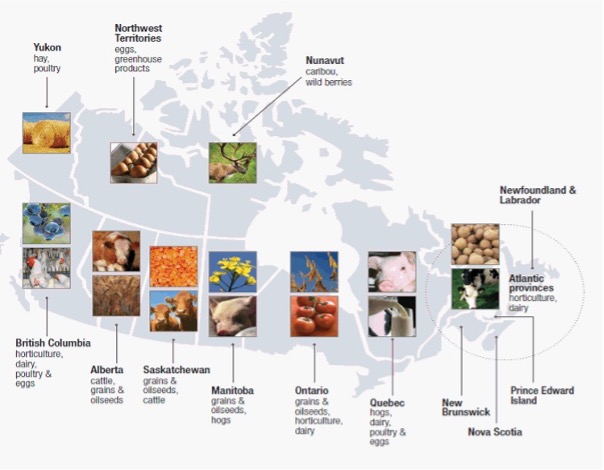
Source: Agriculture and Agri-Food Canada
Forestry
Forestry employs nearly 200,000, mostly in Quebec (33%), British Columbia (25%) and Ontario (20%) followed by Alberta, Atlantic Canada, Manitoba, Saskatchewan and the territories. Forest products contribute over 4% to annual GDP with softwood lumber and paper, mostly to the United States, the sector’s biggest exports.
Source: Natural Resources Canada
Mining and Energy
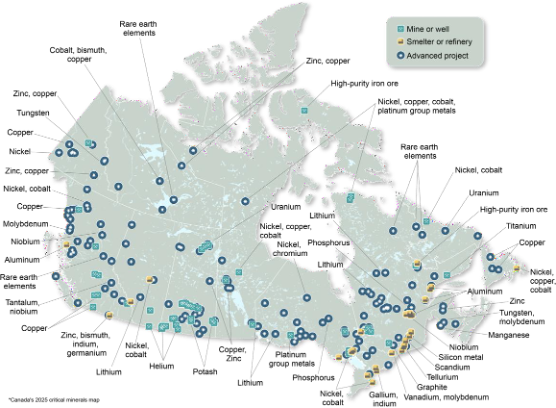
Mining and energy account for sizeable shares of economic output. The oil and gas industry contributes between 2.7% and 4.0% of Canadian GDP (2015-18 estimates) and remains key to export earnings. Canada is the world's second-largest producer of uranium, accounting for approximately 13% of global output, primarily from the Athabasca Basin in Saskatchewan. More than half of the world’s public mining and exploration companies are headquartered in Canada. They represent about 40% of the listing value of the Toronto Stock Exchange. The annual convention of the Prospectors and Developers Association of Canada, held at Toronto’s Metro Convention Centre, is the world’s largest and most important mining trade show.
Critical Minerals
Canada is also positioning itself in the critical minerals race, possessing an estimated 15 million tons of rare earth oxides and new deposits of lithium, nickel and cobalt essential to electric vehicle supply chains. The challenge lies in developing refining capacity in a sector dominated by China.
These realities reinforce the ‘resource nation’ characterization but also expose the challenge: how to add value, diversify and innovate beyond raw material exports.
Resource Politics and Infrastructure
Resources shape not just the economy but the federation. For example, British Columbia depends on forestry, fisheries, mining and hydro; the prairie provinces depend on hydrocarbons, potash and minerals, pork, beef and crops; Ontario on mining and forestry; Quebec on hydro, mining, and forestry; the Atlantic provinces on fisheries with Newfoundland also drawing on offshore oil; and the North on mining. These asymmetries fuel intergovernmental tensions — visible in carbon pricing, pipeline approvals and fiscal transfers. The balance between environmental ambition and regional prosperity remains one of the defining Canadian contradictions, a constant see-saw in national, federal-provincial and sectoral political debate.
Canada’s infrastructure also matters. Resource transportation modes including rail, road, maritime shipping and pipelines, communications grids and ports remain strategic assets. The vast geography and differing climates raise the cost of connectivity, especially in the North. Recent years have seen improvements in ports in Vancouver, Montreal, Halifax and Saint John and rail freight corridors via CPKC and CN, yet gaps remain.
As part of his ‘Build Canada’ project, Prime Minister Carney has pledged billions towards improving basic infrastructure. It’s all part of his commitment to improve Canadian productivity by increasing trade among provinces and getting our goods efficiently to foreign markets, thus enabling trade diversification.
Colony to Country
Canada’s story is fundamentally one of settlement — not conquest. Canada’s journey from scattered colonial outposts to a unified country is a testament to gradual building rather than sudden rupture.
The name ‘Canada’ itself derives from kanata, a Huron-Iroquoian word meaning ‘village’ or ‘settlement.’ In 1534, Jacques Cartier sailed up the St. Lawrence River and claimed the land for France; later, Samuel de Champlain used both ‘Canada’ and ‘New France,’ but it was the name Canada that stuck.
Under British rule, Canada became one of the colonies of British North America and eventually confederated in 1867. The Fathers of Confederation, mindful of U.S. expansionism after the American Civil War, saw union as essential to preserving autonomy.
Full legislative equality with Britain arrived with the Statute of Westminster in 1931; our red-and-white Maple Leaf flag was adopted only in 1965, and “O Canada” became our official anthem in 1980.
Monarchy, Law and the Rule of Compromise
Today, Canada is a constitutional monarchy with King Charles III as head of state — a symbol of continuity and tradition. His role may seem ceremonial, but it anchors our parliamentary democracy above the fray of electoral politics. When he opened the 45th Parliament, King Charles emphasized our values of unity, reconciliation and democracy — acknowledging both the challenges of a changing global order and the importance of the rule of law.
It’s a surprise to most Canadians that our foundational ethos of “peace, order and good government” embedded in our constitutional documents, is not a uniquely Canadian phrase but rather boilerplate prose lifted from British-drafted colonial governance documents.
Nevertheless, we like to contrast this approach to the “life, liberty and pursuit of happiness” of the U.S. Declaration of Independence, believing that it reflects a national temperament that favours collective security over personal liberty, prudence and gradual evolution over revolution and radical change.
The Charter of Rights and Freedoms, patriated with the constitution in 1982, binds both Parliament and the provinces to fundamental rights. It cemented protections for language, gender equality and Indigenous recognition. It elevated the Supreme Court as a guardian of Canadian values. It also included a trapdoor for both provincial and federal governments to opt out using the notwithstanding clause or override section 33 clause. Used more frequently in recent years, its application is always controversial. So, too, is what some argue is judicial activism that moves beyond interpretation of the law.
The Constitution and the Canadian Compromise: A Living Federalism
Canada’s constitutional system thrives on negotiation — between and among provinces, communities and governments. Originally united in 1867 by Ontario, Quebec, Nova Scotia and New Brunswick, Confederation expanded west and northward until Nunavut became a territory in 1999. The Canadian model has always favoured evolution, not upheaval.
In our federation, provincial governments control education, health care and natural resources. The federal government handles defence, foreign policy and trade. Where responsibilities overlap — like immigration or infrastructure — the Supreme Court often mediates disputes, reinforcing its role as arbiter.
A cornerstone of this system is equalization, enshrined in Section 36(2) of the Constitution Act, 1982. Ottawa transfers funds to less wealthy provinces so that citizens across Canada can enjoy comparable services without disproportionate taxation. In 2024-25, equalization payments exceeded $25 billion, with Quebec receiving more than half of that total. While praised in Atlantic Canada as essential support, equalization and its methodology remain politically contentious in resource-rich Western provinces which are currently givers rather than takers.
At the level of municipalities, which covers more than 83% of Canadians, cities argue they are a ‘third order’ of government — managing transit, housing and infrastructure, but lacking constitutional revenue powers. Ottawa’s response includes targeted funding such as the Housing Accelerator Fund, yet structural imbalances remain. As one mayor quipped, “Cities deliver first-class services with a nineteenth-century tax system.”
Canada’s political system is modeled on Westminster with the executive branch drawn from the legislature. The creation of a cabinet by the prime minister is an art, balancing various interests including region, ethnicity, language and gender. While this limits choice for cabinet positions, it has the merit of ensuring a tilt to practical rather than technocratic politics, especially given the permanent nature of our merit-based professional civil service. At the apex of the public service is the Privy Council Office (PCO), with the position of Clerk of the Privy Council and Secretary to Cabinet presiding over the public service and central agencies of Finance and Treasury Board.
Over time, power has shifted from ministers and senior public servants to the prime minister and the Prime Minister’s Office (PMO). The PMO is politically driven and policy sensitive while PCO is policy driven and politically sensitive. The prime minister needs both sets of advice as well as that of the ministers; prime ministers who forget this inevitably put their governments in peril.
Canada’s judiciary is a separate branch of government. The Constitution gives the federal government exclusive lawmaking power over criminal law and criminal procedure, but not over the establishment of criminal courts. The provinces have exclusive power over the administration of justice in their province. Canada has four levels of court: each with authority to decide specific types of cases: the Supreme Court of Canada; the Federal Court and the Federal Court of Appeal; provincial and territorial courts of appeal; and provincial and territorial superior and lower courts.
National Unity in a Diverse and Decentralized Federation
Canada’s political identity rests on managing three permanent files: national and economic security, national unity; and the U.S. relationship. Of these, national unity is the most sensitive, although for now relations with the United States require daily attention. President Trump’s continuing pronouncements threaten our economy, our security, and even our national unity, with the administration sticking its nose into Alberta’s secessionist movement.
Our federation is highly decentralized. Provinces launch their own international trade missions and pursue “para-diplomacy.” Quebec maintains over 30 offices abroad, with Ontario, Alberta, and Manitoba also represented in Washington.
This diffusion of power underpins unity: our provinces are policy laboratories. Saskatchewan launched Medicare, Quebec pioneered universal childcare, and British Columbia implemented carbon pricing. When provincial innovations succeed, Ottawa often adopts them as national policy.
The Quebec Question
Quebec remains central to Canada’s political equilibrium. Historical flashpoints — from the conscription crises in both the First and Second World Wars to the Quiet Revolution — still resonate. The 1980 and 1995 Quebec independence referendums showed how deeply the province wrestles with its place within Canada. While separatism has receded, with polls suggesting only about 30% of francophone Quebecers now favouring independence, issues of language and secularism remain divisive. Quebec’s current government has restricted religious symbols in public service and limited immigration in the name of protecting the French language.
Populism has a long history in Canada, represented historically in our political life through right wing parties like Social Credit, Créditistes, Reform, and on the left by the United Farms and Cooperative Commonwealth Party.
As in other Western societies, populism has experienced a revival in Canadian political culture, accentuated by the lock-down and vaccine mandates occasioned by the COVID pandemic as demonstrated in the convoy of trucks that effectively shut down Ottawa’s downtown in 2021.
Today, the combination of international turmoil, technological and generational change, disinformation breeding mistrust in institutions, along with real concerns about housing, health care, education and inflation create renewed opportunities for populist politics on both the right and left that is not always recognized in daily reportage.
Western Alienation and Carbon Politics
In the prairies, the economic and cultural rift with Ottawa has deepened. Alberta and Saskatchewan argue that national climate policies (especially carbon pricing) penalize their resource-based economies.
These provinces, drawing on their constitutional control over natural resources, see Ottawa’s environmental agenda as overreach.
Prime Minister Mark Carney has responded: he rescinded the federal carbon tax and his Memorandum of Understanding (MOU) with Alberta includes a removal of emissions caps on oil and gas, while his government revises Canada’s climate strategy to focus on carbon mitigation policies.
This tension reflects a broader debate: how to balance ambitious environmental goals with regional economic realities, all while preserving the integrity of Confederation. Premier Danielle Smith plans a referendum on October 19 for Albertans to vote on issues, including immigration and health care to better define their place in Canada.
Reconciliation with Indigenous Canadians
Indigenous peoples (Inuit, Métis and First Nations) represent roughly 4.9% of Canada and speak more than 50 languages. They are the fastest-growing segment of the population, accounting for approximately 15% of residents in Manitoba and Saskatchewan and more than half of those living in the Northwest Territories and Nunavut.
The National Indigenous Economic Development Board reports significant economic progress in the past decade. But systemic challenges remain, including persistent poverty and ill health and the fact that more than 1/3 of our prison population is Indigenous. Remedial work remains necessary, including on essentials like providing long-promised clean drinking water on many reserves.
Reconciliation is an ongoing process. Role models such as Governor General Mary Simon and Manitoba Premier Wab Kinew and Indigenous artisans, authors and musicians provide inspiration.
Aboriginal investment funds and growing equity shares in resource projects are gradually building a capitalist class within Indigenous communities that is changing public perceptions as well as the realities of communities too often portrayed as monolithic and unidimensional.
Canadians’ view of current relations between Indigenous and non-Indigenous people has been steadily improving, although the application of Canada’s adherence to the UN Declaration on the Rights of Indigenous Peoples (UNDRIP) is going to mean court actions that will create controversy and, in some cases, investment uncertainty. The recent Cowichan decision by the British Columbia Supreme Court recognizes Aboriginal title for the Cowichan Tribes over traditional lands and fishing rights, marking a significant legal precedent in Canada.
Population and Political Balance
Canada’s population continues to grow, driven almost entirely by immigration.
In the postwar era, Canada slowly dismantled racialized immigration policies. As of 2025, newcomers from India, China and the Philippines account for a large share of immigration, reshaping cities like Toronto and Vancouver, where nearly half of residents were born abroad.
Canada has also become a global leader in refugee resettlement. The private sponsorship model, born during the Vietnamese refugee crisis in the late 1970s, has welcomed thousands of Syrians, Afghans and more than 125,000 Ukrainians since 2022. The civic generosity of this system has become part of the country’s moral brand.
This demographic recalibration could have political consequences. Redistribution after the 2021 national census pushed the House of Commons to 343 seats, with expansion in fast-growing provinces like Ontario, Alberta and British Columbia. Nonetheless, the constitutional framework still protects representation for smaller and slower-growing provinces, preserving rural and regional influence.
Diaspora Politics and Foreign Interference
Canada’s openness has produced vibrant diaspora communities—but also new challenges in foreign policy. Allegations of interference by China, India and Russia during recent elections prompted the Hogue Inquiry into Foreign Interference in Federal Electoral Processes and Democratic Institutions and a scathing 2024 report from the National Security and Intelligence Committee of Parliamentarians. The report described foreign interference as “pervasive and persistent,” warning that Canada’s democratic openness leaves it vulnerable.
In response, Parliament passed Bill C-70 which establishes a foreign influence registry, expands the powers of the Canadian Security Intelligence Service (CSIS), and criminalizes covert influence. CSIS has also articulated its national intelligence priorities, emphasizing violent extremism, foreign interference and espionage. Sovereignty today is not just about territory — it’s about protecting political systems.
Standing on Guard for Canada
If Canadians are not warlike by nature, when the country does mobilize, it has shown a warrior’s resolve. Historians pinpoint Vimy Ridge in the First World War as a foundational moment — roughly 65,000 Canadian soldiers died during the war and, in its final two years, Canadian troops were later heralded by British Prime Minister David Lloyd George in his memoir as “the shock troops of the Empire.” Over time, Canada has proven that, though modest in size, its armed forces punch above their weight.
During the Second World War, Canada served as the ‘aerodrome of democracy’ and hosted the massive Commonwealth Air Training Plan. The Royal Canadian Navy and Merchant Marine kept sea lanes open in the Battle of the Atlantic, the longest battle of the war and, as Prime Minister Winston Churchill noted, existential for Britain’s survival. By war’s end, Canada had the fourth-largest navy in the world.
Today, Canada’s geography, northern responsibilities and alliance obligations put sustained demand on its armed forces. Yet, for years, capability gaps have widened. Under Prime Minister Mark Carney, a significant transformation is underway.
Current Capabilities and Challenges
The Canadian Armed Forces (CAF) is relatively small. As of 2025, Canada has about 66,000 Regular Force personnel and 23,450 in the Primary Reserve, roughly 12,000 below its authorized strength. Recruitment is improving, but persistent issues remain: inefficiently slow recruitment; dropping retention rates; housing and health care for families; training bottlenecks; and readiness shortfalls. Increased pay and improved benefits were recently announced.
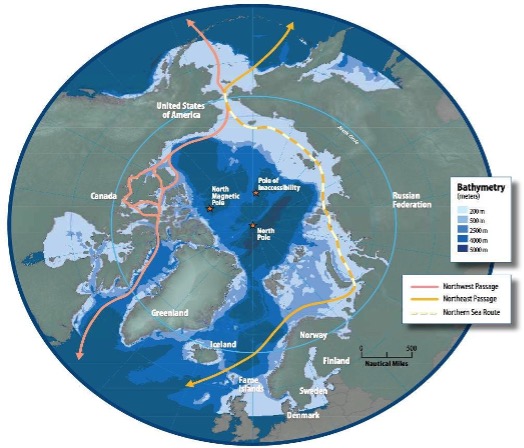
Canada’s strategic geography — the world’s longest coastline, vast Arctic frontiers and continental exposure — demands robust naval and air capability. Yet its forces struggle with aging equipment. As Carney acknowledged in putting forward his plan to expand both capacity and capability to ensure readiness, only one of four submarines is currently operational and fewer than half of its maritime fleet and land vehicles are fully mission-capable.
On the procurement front, Canada has embarked on a generational modernization program: a long-term shipbuilding plan to deliver warships, patrol vessels and submarines, and a parallel push to acquire 88 new fighter jets. But procurement has long been plagued by delays, overreliance on foreign systems and industrial capacity constraints.
Domestically, the CAF is heavily engaged in disaster response and northern sovereignty operations. Internationally, it contributes to NATO, United Nations peace operations and allied missions — but is too often constrained by capability limits.
Carney’s Defence Transformation: From Spending Targets to Industrial Strategy
Prime Minister Carney’s government is pursuing what may be the most ambitious defence renewal in decades. Central to this is a redefinition of Canada’s defence posture along three interconnected pillars:
- Strengthening the Canadian Armed Forces — addressing personnel, readiness and equipment gaps;
- Revitalizing the defence industry — building a sustainable domestic industrial base; and
- Anchoring Canada within allied deterrence — and reducing overreliance on any single partner.
Carney’s commitment to NATO’s 2% of GDP defence spending guideline this year and achieving the 5% target within a decade represents a historic shift.
Canada has long under-spent against its NATO commitment but is now catching up. According to Carney, part of the strategy is to rebalance procurement away from overreliance on U.S. suppliers, which currently pocket 75 cents of every Canadian defence procurement dollar, and toward made-in-Canada manufacturing.
A Defence Industrial Strategy
Carney has tied spending increases to a Defence Industrial Strategy: Canada must not only procure but also produce. This means long term, predictable demand signals for Canadian industry. But policy analysts warn that without a stable pipeline of orders, investment in domestic capacity will not stick.
The government is already aligning capital investments with this industrial plan, laying the groundwork for future procurement cycles. The goal is clear: reduce Canada’s structural dependency on external suppliers and build sovereign capacity. The Defence Investment Agency’s initial investment in enhanced satellite communications, contracting with Canadian suppliers Telesat and MDA, make good on this approach.
Strategic Signals Beyond Procurement
Carney’s defence revival is not just about jets and ships, he’s also anchoring strategy in resource security. At the NATO summit in 2025, Carney linked defence spending to critical mineral development, noting that infrastructure such as ports, rail and telecommunications to extract and export rare earths and metals will count toward NATO’s broader industrial and infrastructure spending target: of the 5% of GDP target to reach by 2035, 3.5% is for core defence and 1.5% for infrastructure and industrial investment.
With billions about to go into defence, the government still needs to answer three critical questions: What is our place and priorities in the emerging global landscape? To guarantee our sovereignty what exactly do we want our military to do? What are the vital pieces of military hardware that should be built at home?
Source: Arctic Marine Shipping Assessment
Managing the Elephant: Canada-U.S. Relations in the Carney Era
No file looms larger in Canadian foreign policy than the United States. Carney rejects grandstanding. His preferred mode is steady, private diplomacy, eschewing theatrical face-offs in favour of coalition-building. But he’s also serious about reducing overdependence: he has committed to doubling Canada’s non-U.S. exports over the next decade. His logic is simple: diversification is risk management, not ideology.
Carney’s approach to the U.S. is pragmatic: build relationships across political lines; defend the dispute-settlement system; protect the auto supply chain; and minimize the collateral damage of U.S. industrial policy. He understands a fundamental truth: Canada cannot shape American politics, but it can shape its exposure to American risk.
With Donald Trump who is capricious, difficult, and quick to take offence, Carney has tried to strike a tone of realism conscious of both the opportunities and risks of the continent’s asymmetrical relationship. Carney has sought to rebuild channels of trust in Washington — engaging not just with the White House but Congress, governors, unions and business associations.
The core challenge is the 2026 Canada-U.S.-Mexico Agreement (CUSMA or USMCA as it is called in the US) review. After it was negotiated in his first term, Donald Trump proclaimed USMCA the “greatest trade deal ever,” but his second term has been dominated by the fragmentation of the global trade status quo and the use of tariffs to coerce countries and re-route supply chains.
Canada must enter negotiations not as a supplicant but with a strategy. A full-court mapping exercise within Canada is underway — mobilizing provinces, labor and business to assess vulnerabilities and build bargaining leverage.
Canada, to use a Trumpism, has ‘cards.’ It is a critical energy and resource supplier to the US, exporting oil, gas, uranium, and possessing unexploited supplies of critical minerals. For most US states, Canada is also their main export market. Their Canadian trade and investment in US states also generates an estimated eight million US jobs that can be identified at the state and district level. Carney sees this not only as an economic strength but as diplomatic leverage. As Washington seeks secure supply chains, Canada’s resources and the jobs generated in the US become strategic assets.
Middle Power for the 21stCentury
Canada’s traditional foreign policy identity has been that of a middle power: quietly influential, committed to the rules-based order, but cautious about power projection. Through institutions like the G7, UN, G20, Asia-Pacific Economic Cooperation (APEC) forum, Commonwealth, Francophonie, NATO, NORAD, the Comprehensive and Progressive Agreement for Trans-Pacific Partnership (CPTPP), and Canada-European Union Comprehensive Economic and Trade Agreement (CETA), we have sought to maximize influence without overextending.
As Mr. Carney declared at Davos, middle powers must shape global rules or be shaped by them. He sees defence revival as fully compatible and fundamental to this identity arguing “we are no longer just relying on the strength of our values, but also the value of our strength.”
Instead of chasing great power status, Canada is investing in niche strengths: Arctic security, critical minerals, cyber capabilities and expeditionary interoperability. Canada must be both a reliable ally and build capacity to defend democracy.
A restoration of defence credibility will give Canada more clout at the table, not by asserting dominance, but by strengthening its value as a partner. Functionalism — doing what we can do well — remains at the heart of Canadian grand strategy.
Carney’s vision is not isolationist — it’s strategic diversification based on “values-based realism” that is both “principled and pragmatic”. Even when Canada looks beyond Washington, U.S. influence remains part of the calculation. But Ottawa is also deepening Canada’s global engagements.
In Europe, he refocused political attention on making CETA work, especially for clean tech and digital services. Canada signed a comprehensive defence and security pact with the EU, opening doors for joint procurement and collaboration in cyber, maritime, space and critical mineral infrastructure. At the end of 2025, Carney also secured Canada’s participation in the Security Action for Europe (SAFE) defence initiative.
In Asia, he has deepened CPTPP ties, launched supply chain partnerships with Japan, South Korea, Indonesia, ASEAN countries and Australia and is re-engaging in separate negotiations with Mexico, India and China. Relations with Mexico are strengthened with a “comprehensive strategic partnership.” With China he has secured a “strategic partnership” that promises to restore trade in EV autos, food and fuel. He has framed the Indo-Pacific as the arena where Canada must shore up “economic, trade and defence partnerships.” He has also opened new doors with the Gulf states. The challenge now, of course, is to seize on these opportunities to generate new trade and investment.
On issues like Ukraine, cyber and resource sovereignty, Canada is coordinating closely with allies — but maintaining its own voice on human rights and multilateral norms.
Carney’s approach reflects a deeper truth: Canada cannot disentangle itself from the United States, but it can lower unnecessary risk through broader, more resilient partnerships.
While Canada’s relationship with the United States dominates political bandwidth, the first year of the Carney government makes clear that Ottawa intends to re-engage the wider world with greater seriousness. Carney’s foreign economic strategy is built on diversification — not away from the United States, but toward complementary partners in Europe, Asia, Africa and Latin America. As he wrote in his book Values, “economic resilience is a national security asset.” In an era of geopolitical fragmentation, spreading risk is essential.
In his June 2025 Munk School speech on defence and security, Carney argued that “middle powers cannot be mere spectators in a fragmenting world; we have responsibilities we must meet.” That theme — responsibility anchored in alliances, economic security and democratic solidarity — now runs across Canada’s approach to Europe, Asia, the Middle East, Africa and the Americas.
Canada’s ties with Europe are grounded in history and institutions: NATO on collective security and the 2016 Comprehensive Economic and Trade Agreement anchoring commercial relations. Within days of becoming prime minister, he flew to Paris, then London, to meet his counterparts and call on King Charles III. Carney has made return visits, signing the New EU-Canada Strategic Partnership of the Future, launching comprehensive negotiations across multiple areas to strengthen co-operation and connection.
On democracy, Carney has taken a sharp line, warning at the NATO Brussels Summit that revisionist autocracies must be deterred. Ukraine is central as the front line in sustaining the rules-based order, with Carney pledging predictable, multi-year military and reconstruction support, joining the allies to lock in “strategic patience” to thwart Russian aggression. Bilateral relations with Russia remain effectively frozen, though Arctic coordination with Nordic allies continues.
If Europe is familiar terrain, the Indo-Pacific is where the Carney government appears most intent on updating Canadian strategy. Canada’s relationships with India and China, strained during the last years of the Trudeau government, are beginning to thaw.
Carney’s January visit to Beijing signalled a new Canada-China relationship based on clean energy; expanding trade, particularly in agriculture and food; a commitment to multilateralism and strengthened global governance; deepening engagement in public safety and security cooperation; and boosting people-to-people ties and cultural exchanges.
As for Japan, the CPTPP is delivering market access, a goal long sought since Pierre Trudeau. Joint work with Korea on critical minerals, EV supply chains and emerging technologies has accelerated.
Building on the 2022 Indo-Pacific Strategy, Carney has framed the region as a test of the international system’s stability and as an opportunity for trade and investment with Indonesia and Vietnam. Carney’s visits to Malaysia (ASEAN), South Korea (APEC), and Singapore and the promise to lead a Team Canada mission in 2026 are necessary if Asian governments are to see Canada as seriously engaged.
Canada is defined as part of the Americas, with institutional frameworks linking it to Latin America and the Caribbean, including as a member of the Organization of American States (OAS) and close partnership with the Caribbean Community (CARICOM). Mexico — one of Canada’s top three trading partners — has received early high-level engagement from the Carney government, especially given our shared interest in preserving our mutually profitable North
American trading platform. In the wake of the December 2025 U.S. National Security Strategy laying out a revived Monroe Doctrine and subsequent military action in Venezuela and capture of incumbent president Nicolás Maduro, the likelihood of closer ties among other OAS members and Canada would seem a safe bet.
Africa remains the region where Canada’s ambitions lag most. Canada’s engagement with Africa has long been uneven, periodic surges of political attention are too often followed by relative neglect. Historically, Canada’s Africa policy has been shaped by competing priorities — trade and commercial opportunity on the one hand, and development and humanitarian responsibility on the other. Despite new diplomatic posts in Kigali, Rwanda, and Addis Ababa, Egypt, we lack an Africa Strategy. Carney’s background in climate finance will likely shape what his government does in and with Africa. He sees the continent as essential to global clean energy supply chains and has supported development finance tools to bring in private investment, ideas he advanced at the UN and International Monetary Fund (IMF).
The Carney Credo
Carney’s vision for Canada is best expressed in speeches he gave in January, at Davos and then a couple of days later, in Quebec City. If Davos addresses the world, Quebec City is aimed at Canadians, but together they articulate a governing credo that seeks to integrate Canadian foreign and domestic policy more tightly than at any time since the early Cold War.
The Carney credo rests on nine pillars. Domestically this means: dismantling internal trade barriers; accelerating major infrastructure projects; negotiating new provincial accords; and addressing longstanding structural weaknesses within Canada especially housing and health care, recognizing this must be a partnership with the other levels of government, as well as through industrial policies, especially for defence production and the auto industry. It also means strengthening border security and the criminal justice system.
Internationally this means: diversifying trade beyond the United States; stabilizing relations with Washington, Beijing and New Delhi; creating closer economic and security collaboration with like-minded democracies; and asserting and exercising sovereignty, especially in the North, through reinvigorating and expanding defence capacity and capability.
Together, these form a coherent program — but one that faces immense political and economic constraints.
Consider Carney’s bold defence and foreign policy transformation.
Rampant spending raises tough questions. According to the C.D. Howe Institute, sustained rise to 3% of GDP (let alone 5%) would impose enormous fiscal burdens: without credible management, deficits and debt could balloon.
To deliver on ambitious procurement, Canada must dramatically scale up its defence-industrial base including across shipyards, aerospace and supply chains.
Pursuing defence sovereignty while maintaining interoperability — particularly with the United States — is politically and technically challenging. Canada’s defining foreign policy challenge remains managing its relationship with the United States, which demands more than old strategies of alignment or appeasement.
Finally, building ‘warriors when necessary’ requires sustained buy-in from Canadians. Defence spending must deliver visible value — in readiness, technology, jobs and regional resilience.
Carney’s government must translate commitments into capability — fast. The risks of under-delivery are not just budgetary. They strike at Canada’s credibility as a reliable ally, a sovereign actor, and a national security steward.
Striving to be a better middle power, ready to defend its interests and contribute meaningfully to global security is worthy, ambitious and necessary.
Carney’s credo is coherent but demanding. It assumes a capable state, disciplined politics, an efficient bureaucracy, and sustained consensus involving the various levels of government, business, labour, and civil society.
Canada is being asked to grow up strategically: to accept pragmatism and life in a harsher world. Only by rebuilding the foundations of power at home can Canada exercise influence abroad.
Variable geometry requires stamina. Values-based realism requires judgment. Nation-building requires speed.
Whether Carney succeeds will depend less on the elegance of his ideas than on his ability to communicate convincingly while translating his plans into institutions, coalitions, and concrete results.
Canada: A Work in Progress
Managing Canada’s vast, diverse and sometimes fissiparous federation has never been simple. Historian Peter Waite captured the enduring truth of Canadian governance in Arduous Destiny when he observed that “Canada is a hard country, a hard country to live in, a hard country to govern.” That difficulty is not a flaw of design but a defining feature of a project that has always required compromise, negotiation and patience.
Accommodation is the essence of Canadian political life. We begin by accommodating our geography and climate — harsh, sprawling, often unyielding. We then extend that practice to our politics: between regions, between urban and rural communities, between French and English speaking Canadians, among Indigenous peoples and settlers, and increasingly, among newcomers who are reshaping the country’s demographic and cultural landscape.
Canadians are, by habit and instinct, hedgers. As generations of political scientists have noted, Canadians often vote differently at the federal and provincial levels, using the ballot box not just
to choose governments but to balance them against each other.
This complex compromise may be our strength. Our political flexibility allows provinces to experiment. Our openness fuels growth — even as we tighten controls. Our institutions, from the Supreme Court to our equalization system, remain vital.
Canada, in this sense, is a country still in development, with less history than Europe or Asia — an absence some see as an advantage — we improvise as much as we plan.
Canada’s challenge in the years ahead will be to modernize — to close productivity gaps, invest in nation-building infrastructure, and manage the delicate politics of a deeply diverse federation.
But if we do it well, our model may become more than just a Canadian story: a blueprint for plural, decentralized governance in a global age.
Humourist Will Ferguson once joked that the great themes of Canadian history were “keeping the Americans out, the French in and the natives out of sight.” A Trump-led United States is both aggravation and threat. Our ‘French fact’ is worth special care and attention. Reconciliation now forms the core of our national work with Indigenous peoples. How we manage diversity is central to the definition of Canadian identity and legitimacy.
Governing Canada demands a rare combination of listening, balancing and timing. Few figures embodied this paradox more than Prime Minister William Lyon Mackenzie King. A cautious empiricist with a mystical streak, King governed not by advancing sharp lines but by avoiding them. The poet F.R. Scott skewered King’s method in one of Canadian political literature’s most enduring satirical portraits:
We had no shape … Because he never took sides
And no sides … Because he never allowed them to take shape
Do nothing by halves … Which can be done by quarters.
Intended as an indictment, Scott’s poem accidentally captured the logic of Canadian governance itself. King’s studied avoidance of absolutes reflected a deeper national instinct — one that sees political life less as a contest of purities than as an exercise in pragmatic coexistence.
In a country defined by vast geography, layered identities and multiple founding narratives, this ethos of accommodation is not merely a governing strategy but a cultural inheritance.
Canada continues to be a work in progress: a political experiment held together through compromise, patience and the continuous search for balance.
Uncertainties abound but I remain an optimist about Canada. I continue to believe that to be born in Canada — or to have chosen it as one’s home — is to have won the global lottery. The task going forward is to ensure that those odds hold true for the next generation.
Further Sources
One of my assignments involved leading Historica Canada, dedicated to building awareness of Canadian history and citizenship. The Canadian Encyclopedia is part of its stable and I encourage readers who want more information on Canada to go to this dependable source.
The best weekly summary of Canadian policy-related news is prepared by Lisa Van Dusen for Policy Magazine, itself an excellent source of informed analysis on topical issues.
The major news outlets — CBC-Radio Canada, CTV, Global, The Globe and Mail, National Post, La Presse, Toronto Star and Maclean’s all provide daily electronic updates as does National Newswatch, Politico Ottawa Playbook, iPolitics, and The Hill Times.
The journalists I regularly read and trust for reportage and insights are Paul Wells who writes for Substack; Susan Delacourt, Althia Raj, Tonda MacCharles in the Toronto Star; Andrew Coyne, Shannon Proudfoot, John Ibbitson, Janice Dickson, Stephanie Levitz, Steven Chase, Bill Curry and Robert Fife at The Globe and Mail; Tom Perry, Marina von Stackleberg, Ashley Burke and Aaron Wherry at the CBC; Abigail Bimman at CTV; and David Akin at Global. On the economy, I read Kevin Carmichael at The Logic; John Ivison at the National Post; Jim Bronskill and Dylan Robertson at Canadian Press; and Mike Blanchfield at Politico Canada.
Chantal Hébert, Coyne, and Raj appear regularly on CBC’s Thursday night At Issue panel hosted by Rosemary Barton. David Cochrane hosts CBC’s Power and Politics on CBC every weeknight, while Vassy Kapelos hosts CTV’s Power Play. CPAC’s daily newscast focuses on Parliament. The House on CBC Radio hosted by Catherine Cullen is required listening on Saturday mornings. On Sunday morning Global’s Ben Mulroney hosts West Block while Mercedes Stephenson is on leave. Vassy Kapelos hosts CTV’s Question Period.
For podcasts on politics: Listen to David Herle’s Herle-Burly podcast and the Friday edition of Peter Mansbridge’s The Bridge when he speaks with Chantal Hebert and Bruce Anderson.
To get a sense from francophone Canada read Joël-Denis Bellavance, Stephanie Grammond, Michel Auger, Jean Philippe Décarie, Philippe Teisceira-Lessard, Tommy Chouinard and Paul Journet of La Presse; Nicolas Van Praet of The Globe and Mail; Daniel Leblanc, Chantal Hébert and Hélène Buzzetti of SRC/CBC; Michel David and Brian Myles of Le Devoir; Mario Dumont of LCN; and Gérald Filion of RDI.
Western Standard has Alberta/Saskatchewan sensibility. Gary Mason of The Globe and Mail also gives a western perspective. There are also Substacks like The Hub and The Line. For deep insight look to the work of the Canada West Foundation.
For news on Indigenous Canadians the Raven provides a curated aggregation and CBC has an Indigenous section on its website and Indigenous programming.
The journalists on Canadian foreign policy include David Ljunggren from Reuters, Doug Saunders in The Globe and Mail, Murray Brewster who covers defence for CBC, and for national security read Wesley Wark in Substack.
The New York Times, Wall Street Journal and The Economist have Canadian correspondents.
Pollsters of note include Abacus’s David Coletto who provides regular surveys, Frank Graves of EKOS, Darrell Bricker of IPSOS, Dan Arnold of Pollara, Nik Nanos of Nanos Research, Shachi Kuri of Angus Reid, Mainstreet and for Quebec, Leger. For elections go to 338Canada.
For a profile of Mark Carney read Mark Bourrie Who is Mark Carney from The Walrus and Shannon Proudfoot Meeting his Moment in The Globe and Mail. On Pierre Poilievre read Stephen Maher’s The Prince and Andrew Lawton’s Pierre Poilievre.
On contemporary politics, read A New Blueprint for Government: Reshaping Power, the PMO and the Public Service by Kevin Lynch and Jim Mitchell, Breaking Point: The New Big Shifts Putting Canada at Risk by Darrell Bricker and John Ibbitson. Nik Nanos looks at populism in his The Age of Voter Rage: Trump, Trudeau, Farage, Corbyn & Macron – The Tyranny of Small Numbers.
On the role of the provinces and their relationship with the national government, read Ed Whitcomb’s Rivals for Power: Ottawa and the Provinces: The Contentious History of the Canadian Federation and on Canada’s relations with its First Nations, Understanding First Nations: The Legacy of Canadian Colonialism.
For an easy and fun insight into Canadian history watch the Heritage Minutes produced by the Historica Canada. There is also the online Canadian Encyclopedia, Dictionary of Canadian Biography and the on-line history A Country by Consent. The Canadian Government has also produced Discover Canada, a study guide on the rights and responsibilities of citizenship.
On prime ministers and their foreign policies go to Patrice Dutil’s Statesmen, Strategists and Diplomats: Ranking Canada’s PMs on Foreign Policy. It is part of the CD Howe series on Canadian political history directed by historians John English and Robert Bothwell published by UBC Press. Other volumes look at the Jean Chretien foreign policy and include Raymond Blake’s winning 2025 Shaughnessy Cohen Prize for Political Writing Canada’s Prime Ministers and the Shaping of a National Identity.
For political writing generally look at the winners and finalists of the annual Shaughnessy Cohen Prize for Political Writing. For single histories, look at Conrad Black’s rambunctious Rise to Greatness: The History of Canada from the Vikings to the Present or Robert Bothwell’s Penguin History of Canada, Desmond Morton’s A Short History of Canada, or Will Ferguson’s Canadian History for Dummies.
On hockey find a copy of Ken Dryden’s The Game (1983) and Home Game (1990) that he cowrote with Roy MacGregor. Former diplomat Gary J. Smith has written Ice War Diplomat, a superb account of the 1972 Canada-Soviet hockey series.
For Canadian military history, look to the works of historians Tim Cook, David Bercuson, Jack Granatstein and Des Morton.
For a sweeping historical perspective of Canadian foreign policy read the brilliant Canada First Not Canada Alone: A History of Canadian Foreign Policy by historians Adam Chapnick and Asa McKercher. For Canada-U.S. relations read Kim Richard Nossal’s Canada Alone: Navigating the Post-American World.
On Canadian foreign policy, subscribe to the weekly newsletter or listen to the weekly podcasts of the Canadian Global Affairs Institute and, in particular, The Global Exchange podcast. Look also to the Canadian International Council and its Red Passport podcast. Carleton University publishes its annual Canada Among Nations and Canadian Foreign Policy Journal. The best single-volume history of Canada and the U.S. is Your Country, My Country: A Unified History of the United States and Canada, by historian Robert Bothwell but look also to Jack Granatstein and Norman Hillmer in Empire to Umpire and For Better or For Worse.
To get a good sense of the politics of energy, environment and First Nations, look to Dwight Newman’s Substack and read the late Jim Prentice and J.S. Rioux’s Triple Crown: Winning Canada’s Energy Future and David Yager’s From Miracle to Menace: Alberta, a Carbon Story.
To understand our government, the best guide to the constitutional system remains Eugene Forsey’s classic How Canadians Govern Themselves although there is also a Library of Parliament’s Our Country, Our Constitution (2021).
About the Authors
Maureen Boyd is chair emerita of the Parliamentary Centre, a nonprofit organization that has worked for the past half-century in more than 70 countries supporting legislatures to better serve their citizens. She founded Carleton University’s Initiative for Parliamentary and Diplomatic Engagement, now EngageParlDiplo, to provide outreach and policy orientation to parliamentarians and diplomats, including orientation for newly elected Members of Parliament and annually for newly arrived diplomats to Canada.
Having lived in Vancouver, New York, Hong Kong, Ottawa, Los Angeles and Washington, Maureen has previously worked in politics, the media, at Rideau Hall and in government, including as a senior political staffer, national political and current affairs reporter and host for television news, communications advisor and public policy analyst.
Maureen is a member of the International Women's Forum and of Politics and the Pen. She was founding chair of the Mothers Matter Centre and past chair of HIPPY Canada. Maureen is a Senior Fellow at the Norman Paterson School of International Affairs at Carleton University. She has a Master of Science in Journalism from Columbia University in New York and an Honours B.A. in Political Science from the University of British Columbia.
Maureen is a member of the Order of Canada and a recipient of the Queen Elizabeth II Diamond Jubilee medal.
Colin Robertson is a former Canadian diplomat, and is Senior Advisor and Fellow at the Canadian Global Affairs Institute and hosts its regular Global Exchange podcast. He is an Executive Fellow at the University of Calgary’s School of Public Policy and a Distinguished Senior Fellow at the Norman Paterson School of International Affairs at Carleton University. A member of the Department of National Defence’s Defence Advisory Board, Robertson is an Honorary Captain (Royal Canadian Navy) assigned to the Strategic Communications Directorate. Robertson sits on the advisory councils of the Alphen Group, Johnson-Shoyama School of Public Policy, North American Research Partnership, the Sir Winston Churchill Society of Ottawa and the Conference of Defence Associations Institute. During his foreign service career, he served as first Head of the Advocacy Secretariat and Minister at the Canadian Embassy in Washington, Consul General in Los Angeles, as Consul in Hong Kong, and in New York at the UN and Consulate General. A member of the teams that negotiated the Canada-US FTA and then the NAFTA, he is a member of the Deputy Minister of International Trade’s Trade Advisory Council and the North American Forum. He writes on foreign affairs for the Globe and Mail and he is a frequent contributor to other media. The Hill Times has named him as one of those that influence Canadian foreign policy.
Canadian Global Affairs Institute
The Canadian Global Affairs Institute focuses on the entire range of Canada’s international relations in all its forms including trade investment and international capacity building. Successor to the Canadian Defence and Foreign Affairs Institute (CDFAI, which was established in 2001), the Institute works to inform Canadians about the importance of having a respected and influential voice in those parts of the globe where Canada has significant interests due to trade and investment, origins of Canada’s population, geographic security (and especially security of North America in conjunction with the United States), social development, or the peace and freedom of allied nations. The Institute aims to demonstrate to Canadians the importance of comprehensive foreign, defence and trade policies which both express our values and represent our interests.
The Institute was created to bridge the gap between what Canadians need to know about Canadian international activities and what they do know. Historically Canadians have tended to look abroad out of a search for markets because Canada depends heavily on foreign trade. In the modern post-Cold War world, however, global security and stability have become the bedrocks of global commerce and the free movement of people, goods and ideas across international boundaries. Canada has striven to open the world since the 1930s and was a driving factor behind the adoption of the main structures which underpin globalization such as the International Monetary Fund, the World Bank, the World Trade Organization and emerging free trade networks connecting dozens of international economies. The Canadian Global Affairs Institute recognizes Canada’s contribution to a globalized world and aims to inform Canadians about Canada’s role in that process and the connection between globalization and security.
In all its activities the Institute is a charitable, non-partisan, non-advocacy organization that provides a platform for a variety of viewpoints. It is supported financially by the contributions of individuals, foundations, and corporations. Conclusions or opinions expressed in Institute publications and programs are those of the author(s) and do not necessarily reflect the views of Institute staff, fellows, directors, advisors or any individuals or organizations that provide financial support to, or collaborate with, the Institute.


Showing 3 reactions
Ce texte manque de profondeur sur les réalités du monde francophone, surtout québécois à la construction du Canada depuis ses tout débuts, à son histoire politique et économique avec l’ensemble du Canada, les USA et surtout l’Europe. Les liens culturels n’occupent que peu de place dans ce texte or cela est la toile de fonds de notre texture, de notre valeur ajoutée, de notre contribution au monde.
Il me semble que l’analyse oublie de souligner la contribution et l’engagement multilatéral de Canada notamment via l’ONU mais non seulement comme un forum de rencontre, d’échanges mais surtout par notre poursuite et défense de la règle de droit et des droits de personne.
Mes commentaires visent à améliorer et approfondir votre texte fort utile par ailleurs,
Paul Dubois
Ambassadeur du Canada (ret.)