
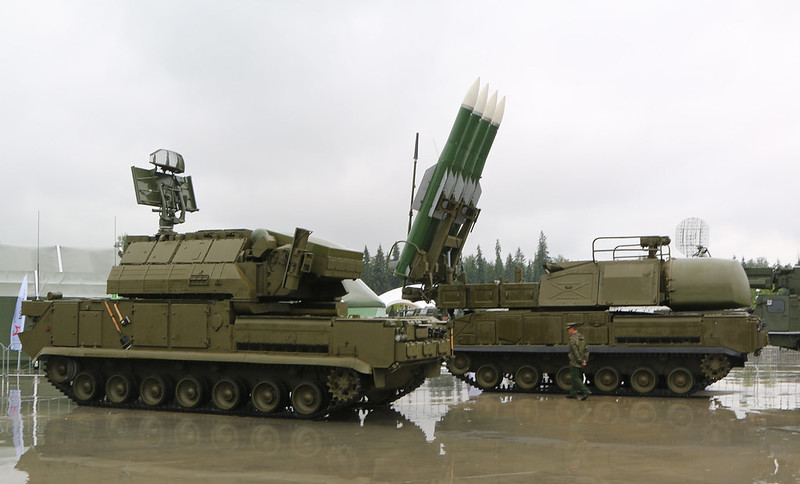
 Photo by RussianService BBC
April 2026
Table of Contents
- Introduction
- Ukraine’s Defence Procurement: Before and After February 2022
- Defence Procurement Model in Ukraine
- Key Lessons for Canada and Allies
- Challenges of the Defence Procurement System in Ukraine
- Conclusion
- About the Author
- Canadian Global Affairs Institute
Introduction
Ukraine is often cited as a reference case for effective defence procurement, demonstrating that even under the extreme conditions of an active, high-intensity war, the state can organize speedy delivery of critical military equipment to its armed forces. Ukraine’s Ministry of Defence (MoD) has been transforming the way the state interacts with its military, domestic industry and society, building digital ecosystems that connect frontline needs with national capability development.
Ukraine’s partners, however, operate in fundamentally different conditions and remain reluctant to introduce radical changes to their defence procurement systems.
While Canada and other allies have launched reform initiatives aimed at making defence procurement more agile and better adapted to the realities of modern war, Ukraine’s experience offers a set of practical lessons that deserve close attention.
The first section of this article provides an overview of the evolution of Ukraine’s defence procurement system, focusing on the most recent reforms, namely the introduction of the ProZorro digital procurement system, as well as DOT-Chain and Brave1 Market. The next section highlights key lessons from Ukraine’s defence procurement reforms that Canada and its allies should consider for their respective systems, including the digitalization of defence procurement processes, a focus on end-users, and the combination of centralized and decentralized procurement approaches. The final section briefly outlines the challenges of Ukraine’s procurement model, which must be assessed alongside its benefits. The article draws on Ukrainian- and English-language analytical reports, government sources, media publications and podcasts, as well as interviews with representatives of Brave1, the Defence Procurement Agency of Ukraine, civil society organizations and military personnel.
Ukraine's Defence procurement: Before and After February 2022
Before February 2022, defence procurement in Ukraine was divided between two departments of the Ministry of Defence of Ukraine: the Department of Military-Technical Policy, responsible for lethal equipment; and the Department of Resource Support, responsible for non-lethal supplies.
Following Russia’s full-scale invasion and the urgent transition from a peacetime to a wartime economy, defence procurement became one of the key reform areas in Ukraine. Starting from December 2023, Ukraine has been operating a new procurement system. The core logic of the reform was to separate procurement execution from policy-making functions, in order to increase transparency, efficiency and accountability across defence supply chains.
The new procurement architecture was built on two institutional levels. At the first level was the Ministry of Defence’s Procurement Policy Department, responsible for strategy, rules and oversight. At the second level were two newly established state-owned enterprises tasked with conducting procurement operations: the Defence Procurement Agency (DPA); and the Defence Logistics Operator (DLO), which focused on rear and non-lethal supplies.
According to Aliona Zhuzha, IT Advisor at the DLO, “The agency was separated from the Ministry of Defence to ensure that the function of defining requirements, which remains the responsibility of the Ministry, does not overlap with the execution of procurement. Such an overlap creates an inherent conflict of interest, which has long been a systemic problem in procurement processes.” This separation aligned Ukraine’s defence procurement governance more closely with NATO and EU best practices.
In January 2026, DPA and DLO were merged under a single governance framework. While this reform was initially planned to take place after the end of martial law, the merger occurred sooner than expected to improve resource and personnel management.
This decision was described by several civil society organizations in Ukraine as carrying multiple risks. The Public Anti-Corruption Council under the MoD noted that the two agencies are fundamentally different and operate in separate markets with distinct contracting systems. Combining different types of procurement within a single agency, they argued, could negatively affect transparency and increase corruption risks. According to the council, this merger was not part of a broader strategic vision but rather a separate tactical step. The Anti-Corruption Action Center stated that the decision contradicts basic logic and NATO recommendations, which advise against large-scale reorganizations of defence procurement systems during wartime.
Currently, the newly reformed DPA is headed by a Director, who is appointed by the Minister of Defence of Ukraine upon the recommendation of the Supervisory Board of DPA. The Supervisory Board provides strategic guidance and oversight, monitors the achievement of the agency’s objectives, and ensures compliance with legislation, accountability and transparency in the agency’s operations.
Members of the Supervisory Board are selected through open competitions organized by professional recruitment firms. The candidates are appointed by the Cabinet of Ministers of Ukraine upon the nomination of the Minister of Defence. The Supervisory Board includes both Ukrainian and international experts.
According to the agency, it maintains systematic cooperation with international partners, particularly Norway’s Norwegian Defence Materiel Agency (NDMA) and the United Kingdom’s Defence Equipment & Support (DE&S), focusing on the exchange of institutional experience and best practices. In addition, the DPA has developed partnerships with defence procurement bodies across NATO member states, including Denmark (DALO), France (DGA), Estonia (ECDI), Czechia (AMOS), Italy (AID), Türkiye (SSB), Sweden (FMV), Lithuania (DMA) and Latvia (VALIC).
Defence Procurement Model in Ukraine
Today, there are three components to the defence procurement model in Ukraine.
The first one is centralized direct procurement, based on specifications developed by the military and validated through the General Staff. This channel is used for classified procurements, including weapons systems, military equipment, and defence-related goods and services that constitute state secrets. Information related to such procurements is restricted and not subject to public disclosure.
The second model consists of tenders and simplified procurement procedures conducted through the ProZorro system. Through ProZorro, contracting authorities independently select suppliers and conclude framework agreements. ProZorro, an electronic public procurement system designed as a unified digital marketplace for state purchases, was launched in 2015. The Ministry of Defence, responsible for defence procurement at the time, became one of the early adopters and pilot users of the system, alongside several other state institutions. The MOD started using ProZorro in July 2015 as a main tool for non-lethal procurements.
In August 2016, the use of ProZorro became mandatory for all government bodies and state-owned structures, marking a major institutional shift in how defence procurement was conducted in Ukraine. This model enables greater price competition and often results in better financial terms. However, framework agreements do not always sufficiently reflect real battlefield experience or end-user feedback, which can limit their effectiveness in rapidly evolving combat conditions.
The third — and most recent — model is DOT-Chain Defence, launched in July 2025. This system represents a market-based procurement mechanism in which procurement decisions are made directly by military units. DOT-Chain Defence functions as a digital defence marketplace of Ukrainian-produced equipment (unmanned systems, counter-unmanned aerial vehicles (UAVs), components and software), enabling rapid ordering and delivery of equipment. At a later stage, DOT-Chain is expected to cover the procurement of ammunition, electronic warfare systems, ground vehicles and equipment, clothing and personal gear, as well as fuel and lubricants.
The system operates through three core steps:
- Military units independently select, order and reserve the equipment they need; track delivery timelines; provide feedback; and receive rapid responses. The process starts at the company level, where responsible personnel select the necessary equipment from the online catalogue. It then moves to the brigade level, where procurement personnel process the request and the brigade commander approves it.
- Manufacturers gain a transparent mechanism for cooperation with the state and the armed forces, as well as direct feedback from the front line. From January 2026, manufacturers can track the real-world performance of their products through analytical dashboards in their personal accounts on DOT-Chain. They gain access to data such as market share, the number of strikes and points earned per drone (including ranking among analogous systems), and the ranking of units most actively using their products.
- The state obtains real-time data on frontline needs, enabling data-driven decision-making, supporting the development of the defence industry, and accelerating the adoption of innovations.
If a particular product is not purchased, the manufacturer is forced to adapt by improving performance, reducing costs or modifying the product to meet frontline requirements better. This competition-driven model is aimed at directly incentivizing effectiveness and aligning procurement outcomes with the operational needs of the armed forces.
The risk of this model lies in the potential corruption component, whereby a military commander, having authority over procurement decisions, may place orders based on personal preferences. This is a concern shared by many manufacturers. The DPA is seeking to introduce safeguards against this, such as preventing price changes on orders over extended periods of time.
Key Lessons for Canada and Allies
Digitalization of Defence Procurement Processes
The launch of the ProZorro electronic procurement system marked a turning point in Ukraine’s public procurement landscape by opening access to tenders for thousands of small and medium-sized companies.
One illustrative example comes from DroneUA, a Ukrainian unmanned systems manufacturer. One of its founders noted that he initially did not expect significant benefits from ProZorro; however, within the first year of operating through the system, the company sold drones worth several hundred thousand Ukrainian hryvnias. As a result, DroneUA expanded its pool of clients to include the Security Service of Ukraine, the Ministry of Internal Affairs, and the State Emergency Service.
In 2016, ProZorro received the World Procurement Award, the most prestigious international recognition in public procurement. In 2018, Wired UK published an in-depth feature on the system, describing it as “the most transparent platform for government spending.” All contracting authorities in Ukraine have been required to report procurement activities through the system.
The expansion of ProZorro’s use for defence procurement has enabled Ukraine’s Ministry of Defence and other defence contracting authorities not only to reduce corruption risks but also to institutionalize transparency principles in public procurement governance. Amendments introduced in 2023 further expanded the system’s role by introducing open competitive procurement mechanisms in the defence sector. These changes allowed not only Ukrainian companies but also international partners to compete for defence contracts and supply equipment at competitive prices and under contractual terms. The Defence Procurement Agency has become the largest purchaser of UAVs within the ProZorro system.
A critical component of this digital transformation following the full-scale invasion was the introduction of the DOT-Chain system. DOT-Chain digitized supply processes end-to-end, from ordering and contracting to logistics. This innovation reduced the food supply cycle for the armed forces by a factor of four and eliminated more than 35,000 paper documents previously filled out manually by logistics units each week.
Within this framework, the Defence Procurement Agency assumes responsibility for contracting, payments, supplier vetting and performance control. During the pilot phase, delivery cycles to frontline brigades were reduced by more than five times: the average time from order to delivery dropped to 10 days, with the fastest deliveries completed in just five days.
Focus on End-Users: Military Units
The diversification of buyers has become a cornerstone of growth in Ukraine’s defence technology ecosystem. In Ukraine, several actors beyond the central government have both the budget and authority to conduct defence procurement, including military formations (at the brigade level), local government administrations, and volunteer and civil society organizations.
According to a Tech Force in UA survey, while government contracts remain important, no defence tech company relies exclusively on them. Direct interaction with end-users, military formations, has increasingly shaped product development, pricing and battlefield relevance.
In December 2024, by presidential decision, each combat brigade began receiving a separate budget for UAVs and counter-UAV systems, which commanders can spend according to their operational needs. This measure provided a powerful stimulus to the defence market by significantly expanding the number of active buyers and enabling direct, continuous feedback from the front line.
In practice, this mechanism functions as a brigade commander’s reserve fund — a tool that allows units to procure urgently needed solutions here and now, without lengthy bureaucratic procedures. According to the military personnel interviewed for this article, despite inherent risks of misuse, the system operates under law enforcement oversight and has proven highly effective under wartime conditions. This shift is reflected in industry data: 88% of Ukrainian defence tech companies depend at least partially on direct procurement by military units, compared to 64% that fulfil government contracts, highlighting the growing role of decentralized, end-user-driven demand in shaping the market.
Alongside DOT-Chain Defence, which operates under the Ministry of Defence, Ukraine has also developed Brave1 Market, administered by the Ministry of Digital Transformation and launched in April 2025. Brave1 Market introduced an open catalogue of manufacturers and products, primarily drones, electronic warfare systems and related technologies. This catalogue is publicly accessible within Ukraine and allows users to compare products within the same category, including prices and technical specifications, providing visibility into what is available on the market.
A restricted section of the platform is accessible to military units, which can place orders using the ‘e-points’ system. For this program, Brave1, upon submission by the Ministry of Defence, draws funding from the special state budget fund. Since the launch of the project, military units have purchased goods worth over 8.5 billion Ukrainian hryvnias (270 million CAD) using e-points.
The process works as follows:
- A unit carries out a combat mission.
- Confirmation materials (video, photos, report) are uploaded into the DELTA combat and control system.
- The data is verified by the relevant structures within the Brave1 system.
- After verification, the unit receives a specific number of e-points at the end of the month.
- The points appear in the unit’s account and become available for exchange through Brave1 Market.
Beyond procurement, this system serves as a behavioural and performance incentive: it motivates units to achieve higher battlefield results, creates internal rankings among formations, and encourages manufacturers continuously to improve product quality and performance.
Additionally, the government is using the e-points system to incentivize the use of specific types of platforms by rewarding units with extra points. At the start of 2026, units began receiving e-points for conducting logistical and evacuation missions using unmanned ground vehicles. This reflects the government’s broader strategy to place greater emphasis on this category of systems.
Brave1 does not replace formal procurement channels. As Arsen Zhumadilov, Director of the Defence Procurement Agency, explained: “Even when military units place orders using e-points, all backend processes still go through DOT-Chain. These are our contracts, our deliveries, our invoices, and acceptance certificates — the entire cycle takes place within the DOT-Chain ecosystem.”
Additionally, one can notice a healthy competition between Brave1 Market and DOT-Chain Defence. Both platforms are run by professional, institutionally mature teams. When one platform moves ahead, the other is compelled to catch up. Ultimately, the beneficiaries are not the platforms, but the military, as this competition drives improvements in quality, speed and alignment with real frontline needs.
Combination of Centralized and Decentralized Approaches
Ukraine employs a hybrid procurement model that combines centralized and decentralized practices. According to Nelly Stelmakh, Expert of the Defence Procurement Reform Project, currently over 80% of defence procurement in Ukraine is conducted through centralized procurement, with the remaining share being decentralized procurement carried out by military units.
The Director of the Defence Procurement Agency (DPA) described DOT-Chain Defence as “a model of centralised [sic] procurement combined with decentralised selection and delivery.” Under this model, the contracts are concluded by the DPA under uniform pricing and standardized delivery and payment terms that apply equally to all military units, while brigades independently place orders based on the budgets available to them. As a result, all contractual and bureaucratic procedures are handled by the DPA, while equipment is delivered directly to brigades. This approach significantly reduces the administrative burden for both manufacturers and contracting authorities.
From a market perspective, when brigades make procurement decisions themselves, they effectively shape how manufacturers sell and develop their products. Under wartime conditions in Ukraine, long-term, multi-year contracts are ill-suited to rapidly evolving technologies that risk becoming obsolete within months.
Instead, producers are incentivized to build direct, trust-based relationships with military units that know the product, use it in combat conditions, and provide continuous feedback. In this environment, service quality and the ability to solve operational problems rapidly become decisive competitive advantages, precisely what military end-users value most.
Speed of Procurement
The Russian-Ukrainian war is characterized by rapid iteration cycles in unmanned technologies and counter-unmanned aircraft systems, approximately 4-6 weeks for hardware and as little as one week for software. Under these conditions, the state was compelled to deregulate and adapt procurement mechanisms to enable the rapid delivery of required systems to the battlefield. When it comes to unmanned systems and electronic warfare capabilities, the introduction of tools like DOT-Chain Defence and Brave1 Market has led to a substantial reduction in procurement cycles.
The Defence Procurement Agency conducted an anonymous survey among 12 brigades participating in the pilot phase of the DOT-Chain Defence weapons marketplace. According to the results, respondents rated both the ease of ordering and the speed of delivery highly.
At present, 186 combat brigades of the Armed Forces of Ukraine, as well as brigades from two corps, already have access to placing orders within the system.
After four months of DOT-Chain Defence operations, the brigades received 143,700 units of equipment from 90 manufacturers. While the average delivery time for first-person-view drones is around 10 days, in some cases, delivery timelines were reduced to as little as three days, with at least one delivery completed within a single day.
These figures illustrate how digital, end-user-oriented procurement mechanisms can dramatically accelerate supply cycles under wartime conditions, particularly for rapidly evolving technologies where speed is a decisive factor.
Challenges of the Defence Procurement System in Ukraine
One of the core challenges of a system that heavily prioritizes end-user requirements is the emergence of a “zoo of technologies.” As the number of different specifications grows, it ultimately undermines standardization. Hundreds of system variants complicate training and can negatively affect the operational effectiveness of personnel.
At the industrial level, this dynamic also limits manufacturers’ ability to scale their most effective products, as they often focus on tailoring solutions to the specific needs of individual units rather than consolidating production around standardized models. Russia, on the other hand, while lacking the level of innovative capability seen in Ukraine, has demonstrated an ability to identify and scale the production of its most effective systems, including Geran drones, KVN fiber-optic drones, and KAB guided aerial bombs.
From a battlefield perspective, the impact of the “zoo of technologies” is mixed. On the one hand, enemy forces struggle to adapt to the wide variety of unmanned systems that may appear along a particular sector of the front line. On the other hand, Ukrainian personnel also must continuously adapt to different systems, which can reduce efficiency.
Since almost 200 brigades have been allocated separate budgets and granted procurement powers, this places additional strain on the Defence Procurement Agency, which must have sufficient manpower to process all orders. In addition, brigades will now need procurement personnel capable of operating the system, further increasing the demand for qualified procurement specialists in Ukraine.
Corruption risks within the procurement system persist despite multiple reforms. While ProZorro has been cited as a successful anti-corruption tool, the opportunities for workarounds remain. For instance, tender procedures can be designed with highly specific requirements that ensure the selection of a particular manufacturer.
With the introduction of DOT-Chain Defence and Brave1 Market, similar informal arrangements between military units and manufacturers could potentially emerge, as could manipulations of user feedback that might influence the procurement of particular products. Since these systems are relatively new and under constant development, it is difficult to assess their risks and practical vulnerabilities at this time.
This underscores the importance of independent audits and robust monitoring mechanisms. In December 2025, the State Audit Service of Ukraine presented an overview of 116 defence procurement monitoring reviews. Among the key issues identified by auditors were:
- The absence of consistent approaches in applying tender security and contract performance requirements to all participants;
- The imposition of unlawful (discriminatory) requirements on suppliers;
- A selective approach to requiring bank guarantees from bidders;
- Manipulation of submitted proposals, among other violations.
The role of Ukraine’s civil society organizations, which over the years have monitored the effective implementation of reforms and prevented some questionable decisions by state officials, remains crucial in this process.
Conclusion
Under the conditions of Russia’s invasion, Ukraine has undertaken a profound reform of its defence procurement system. Early reforms introduced digital instruments, most notably ProZorro, which became a key tool for transparency and accountability in defence procurement.
Following the start of the full-scale invasion, this system was further adapted to meet wartime requirements. Ukraine established two specialized agencies — the Defence Procurement Agency (DPA) and the Defence Logistics Operator (DLO) — to conduct procurement operations under the supervision of the Ministry of Defence. Starting on 1 January 2026, these agencies were placed under a unified governance framework.
The rapid iteration cycle of battlefield technologies, particularly in unmanned and counter-UAS systems, created a need for direct and continuous communication between defence producers and military units. Traditional procurement timelines proved incompatible with technologies that evolve over weeks rather than years.
In response, two new procurement instruments were introduced in 2025: DOT-Chain Defence and the Brave1 Market. These platforms enable military units to participate directly in the procurement process, selecting required equipment from digital catalogues designed in a format familiar to civilian users, similar to commercial marketplaces such as Amazon. This approach significantly reduced bureaucratic friction and empowered end-users at the unit level.
These initiatives have substantially accelerated delivery timelines for unmanned systems and counter-UAS capabilities. At the same time, for other categories of critical equipment, Ukraine continues to rely on traditional government procurement mechanisms managed by the Defence Procurement Agency, including direct contracts and competitive tenders conducted through ProZorro or internal procedures.
While Ukraine’s defence procurement system continues to undergo multiple reforms, it faces several challenges. One of them is the de-standardization of technologies, a consequence of efforts to tailor military production to the diverse needs of end-users. Currently, the market in Ukraine is gradually attempting to move toward greater standardization.
Another challenge is the involvement of multiple actors in defence procurement, which may create risks of misuse of procurement authority and corruption. In this context, the role of civil society organizations and independent auditors remains crucial.
Recommendations for Canada
- Digitalization of procurement processes: transitioning the entire procurement cycle into digital formats, from solicitation and contracting to logistics and performance monitoring, with clearly defined decision-making timelines;
- A stronger focus on end-users: users ultimately have the most direct and up-to-date knowledge of operational requirements.
- Business and end-user matchmaking: instruments such as Brave1 Market, an open catalogue of domestic defence producers, improve manufacturer visibility, enhance market transparency and competition, and facilitate direct connections between producers and end-users. Such tools can serve as powerful incentives for innovation while improving the alignment between the needs of the armed forces and industrial output.
About the Author
Olena Kryzhanivska is a COVE Post-Doctoral Fellow at the Canadian Global Affairs Institute, where she focuses on defence innovations in Canada. She holds a PhD in Political Science from Gazi University (Türkiye). Olena has provided expert analysis to the Norwegian Embassy in Türkiye, the United Nations Office for Disarmament Affairs, and the NATO Association of Canada. As an independent researcher for more than two years, she authors the weekly newsletter Ukraine’s Arms Monitor, which covers weapons transfers, defence production, and drone warfare in the context of the Russia–Ukraine war.
Canadian Global Affairs Institute
The Canadian Global Affairs Institute focuses on the entire range of Canada’s international relations in all its forms including (in partnership with the University of Calgary’s School of Public Policy), trade investment and international capacity building. Successor to the Canadian Defence and Foreign Affairs Institute (CDFAI, which was established in 2001), the Institute works to inform Canadians about the importance of having a respected and influential voice in those parts of the globe where Canada has significant interests due to trade and investment, origins of Canada’s population, geographic security (and especially security of North America in conjunction with the United States), social development, or the peace and freedom of allied nations. The Institute aims to demonstrate to Canadians the importance of comprehensive foreign, defence and trade policies which both express our values and represent our interests.
The Institute was created to bridge the gap between what Canadians need to know about Canadian international activities and what they do know. Historically Canadians have tended to look abroad out of a search for markets because Canada depends heavily on foreign trade. In the modern post Cold War world, however, global security and stability have become the bedrocks of global commerce and the free movement of people, goods and ideas across international boundaries. Canada has striven to open the world since the 1930s and was a driving factor behind the adoption of the main structures which underpin globalization such as the International Monetary Fund, the World Bank, the World Trade Organization and emerging free trade networks connecting dozens of international economies. The Canadian Global Affairs Institute recognizes Canada’s contribution to a globalized world and aims to inform Canadians about Canada’s role in that process and the connection between globalization and security.
In all its activities the Institute is a charitable, non-partisan, non-advocacy organization that provides a platform for a variety of viewpoints. It is supported financially by the contributions of individuals, foundations, and corporations. Conclusions or opinions expressed in Institute publications and programs are those of the author(s) and do not necessarily reflect the views of Institute staff, fellows, directors, advisors or any individuals or organizations that provide financial support to, or collaborate with, the Institute.


Showing 1 reaction