
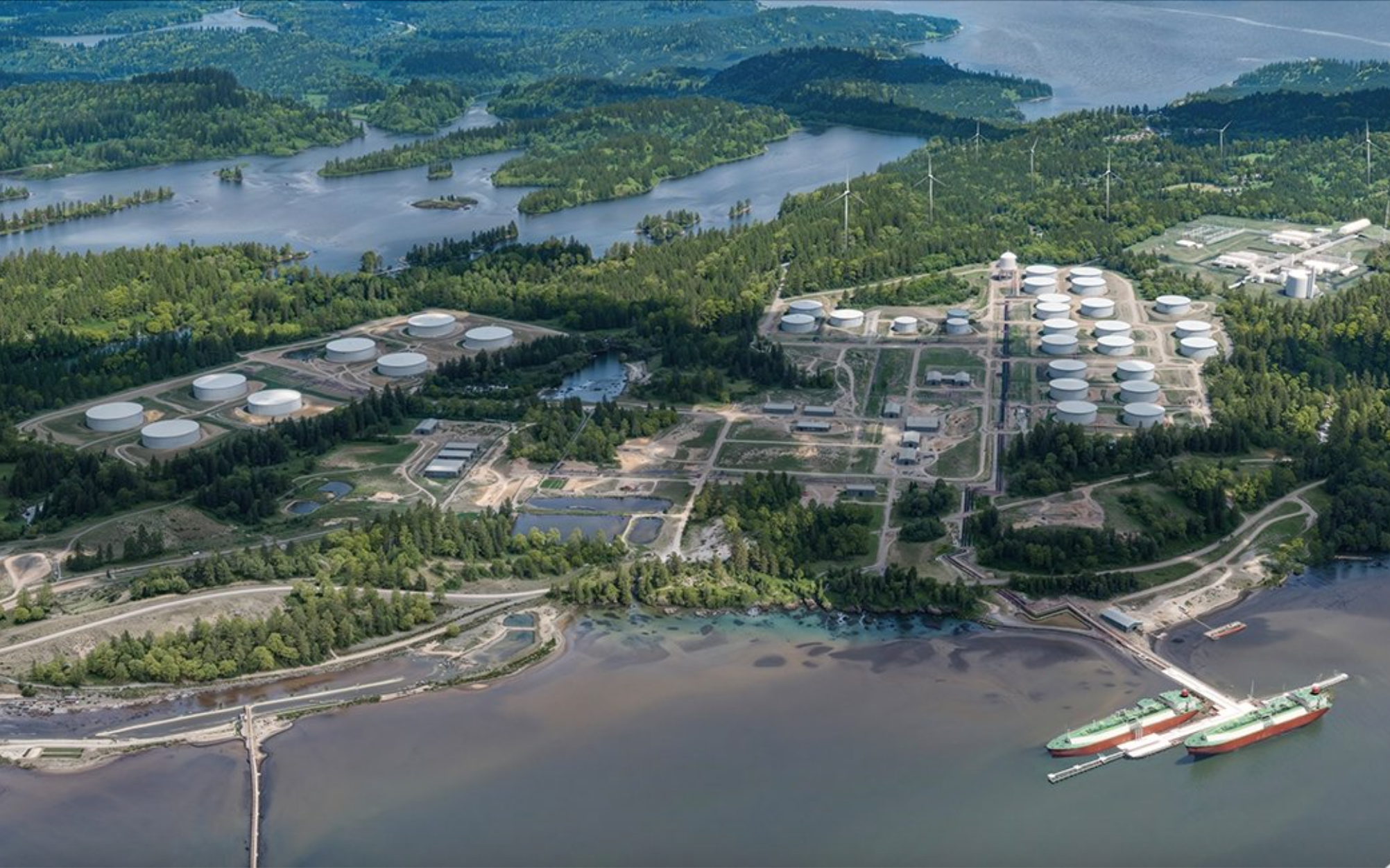
Image credit: Invest Canada
by Tammy Nemeth and Ron Wallace
August 2025
Table of Contents
Introduction
Mark Carney has made it clear that, as part of continued net zero policies, his government will consider imposing a Carbon Border Adjustment Mechanism (CBAM), a carbon tariff applied to imports to support Canadian products burdened by domestic carbon pricing.
Proposed in 2021 and included in the 2024 Fall Economic Statement, the Canadian CBAM is a misguided attempt to shield domestic industries. In response to America’s new tariffs, a CBAM has been proposed to pivot trade to the European Union (EU) and adopt a European-style CBAM. Here we argue that any attempt to harmonize Canada with the EU’s complex regulations risks overregulation that would put Canadian companies at a competitive disadvantage and potentially strain ties with the United States (US), Canada’s primary defence and trading partner. Coming at a time when America is distancing itself from net zeropolicies, the Trump administration would certainly view any Canadian border adjustment mechanisms as thinly-disguised trade barriers that affect sovereign control of trade. Moreover, this mechanism proposed by the EU could impact Canadian exports, including defence-related products should those materials or components fall under future CBAM regulations currently under consideration for extension to downstream products beginning in 2026.
The EU’s CBAM, launched in October 2023 with full implementation set for 2026, initially targets high-emission sectors like aluminum, fertilizers, steel, cement, electricity and hydrogen, with plans to expand coverage to all products covered under the EU Emissions Trading System (ETS). The purpose of the CBAM is to prevent “carbon leakage” by penalizing companies that attempt to avoid EU carbon taxes by manufacturing in countries with lower carbon emission taxes. To diminish circumvention, all imports under the CBAM must provide detailed emissions accounting for a product’s verified “embedded emissions” to ensure the levied carbon price mirrors that of the ETS so that the carbon price paid on the imported product is equal to what would have been paid if the product was made in the EU. Initially, the CBAM applied to all importers regardless of size; however, complaints by Small, Medium, Enterprises (SMEs) regarding the onerous regulatory burden and compliance costs led to a narrowing of scope to large shipments over 50 tonnes. If an exporter is in a jurisdiction with carbon emissions pricing, once verified and converted to Euros, it could be deducted from the EU tariff. That sounds simple enough, but the reality is far more complex.
Some may argue that it will be a simple matter for Canadian companies to use the data they are already collecting for Canada’s Output-Based Pricing System (OBPS) in order to comply with the EU requirements. However, the CBAM significantly escalates regulatory demands: it requires exporters to track product-level “embedded emissions” (meaning direct emissions from production, precursors, and indirect emissions like electricity and energy consumption) using intricate EU-specific methodologies; it forbids the use of estimatesexcept in extenuating circumstances; and it also requires companies to accept EU verifications that may require on-site inspections even if the installation is in a country outside the EU. As one law firm explains, “The total embedded emissions declared must be verified by a "verifier" accredited by the national accreditation bodies. The verifier will need to visit the third country producer’s installation and prepare a report.”
It is significant that direct calculations of the potential compliance costs for Canadian exporters appear not to be readily available. This is a serious omission for any potential legislation that will have a material impact on the Canadian export sector. Hence, one can only speculate on compliance costs for Canadian companies. A qualitative assessment would include the costs of comprehensive emissions accounting of both direct and indirect emissions (software, training, consultants); verification and auditing (third party services and internal audits); administrative overhead; and third-party inspection costs. These numerous compliance costs, the amount of which may range from tens of thousands to millions of dollars, depending on the size of the company and complexity of the products, will be borne by the exporting company.
In July 2025, the EU issued a notice to consult on modifications to the CBAM to assist exporters that may be affected by CBAM circumventions and downstream carbon leakage. While it may appear that the EU may be reconsidering aspects of its policy as it enters a consultation process, the proposed changes are intended to extend the CBAM to downstream products that use inputs from sectors covered by the CBAM. The result would be that any steel or aluminum intensive downstream products like cars or cans would need to report emissions embedded in those products. This result would be consistent with a developing consensus within the EU to use trade barriers to reduce competition from countries that use cheaper energy.
Harmonizing Canada’s OBPS with the EU-CBAM either through aligned methodologies or verifier recognition would shackle Canada to a distant protectionist EU system with uncertain outcomes for Canadian exporters. Hence, any pivot to the EU to offset US trade restrictions would require a transformation of Canada’s export economy that would impose an expensive, intricate web of costly compliance monitoring and verifications that risk uncertain EU tariffs and onerous administrative penalties. To be clear, the EU-CBAM, or potential Canadian versions of it, ignores broader environmental regulatory efforts because it is fixated solely on the taxation of embedded emissions. As the United States Trade Representative pointed out in its recent report on Foreign Trade Barriers the EU “CBAM does not offer credits for regulatory and other non-price mechanisms for reducing carbon emissions.”
If Canada implemented a CBAM like the EU’s, it could indeed create a chilling effect on trade with countries lacking equivalent carbon pricing systems, and increase the cost of goods from those nations, potentially deterring trade with major partners like the US or China unless they agree to align their standards. With the current Trump administration in the US, this possibility is probably quite unlikely. For Canada, a CBAM could safeguard domestic industries against cheaper, non-carbon taxed imports, but it also risks retaliatory trade measures from affected partners. As Canada aims to diversify its trade relationships, a CBAM might also hinder new partnerships with countries not yet on board with carbon pricing.
Peter Shawn Taylor recently reviewed historical efforts by Canada to pursue (third) options to shift trade away from the US to other countries:
“The Third Option’s overarching objective was to sever Canada’s deep economic and cultural ties with the U.S. It didn’t work . Throughout the 1970s, the share of Canadian exports delivered to the U.S. never dropped below 65 per cent. By the early 1980s, it was well over 70 per cent . There was no real diversification of Canada’s export trade in spite of all the self-harm caused by policies such as the NEP. In fact, foreign direct investment from the U.S. actually increased, as did Canadian investment in the U.S. Today, the Third Option is widely acknowledged to have been a complete failure.”
That analysis shows that any strategic legislative measures crafted to overcome geography and deflect commerce away from the US by expanding trade with Western European democracies has a history of failure. In addition to that historical reality, a proposed Canadian CBAM would raise costs for manufacturers, tax US imports and disrupt integrated supply chains. A CBAM could also risk derailing negotiations with a Trump administration clearly skeptical of, if not hostile to, EU climate policies and could trigger further retaliatory US tariffs against such trade measures.
Having withdrawn from the Paris Agreement and associated climate disclosures, the Trump administration has signaled a significant rejection of net zero policies, this at a time when Canada and the EU would be embarking together on diametrically opposed measures like CBAMs. In short, any attempt to swap US general tariffs for the EU’s strings-attached tariffs and regulatory morass would be a strategic error.
As Canada renegotiates its trade and defence relationships with the US it should also work to enhance those trade relations while attempting to diversify its international trade to markets with less red tape than the EU. Undeterred by such considerations, Canada and the EU have entered a “dialogue” on new industrial trade policies that is focused on strengthening and diversifying trans-Atlantic partnerships. There are major questions about, and ramifications from, any attempts by Canada to align its trade policies with the EU. As economist Jack Mintz commented:
“As we move away from the U.S., we need to be a stronger Canada, not an imitation Europe. We should certainly diversify our trade, but we should do it by creating an economy that can compete with countries all around the world. That would make us neither European nor American but uniquely Canadian.”
With a Canada-India trade deal poised to deliver potential substantial growth by 2030, unburdened by EU-style regulations Southeast Asia may also present dynamic alternative trade opportunities for Canadian products. Coming at a time when defence-related trade has assumed new political dimensions, not just for Canada but for the entire NATO Alliance, Canada would be better advised to drop considerations of a CBAM and make it a priority to enhance and co-ordinate its defence and trade relationships with the US.
About The Authors
Dr. Ron Wallace retired as a Member of the National Energy Board in 2016 and as a Fellow of the Canadian Global Affairs Institute and Canada West Foundation has written extensively on energy policy issues for the national and provincial press. In 2024 he published a book on the Inuit of Pond Inlet, Baffin Island, Nunavut (Tales and Legends of Pond Inlet).
Tammy Nemeth Ph.D. is a UK-based energy and ESG analyst, leading ESG2 Insight, which provides research on Energy, Security, Geopolitics, and ESG issues. She authored Counting Carbon Molecules, analysing the International Sustainability Standards Board’s (ISSB) climate-related financial disclosures. Dr. Nemeth regularly contributes to The Financial Post, Calgary Herald, and Energy Now, hosts "The Nemeth Report" podcast, shares insights on her Substack and is a co-host of the international Energy Realities Podcast.
Canadian Global Affairs Institute
The Canadian Global Affairs Institute focuses on the entire range of Canada’s international relations in all its forms including trade investment and international capacity building. Successor to the Canadian Defence and Foreign Affairs Institute (CDFAI, which was established in 2001), the Institute works to inform Canadians about the importance of having a respected and influential voice in those parts of the globe where Canada has significant interests due to trade and investment, origins of Canada’s population, geographic security (and especially security of North America in conjunction with the United States), social development, or the peace and freedom of allied nations. The Institute aims to demonstrate to Canadians the importance of comprehensive foreign, defence and trade policies which both express our values and represent our interests.
The Institute was created to bridge the gap between what Canadians need to know about Canadian international activities and what they do know. Historically Canadians have tended to look abroad out of a search for markets because Canada depends heavily on foreign trade. In the modern post-Cold War world, however, global security and stability have become the bedrocks of global commerce and the free movement of people, goods and ideas across international boundaries. Canada has striven to open the world since the 1930s and was a driving factor behind the adoption of the main structures which underpin globalization such as the International Monetary Fund, the World Bank, the World Trade Organization and emerging free trade networks connecting dozens of international economies. The Canadian Global Affairs Institute recognizes Canada’s contribution to a globalized world and aims to inform Canadians about Canada’s role in that process and the connection between globalization and security.
In all its activities the Institute is a charitable, non-partisan, non-advocacy organization that provides a platform for a variety of viewpoints. It is supported financially by the contributions of individuals, foundations, and corporations. Conclusions or opinions expressed in Institute publications and programs are those of the author(s) and do not necessarily reflect the views of Institute staff, fellows, directors, advisors or any individuals or organizations that provide financial support to, or collaborate with, the Institute.


Showing 1 reaction