
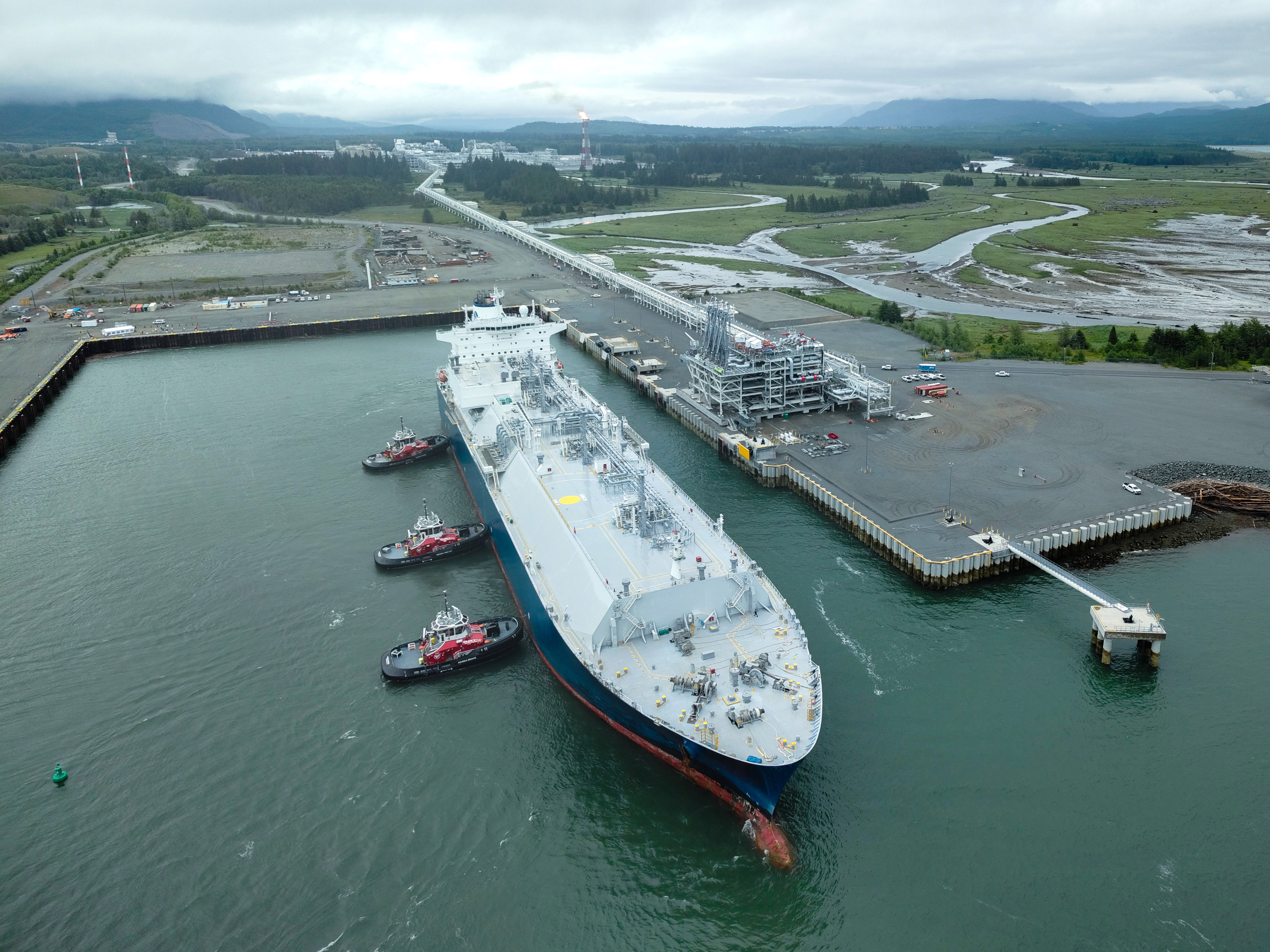
LNG Canada site in Kitimat, B.C. June, 2025 - Via LNG Canada
by Joe Calnan
November 2025
Table of Contents
- Introduction
- Energy Needs in the Indo-Pacific
- The Current Role of Canadian Energy in the Indo-Pacific
- The Next Supply Node for Regional Energy Security
- Aligning Canadian Energy Policy with Foreign Policy
- The Vision of Canada as an Energy Security Partner in the Indo-Pacific
- About the Author
- Canadian Global Affairs Institute
Introduction
Let’s work together – Canada, Japan, and all our partners, to build balanced, secure, and sustainable energy in this dynamic region.
- Jun Nishizawa, Visiting Fellow, Institute for Energy Economics, Japan, at CGAI’s conference Canada’s Next Chapter in the Indo-Pacific
The use of trade impediments as a tool for coercion is a major challenge to preserving the independence of Canadian foreign policy. Under the current U.S. Administration, the Canada-United States relationship has become much more transactional. At the same time, the combination of cultural, geographic, and economic ties with our much larger southern neighbour means that the United States will likely continue to be our largest trade partner.
The status quo poses economic risks for Canada. Canada is highly dependent on the vast American market for sales of goods and services. Many Canadian companies have faced difficulties finding customers outside of the United States after tariffs were applied on Canadian goods. This could mean that the United States has monopsony power over Canadian producers, i.e., when the U.S. imposes tariffs, these taxes may be passed on to Canadian producers rather than American consumers.
If Canada is unable to improve its negotiating position with its largest security and trade partner, Canadian sovereignty may be at risk. The North-South trade axis is especially intense on energy trade, Canada’s single largest export to the United States. This vulnerability goes both ways. Canada and the United States are both dependent on continued energy trade. Trade in these energy products could be an area of Canadian leverage, but only if Canada can successfully access other markets.
Canadian economic diversification is necessary to improve our nation’s bargaining power. To help diversify Canadian trade and therefore strengthen Canada’s position, Prime Minister Mark Carney has set an ambitious goal of doubling non-U.S. exports by 2035. CGAI’s recent conference, Canada’s Next Chapter in the Indo-Pacific, featured perspectives from customers, policymakers, and industry emphasizing Canada’s opportunities to sell energy to our partners in the Indo-Pacific region.
Indo-Pacific countries face their own economic security challenges. One important challenge is security of their energy supplies. These fast-growing countries are dependent on imports for many of the raw materials required to fuel their development. Energy is of particular importance to these countries owing to the continued expansion of heavy industry and new energy requirements from datacentres.
Canada is already a large and growing energy exporter to the Pacific. The opening of Liquefied Petroleum Gas (LPG), Liquefied Natural Gas (LNG), and crude oil export infrastructure in recent years has bolstered Canada’s role in the region. However, infrastructure limitations currently constrain Canadian supply to just ~0.8% of Indo-Pacific energy consumption. Canada must prioritize the construction of infrastructure to further develop energy trade with these markets.
Recent announcements from the Carney government highlight new energy infrastructure requirements to meet Canada’s trade diversification push. The November 27, 2025 MoU between the Government of Canada and the Government of Alberta states a shared goal of increasing production of Alberta oil and gas to reach Canada’s export and national security goals. This will be accomplished through the construction of a one million barrel per day new export pipeline, alongside the expansion of the Trans Mountain pipeline for a total additional 1.3-1.4 MMbpd (million barrels per day) of additional oil export capacity.
The Carney government also has big plans for Canadian LNG. Two LNG export projects - LNG Canada Phase 2 and the Ksi Lisims Project – have been referred to the Major Projects Office. Alongside existing facilities, these projects would bring total Canadian LNG export capacity to around 45 mtpa (million metric tonnes per year). Canada should not stop there. In November, the Prime Minister promoted an expansive vision of reaching 100mtpa of Canadian LNG export capacity to Asia.
There is some skepticism that energy demand from Indo-Pacific countries will be enough to support this infrastructure buildout. These critiques fail to grasp the scale of Indo-Pacific energy demand. If Canada manages to pull off these dramatic infrastructure buildouts, alongside a massive increase in LPG and nuclear exports by 2035, we will be able to provide at most 2.9% of Indo-Pacific total energy supply. This amount should be easily absorbed by these countries at the right price. This will nevertheless make Canada a strong energy security partner in the region and could provide as much as $100 billion in annual export revenue (see Table 2).
To make this happen, Canada needs to show that it can deliver. Policymakers can do so by accelerating regulatory processes, eliminating ineffective policies, and streamlining bilateral investment. If the Canadian Government and energy industry can accomplish this feat, Canada will be on track to deeply diversify our trade and demonstrate our capacity to set our own foreign policy priorities.
Energy Needs in the Indo-Pacific
Malaysia is probably going to be importing LNG in about five years. And this is because, first of all, the Malay Basin is drastically reducing in terms of its output. The second one is our datacentres, which require lots and lots of energy.
- Dr. Shazelina Abidin, High Commissioner of Malaysia to Canada, at CGAI’s conference Canada’s Next Chapter in the Indo-Pacific
In the coming decades, the global economy will continue shifting toward the major Asian economies. According to the IMF’s 2025 World Economic Outlook, Emerging and Developing Asia – a grouping of countries which includes China, India, and other Southeast and South Asian countries – will lead the world in GDP growth through to 2030. This growth will be on top of an already immense economic footprint of nearly 40% of global GDP, measured by purchasing power parity.
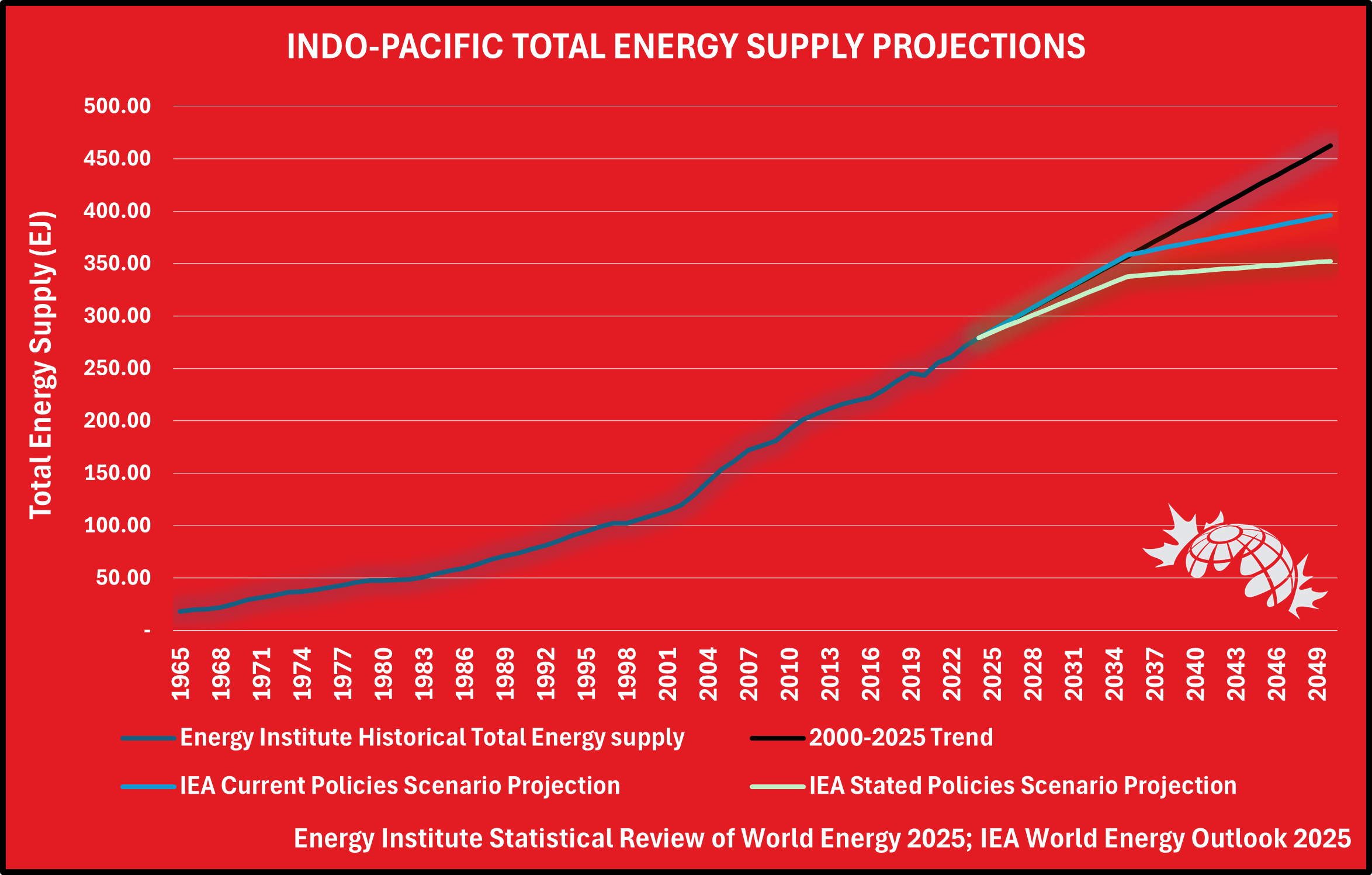
Economic growth in the Indo-Pacific will be the driving force behind the region’s energy needs. The International Energy Agency’s Current Policies Scenario projects Indo-Pacific Total Energy Supply (a metric of energy consumption) growing from just under 300 EJ today to 396 EJ in 2050. The Stated Policies Scenario is more restrained, but also predicts substantial energy consumption growth in the coming decades. If Indo-Pacific countries continue current trends beyond 2035, the region’s energy demand could surpass 460EJ by 2050 - five times U.S. energy consumption in 2024.
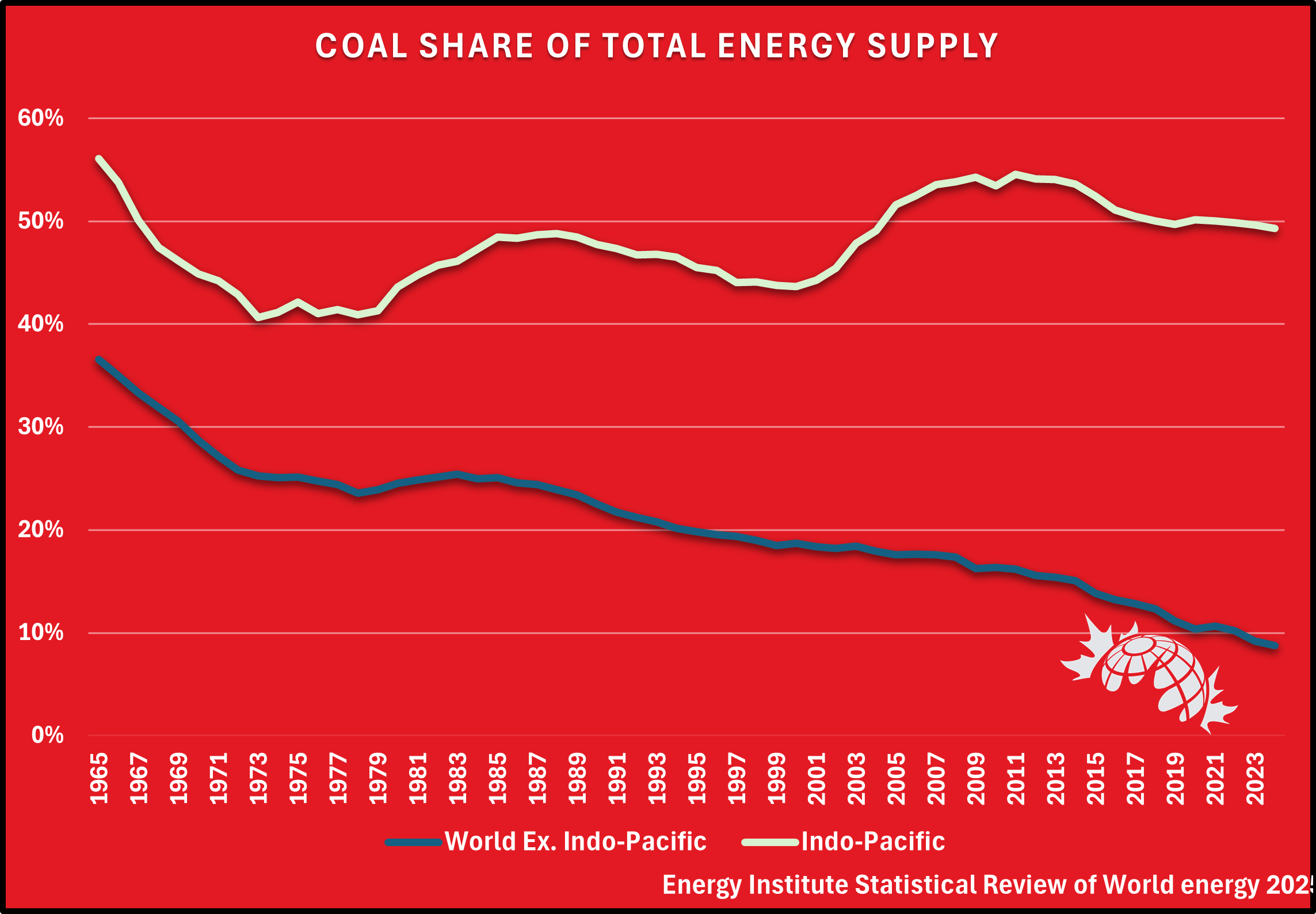
Indo-Pacific countries are largely reliant on coal, making up 49% of total regional energy needs in 2024. Coal plays a smaller role in the rest of the world, having declined from 37% of total energy supply in 1965 to just 9% today. Coal offers major energy security benefits for Indo-Pacific countries. The largest energy-consuming countries in the region are also owners of huge coal reserves and coal mining industries, which can at times be used to control local energy prices.
Countries in the region are understandably hesitant to become reliant on foreign energy imports. The 2022 oil and LNG price spike following the Russian invasion of Ukraine had devastating impacts on countries including Pakistan, Vietnam, and Sri Lanka. However, in a post-crisis analysis the IEA determined that countries which consumed less natural gas were more likely to face price spikes than larger, more gas-dependent markets in Asia like Japan, Korea, or Taiwan. The IEA determined that heavily impacted countries were more reliant on volatile spot cargoes rather than the stable long-term contracts favoured by established importers.
The scale of energy demand growth means that Indo-Pacific oil and natural gas demand is expected to climb in the coming decades regardless of energy security considerations. Under the Current Policies Scenario, the IEA estimates that the combined oil demand of India and Southeast Asia will grow 76% from 10.5 MMbpd in 2024 to 18.5 MMbpd in 2050. Natural gas demand under the same scenario will grow by 90%, from 259 bcm/year in 2024 to 494 bcm/year in 2050. The IEA’s Stated Policies Scenario is less bullish but still predicts strong demand growth for both fuels. The need for oil and gas imports will be bolstered further by declining production in the mature fields of Southeast Asia.
As Indo-Pacific countries become wealthier, social and economic pressures may also mount to reduce reliance on coal-fired energy. According to the UN Environment Programme, 70% of the 6.5 million people who die annually from exposure to poor air quality are in Asia-Pacific countries. Burning solid fuels like coal and traditional biomass is a large source of pollutants, especially PM2.5 fine particulate matter which is connected to serious respiratory illnesses. The combination of popular opposition to local pollution and recognition of the economic costs of poor public health may encourage governments to adopt cleaner burning fuels.
South and Southeast Asian countries face difficult decisions in the trade-off between pollution, affordability, and energy security. Energy can be secure and affordable but polluting (coal and traditional biomass); energy that avoids pollution and is affordable may be insecure (LNG from Qatar); and energy that avoids pollution and is secure can be unaffordable (nuclear power). Renewable energy may fulfill all three components, but land shortages in small countries and concerns about China’s influence over supply chains will likely limit the adoption of wind, solar, and batteries. Even under the Stated Policies Scenario, the IEA expects renewables to provide only 36% of Southeast Asia and India’s Total Energy Supply by 2050.
In this context, Canada can establish itself as a trustworthy energy security partner for countries with fast-growing energy needs. Canadian energy can become an extra-secure and reliable part of a diversified portfolio of suppliers to the region, with currently proposed Canadian infrastructure and technology providing 3% of regional Total Energy Supply. However, Canada will need to prove that it is a serious player that can deliver on its promises and engage with customers on a level of mutual respect to be taken seriously as a long-term energy security partner in the Indo-Pacific.
The Current Role of Canadian Energy in the Indo-Pacific
The start-up of Trans Mountain has very much changed the access of Canadian oil to the global market. Heavy oil particularly as it relates to Asian demand, and especially in the petrochemical sector. One of the great advantages Canada has [...] is a rule of law, well understood, great trading partner, all of these things. And for Canada, it’s diversification of market.
- Mark Maki, Chief Executive Officer, Trans Mountain Corporation, at CGAI’s conference Canada’s Next Chapter in the Indo-Pacific
Before I was told that I would be posted to Ottawa, I was not really aware that Canada had never exported LNG to Asia up until June 2025. Given the landmass and the natural resource reserves that this country has, I thought – I assumed – prior to my arrival that Canada already exported.
- Hideaki Ishii, Deputy Head of Mission, Embassy of Japan in Canada, at CGAI’s conference Canada’s Next Chapter in the Indo-Pacific
Canadian support for Indo-Pacific energy security is a relatively recent phenomenon. While Canada has been a reliable supplier of metallurgical coal to Asian countries for decades, its oil and gas exports are underpinned by the completion of three recent energy export infrastructure projects - the RIPET LPG export facility in May 2019, the Trans Mountain Pipeline expansion (TMX) in May 2024, and LNG Canada in June 2025.
Efforts to unlock Canadian energy supply to Asia, on the other hand, have been in the works for decades. Japan’s presence in Western Canadian upstream oil and gas dates back to the 1970s. In the “peak oil” era of ~2005-2012, state-owned and private companies based in other Indo-Pacific countries began to make investments in Canadian upstream oil and gas production and export infrastructure. However, these investments faced substantial obstacles, and did not lead to increased supplies to the Pacific until the 2020s.
The Ridley Island Propane Export Facility had the fastest turnaround – this project was originally proposed in 2016 and reached a positive Final Investment Decision (FID) in 2017. The Trans Mountain Expansion and LNG Canada both had a longer road to completion. TMX was announced in May 2012 and reached a positive FID in May 2016. LNG Canada was announced in October 2012 and reached a positive FID in October 2018.
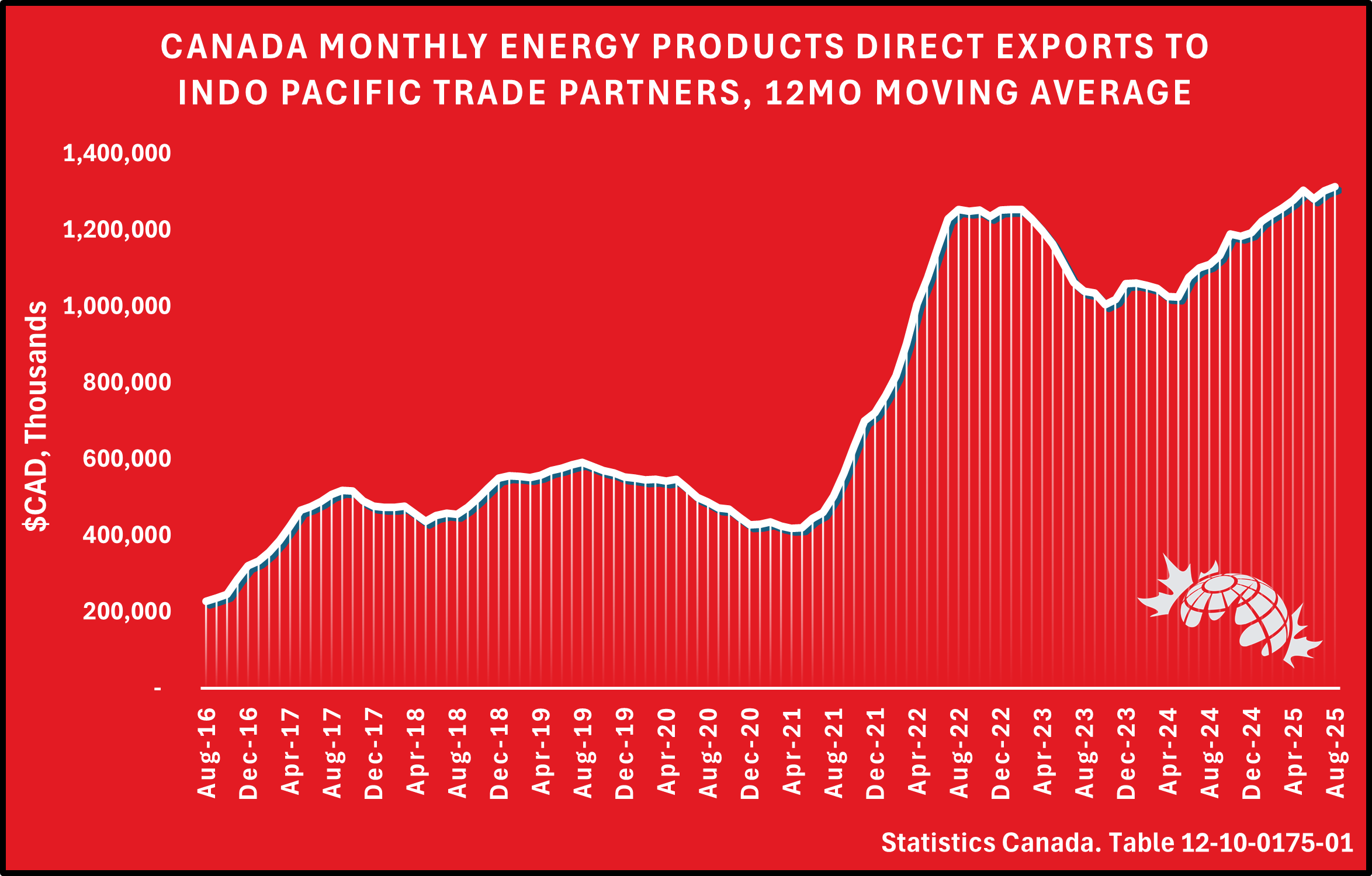
These three projects have succeeded in their goal of reaching markets in Asia. In the last ten years, Canadian energy product exports to major trade partners in the Indo-Pacific (China, Japan, South Korea, India, Taiwan, Australia, Indonesia, and Singapore) have increased by 470%. Energy products now make up close to 25% of Canada’s exports to these Indo-Pacific countries, around $15 billion in the last year.
The Next Supply Node for Regional Energy Security
When you intend to get into the energy security space, and especially in LNG [...] one word came up many, many times – reliable. You get into the space of supply and it’s not a one-year contract, three-year contract or a market deal. It’s actually a long-term relationship with a partner, with a country.
- Hafiz Zubir, Chief Executive Officer, Petronas Canada, at CGAI’s conference Canada’s Next Chapter in the Indo-Pacific
Despite the scale of RIPET, TMX, and LNG Canada, their combined energy export capacity is small compared to energy consumption in the Indo-Pacific. Table 1 below illustrates the relatively small scale of these huge projects compared with total Asian energy consumption. Running at full capacity with all exports directed toward Asia, the existing projects could only contribute <0.8% of 2024 Indo-Pacific Total Energy Supply.
|
Table 1 – Current State of Canadian Energy Supply to Indo-Pacific Countries |
|||
|
Facility |
Export Capacity (million tonnes per year) |
Exajoules (billion GJ) |
|
|
RIPET (Altagas); and Prince Rupert Export Terminal (Pembina Pipeline) |
AltaGas: 2.887 mtpa (92,000 barrels per day) Pembina: (25,000 barrels per day) |
LPG: 46.150 GJ/tonne |
0.169 EJ |
|
TMX Westridge Marine Terminal |
31.365 mtpa (630,000 barrels per day) |
Oil product basket: 43.076 GJ/tonne |
1.351 EJ |
|
LNG Canada Phase 1 |
14.000 mtpa |
LNG: 48.747 GJ/tonne |
0.682 EJ |
|
|
|
Canadian Export Capacity: |
2.202 EJ |
|
|
|
Indo-Pacific 2024 Total Energy Supply: |
279.24 EJ |
|
|
|
Percentage of Indo-Pacific Total Energy Supply: |
0.79% |
But are Indo-Pacific countries interested in increasing Canada’s contribution to their total energy supply?
Yes, and for good reason. Security of supply of oil and natural gas is a major concern for Indo-Pacific countries. Much of their current imports are sourced from the Persian Gulf and Russia. These supplies are subject to major geopolitical risks amid competition between Israel, Iran, and Saudi Arabia, as well as Russia’s threatening posture toward NATO. Disruptions to these supplies may not even require formal state action. The Houthis in Yemen have shown that nonstate actors can disrupt trade flows.
Diversifying energy supplies in favour of Canada could bring energy security benefits to Indo-Pacific countries. Canadian energy export is not constrained by chokepoints or conflict-prone areas. Canadian energy also has shorter shipping times to Asia than from the Middle East and the United States Gulf Coast, improving flexibility and reducing shipping costs for customers.
Even with these projects, Canadian energy export will remain primarily directed toward the United States. However, the addition of new export infrastructure will allow Canada to be on a more even footing with our neighbor. The opening of the Trans Mountain Pipeline expansion has resulted in long-overdue benefits to Canada from access to international markets. While the United States will continue being Canada’s largest customer, it should not be our only customer.
The geopolitical benefits for Indo-Pacific countries and Canada are bolstered by the nearly inexhaustible scale of Canada’s resources. Canada’s estimated marketable natural gas resource is 44 trillion cubic metres –equivalent to 300 years of current production. Growing production from the liquids-rich Montney formation means increased supplies of NGLs for export as LPG or for mixing with oil sands bitumen for transport. The oil sands holds 159 billion barrels of proven oil reserves, compared with just 45.2 billion barrels of oil reserves in all Indo-Pacific countries combined.
Nuclear power is another promising area of energy collaboration between Canada and the Indo-Pacific. Countries in the region are very interested in adopting Canadian nuclear technology and expertise, such as the new CANDU Monark reactor and the upcoming GE Hitachi BWRX-300Small Modular Reactor. Canadian nuclear reactor exports can provide unparallelled security of energy supply for countries in the region.
Canada is well positioned to act as the next supply node for the region’s energy security. To take advantage of this opportunity, Canada will need to show that it is able to deliver.
Aligning Canadian Energy Policy with Foreign Policy
Capital is still sitting on the sidelines. They’re not saying, ‘Oh! You established an MPO [Major Projects Office], where can I sign up to invest?’ They want to see results and actions. Actions always speak louder than words, and in the last decade, especially our actions have not been welcome to that investment we’re talking about here.
- David Nikolejsin, Strategic Advisor at McCarthy Tetrault and former Government of British Columbia Deputy Minister, at CGAI’s conference Canada’s Next Chapter in the Indo-Pacific
We look for suppliers where they can be a reliable supplier […] not a supplier who today says, ‘Okay, I’m going to supply you’, and tomorrow says, ‘No, I have this problem with you, I cannot supply you.
- India’s High Commissioner to Canada Dinesh Patnaik, on CTV News
During a speech to Canadian university students in October, Canadian Prime Minister Mark Carney outlined a vision for doubling Canada’s exports to non-U.S. countries from the current $300b/yr to $600B/yr by 2035. Carney highlighted Canada’s energy resources, including “the third-largest reserves of oil and the fourth-largest reserves of natural gas in the world”. A week later Carney was in Kuala Lumpur, where he met with the Malaysian Prime Minister and the CEO of Petronas to discuss increasing bilateral energy ties.
Canadian economist Trevor Tombe recently observed that doubling Canadian exports outside of the United States is completely feasible on a 10-year timeframe and stressed that energy is arguably the “single best way to boost non-U.S. exports.” However, he also remarked that inefficient Federal energy policy “makes it difficult to invest in expanding Canadian energy output”. Canada has much work to do to align energy policy with our foreign policy goals.
Canada is currently working to streamline the regulation of new energy export infrastructure. The Building Canada Act and the associated Major Projects Office are expected to help proponents overcome some of the roadblocks which derailed previous export projects. The Impact Assessment Agency of Canada and the Canada Energy Regulator are also looking to streamline their processes with a two-year project review timeline in mind.
More improvements are needed to bring approval timelines well below two years, reduce the complexity and cost of regulatory applications, and reduce the scope for intervention. The attitude of Canadian regulators is often described as risk averse, but the current trade status quo is a major risk for Canada. Regulators and other civil servants should be brought into alignment with the larger mission of bolstering Canadian sovereignty through trade diversification.
On climate policy, the combination of escalating carbon pricing, the oil tanker moratorium, and the continued presence of Federal and provincial caps on oil and gas emissions undermines the business case for companies to invest in upstream production. Without increased production, it is unlikely that Canada can fill the facilities currently under consideration by the Major Projects Office. The MoU between the Federal Government and the Government of Alberta is a huge first step for addressing these risks. The Canadian Climate Competitiveness Strategy should also be revised to focus on the competitiveness implications of Canadian climate policy. Canada will find it very difficult to increase exports to the Indo-Pacific if our climate policies are significantly out of step with competitors like the United States and Qatar.
Canada’s commitment to maintaining stable energy relationships could be another concern for our customers in the Indo-Pacific. These countries have their own interests, values, and politics, and these may at times come into conflict with Canada's. To build trust as an energy security partner, Canada must ensure that energy supplies are firewalled from political pressures.
Canada should reaffirm its commitment to rule of law and the rules-based trading system. The Canadian Federal Government can do this by pledging not to interfere with long-term energy supply contracts and by honouring the dispute resolution processes outlined in the CPTPP trade agreement and other bilateral agreements. Reaffirming these commitments will be in alignment with the Carney Government’s commitment to multilateralism and belief in the power of international law to safeguard the interests of middle powers amid great power competition.
Canada can go beyond this to demonstrate our interest in long-term partnerships with Indo-Pacific customers. Canada should consider policies to help Indo-Pacific nations invest in Canadian upstream energy production and downstream energy export infrastructure. Projects that are aligned with our foreign policy goal of doubling Canadian exports could receive expedited reviews under the Investment Canada Act, exemptions from tariffs on equipment under the Building Canada Act, and special visas for the foreign proponent’s employees to accelerate the construction of complex facilities.
Canada’s goal of doubling non-U.S. exports over the next decade is completely possible, but it will require an all-of-government effort. To help align its departments and agencies, Canada should revise its Indo-Pacific Strategy to adopt Prime Minister Carney’s non-U.S. exports target as a central pillar of the Strategy. Furthermore, Canada’s Indo-Pacific Strategy should acknowledge and promote Canada’s growing role as an energy security partner in the region, especially for oil and gas. Oil, natural gas, and LPG are crucial for Canada’s current and future trade relationships in the region.
To implement these revisions, the Government should greenlight Global Affairs Canada to invest in further outreach to energy decision makers in Indo-Pacific countries. This should include the expansion of the Trade Commissioner Service with dedicated employees focused on growing trade in oil, LNG, and LPG in the region, alongside current Commissioners focused on nuclear and clean technology. These representatives should be primarily stationed in the major areas of growing energy demand in South and Southeast Asia. The primary purpose of this outreach is to engage with economy-focused Ministries, energy companies, and utilities on local energy needs and Canada’s intent to become a reliable energy security partner.
The Vision of Canada as an Energy Security Partner in the Indo-Pacific
I think one way we can reframe the discussion is moving away from ‘superpower’ and looking at it as being a partner to the rest of the world. [...] You can only be a good partner if you do what you say you’re going to do. If we’re going to help these people out, if we’re going to help get product to market, we’re going to have to do what we say we’re going to do.
- Anonymous, at CGAI’s conference Canada’s Next Chapter in the Indo-Pacific
Canada should not think of itself as an energy “superpower” This title could imply using energy as a foreign policy pressure point to achieve other goals. We should not participate in the weaponization of global trade. As major countries increasingly try to use their economic heft to exact concessions from smaller trade partners, Canada’s niche is as a trusted energy security partner without ulterior motives. In this role, Canada can build long-term energy security relationships in the Indo-Pacific region with mutual benefits for Canadians and our partners.
The successful construction of all proposed energy export projects implies export capacity for 2MMbpd of oil, 100mtpa of LNG, and substantial growth in LPG and nuclear technology exports. Successfully building these projects in the next ten years could bring Canada close to 3% of Indo-Pacific Total Energy Supply by 2035 (Table 2, below).
|
Table 2 – 2035 Vision of Canadian Energy Supply to Indo-Pacific Countries |
|||||
|
Export |
Export Capacity (million tonnes per year) |
Exajoules (billion GJ) |
Price Assumption (USD) |
Export Revenue Estimated (USD) |
|
|
LPG |
15 mtpa (0.476 MMbpd) |
LPG: 46.150 GJ/tonne |
0.692 EJ |
$500/tonne |
$7.5B/yr |
|
Crude oil |
100 mtpa (2MMbpd) |
Oil product basket: 43.076 GJ/tonne |
4.308 EJ |
$60/bbl |
$43.8B/yr |
|
LNG |
100 mtpa (4,640trillion btu) |
LNG: 48.747 GJ/tonne |
4.875 EJ |
$10/MMbtu |
$46.4B/yr |
|
Nuclear Power
|
118,260 GWh (15x1GW reactors, 90% capacity factor) |
Electricity: 3600 GJ/GWh |
0.426 EJ |
N/A |
- |
|
|
|
2035 Canadian Energy to Indo-Pacific: |
10.301 EJ |
N/A |
- |
|
|
|
Indo-Pacific 2035 Total Energy Supply (IEA Current Policies Scenario): |
358 EJ |
N/A |
- |
|
|
|
Percentage of Indo-Pacific Total Energy Supply: |
2.9% |
Annual Export Revenue Estimate: |
$97.7B/yr |
With reasonable price assumptions, these energy export projects could bring in nearly USD$100 billion in export revenue. Boosting the share of Canadian energy in the region to this level would have transformative economic benefits for Canada and bring the country much closer to the level of export diversification envisioned by Prime Minister Carney.
Getting there will require Canada to pull multiple policy levers simultaneously to enable investment in our energy industry, while also building trust in our customers that we can deliver. This is a challenging task, and it will require special focus from the highest levels of Canadian government to ensure alignment on this goal. If we fail to do so, then our trade diversification target will likely be out of reach. The consequences of further dependence on trade with the United States are difficult to predict. However, it is certain that our failure to diversify will demonstrate our inability to set an independent foreign policy and limit our options for the coming century.
About the Author
Joe Calnan is Vice President, Energy and Calgary Operations and a Fellow at the Canadian Global Affairs Institute. He is also Co-Host of CGAI's Energy Security Cubed podcast. His research focuses on the intersection between energy, economics, policy, and politics in relation to Canada's role in international energy systems. He frequently appears in the media to provide expertise on energy security and energy trade issues, including on CBC News, The Globe and Mail, Politico, Global News, CTV News, and the Daily Oil Bulletin. Prior to joining CGAI, Joe held positions in public affairs and energy analysis at Sustainable Development Technology Canada and Canadian Natural Resources Ltd. Joe received a master’s degree in public policy from the University of Calgary with a focus on Canadian energy and natural resources in 2020. He also holds a Bachelor of Arts in Western Society and Culture from Concordia University.
Media requests on energy security issues can be directed to his email [email protected]
Canadian Global Affairs Institute
The Canadian Global Affairs Institute focuses on the entire range of Canada’s international relations in all its forms including trade investment and international capacity building. Successor to the Canadian Defence and Foreign Affairs Institute (CDFAI, which was established in 2001), the Institute works to inform Canadians about the importance of having a respected and influential voice in those parts of the globe where Canada has significant interests due to trade and investment, origins of Canada’s population, geographic security (and especially security of North America in conjunction with the United States), social development, or the peace and freedom of allied nations. The Institute aims to demonstrate to Canadians the importance of comprehensive foreign, defence and trade policies which both express our values and represent our interests.
The Institute was created to bridge the gap between what Canadians need to know about Canadian international activities and what they do know. Historically Canadians have tended to look abroad out of a search for markets because Canada depends heavily on foreign trade. In the modern post-Cold War world, however, global security and stability have become the bedrocks of global commerce and the free movement of people, goods and ideas across international boundaries. Canada has striven to open the world since the 1930s and was a driving factor behind the adoption of the main structures which underpin globalization such as the International Monetary Fund, the World Bank, the World Trade Organization and emerging free trade networks connecting dozens of international economies. The Canadian Global Affairs Institute recognizes Canada’s contribution to a globalized world and aims to inform Canadians about Canada’s role in that process and the connection between globalization and security.
In all its activities the Institute is a charitable, non-partisan, non-advocacy organization that provides a platform for a variety of viewpoints. It is supported financially by the contributions of individuals, foundations, and corporations. Conclusions or opinions expressed in Institute publications and programs are those of the author(s) and do not necessarily reflect the views of Institute staff, fellows, directors, advisors or any individuals or organizations that provide financial support to, or collaborate with, the Institute.
Showing 1 reaction